 ADVERT

 ADVERT
In an age where shallow soundbites often dominate Kenya’s intellectual space, Francis Okomo-Okello, a lawyer, banker, and entrepreneur of formidable pedigree, has reminded the country of the enduring power of substance. At the launch of his new book Concert of Life — From the Lakeshore to the Boardroom this week, the man who has steered some of East Africa’s most iconic institutions challenged professionals and entrepreneurs alike to raise their standards in a knowledge-based economy.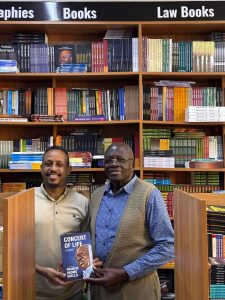
“If you are a professional, be the best-informed professional. If you are an entrepreneur, strive to be the best. We live in a knowledge-based economy in which giving your best is the only guarantee to stand out,” Okomo-Okello told the audience, a gathering of corporate leaders, journalists, and policy makers.
A Career Etched Across Kenya’s Corporate Landscape
Few individuals have left as indelible a mark on East Africa’s corporate landscape as Okomo-Okello. For over four decades, he has chaired the Serena Group of Hotels, transforming it from a local luxury brand into a regional powerhouse with lodges, resorts, and city hotels spanning Kenya, Tanzania, Rwanda, and beyond.
At the helm of Serena, his approach to political risk was not retreat but diversification—expanding across borders so that instability in one market did not cripple the business. His emphasis on environmental stewardship and cultural authenticity reshaped the group’s corporate ethos, embedding sustainability long before it became fashionable in global tourism.
 ADVERT
Beyond hospitality, Okomo-Okello has also been a central figure in banking. As chairman of Barclays Bank’s East African operations, he presided over a period of regional financial integration, expansion of credit services, and the early push towards responsible lending practices. His legal training at the University of Dar es Salaam provided a foundation for navigating both corporate governance and regulatory frameworks in volatile markets.
A Voice for Ethical Capitalism
But it is not just his résumé that commanded attention at the book launch—it is his worldview. Okomo-Okello has consistently argued that corporate power must be exercised responsibly. He has been vocal about the need for banks to avoid predatory lending and instead support enterprises that contribute to sustainable development.
His philosophy intertwines globalization and ethics, urging Kenyan and African firms to compete globally while remaining grounded in local realities. For him, engagement with communities is not corporate social responsibility in its tokenized form, but an essential business strategy.
Turning the Spotlight on Journalists
Strikingly, his sharpest words were reserved for Kenya’s journalists. “You cannot afford to be casual with knowledge,” he told the media practitioners in attendance. “This country needs journalists who not only report events but contextualize them, challenge assumptions, and guide public debate with depth and integrity.”
It was a challenge rooted not in disdain but in urgency. Okomo-Okello knows the centrality of the press in shaping economic literacy, accountability, and the very culture of professionalism he has spent a lifetime defending.
Why This Matters
In a country where public discourse is often hijacked by political theatrics, the voice of a corporate elder statesman carries weight. His book—part memoir, part manifesto—offers more than reflections on his personal journey. It is a call to arms for Kenya’s professionals, entrepreneurs, and journalists to embrace excellence, integrity, and long-term vision.
The lesson is clear: Okomo-Okello is not merely chronicling a life of success. He is challenging a nation to rise above mediocrity, to embed ethical practices in every sector, and to understand that in a fast-changing global economy, only those who give their best can hope to stand out.


