 ADVERT

 ADVERT
A familiar but painful story has once again thrust Kenya’s Bodaboda riders into the national spotlight—this time after one of their own died while in police custody, reigniting debate over systemic abuse, profiling, and the quiet normalization of violence against the men who keep the country moving.
The Independent Policing Oversight Authority (IPOA) has launched investigations into the death of Jack Leon Matoke, a Bodaboda rider who died while being held at Kawangware Police Post under circumstances that have raised troubling questions about police conduct and the treatment of informal sector workers.
In a statement issued on Tuesday, December 16, IPOA confirmed it had initiated investigations under its legal mandate to probe deaths and serious injuries arising from police actions.
According to IPOA, Matoke was arrested and detained at Kawangware Police Post pending transfer and booking at Muthangari Police Station. He never made it.
“On Sunday, 14 December 2025, and pursuant to Section 7(1)(a)(x) of the IPOA Act, the Authority, on its own motion, launched investigations into the death of Jack Leon Matoke in police custody,” the statement read.
 ADVERT
For Bodaboda riders, the announcement sounded all too familiar. Investigations are launched. Statements are issued. Calm is urged. But justice, they say, remains painfully elusive.
Bodaboda riders occupy one of the most precarious spaces in Kenyan society. Daily, they navigate hostile roads, public suspicion, and relentless police crackdowns—often accused first and heard later. To many riders, arrest is less about wrongdoing and more about visibility: reflective jackets, helmets, and motorbikes have become markers for profiling.
Human rights activists argue that riders are frequently treated as criminal suspects by default, subjected to arbitrary arrests, extortion, and in the worst cases, brutality.
Matoke’s death, still unexplained, has amplified claims that custody for Bodaboda riders can feel less like due process and more like a gamble with life.
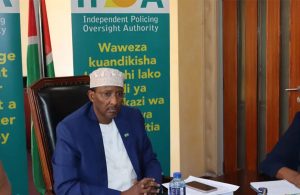
IPOA says it has already taken key investigative steps, including visiting and documenting the scene, engaging Matoke’s family, and attending the post-mortem at City Mortuary on Monday, December 15.
“The arising findings will guide the Authority’s subsequent public communication and any recommendations, including referrals to the Director of Public Prosecutions if criminal liability is established,” IPOA said.
For the family, however, and for thousands of riders watching closely, the wait for answers is agonizing—and familiar.
Even as IPOA investigates Matoke’s death, the authority has in recent months also warned about rising hostility toward police officers by sections of the public. IPOA Chairperson Issack Hassan has cited attacks on officers at State House, JKIA, and Kiganjo Police Station, urging restraint and respect for the rule of law.
But critics say equating public anger with institutional power risks missing the bigger picture.
While attacks on officers are condemnable, Bodaboda riders argue that they are often caught between two fires—viewed as criminals by police and scapegoats by the public whenever insecurity strikes.
Unlike officers, riders lack uniforms of authority, legal protections, or platforms to tell their stories when things go wrong.
IPOA has urged calm as investigations continue, but Matoke’s death adds to a growing list of cases that fuel mistrust between law enforcement and the informal transport sector.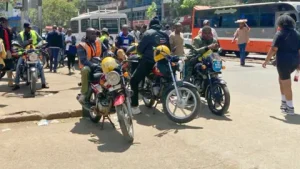
For Kenya’s Bodaboda riders, the question is no longer whether investigations will be launched—but whether this time, they will lead to accountability.
Until then, the riders will keep working, riding, and risking it all—on roads where danger doesn’t just come from traffic, but from the very systems meant to protect them.


