 ADVERT

Cabinet Secretary James Wandayi’s recent engagement with Onagi student leaders drawn from universities across Kenya stands as a deliberate and hopeful gesture toward meaningful youth inclusion. His pleasure in hosting the delegation was evident, not merely as a matter of protocol, but as a reflection of his belief that young people are central partners in shaping the nation’s future. By opening his doors to these student leaders, Wandayi affirmed that leadership is strengthened when it listens closely to the voices it seeks to serve.
At the heart of the meeting were discussions on mutual collaboration, particularly in the areas of youth empowerment and leadership development. Wandayi approached the dialogue with openness, positioning the students not as passive beneficiaries of policy but as active contributors to ideas and solutions. This framing transformed the encounter into a shared space of exchange, where aspirations, challenges, and practical strategies could be discussed candidly and constructively.
Youth empowerment emerged as a defining theme throughout the engagement. Wandayi emphasized the importance of practical, results-oriented initiatives that equip young people with skills for self-reliance and community impact. He shared insights on structured programs that could help students translate academic knowledge into real-world application. His satisfaction in these conversations underscored a conviction that empowering youth today is an investment in national stability and progress tomorrow.
Leadership development featured just as prominently in the discussions. Wandayi outlined a vision in which leadership is cultivated through exposure, responsibility, and ethical grounding. He stressed that mutual collaboration is essential in creating environments where students can gain hands-on experience alongside existing government initiatives. By engaging directly with Onagi leaders, he was able to address their concerns while reinforcing the idea that leadership growth is a shared journey rather than a top-down process.
Throughout the exchange, Wandayi highlighted that genuine empowerment requires accessible opportunities and shared responsibility. He expressed pleasure in listening to student perspectives on tailored training programs designed to prepare young leaders for real-world challenges. The conversation remained focused on initiatives capable of delivering measurable outcomes, such as skills development workshops, mentorship structures, and supportive peer networks. This emphasis revealed a leadership style that values impact over rhetoric.
The notion of mutual collaboration extended naturally into discussions on leadership pathways. Wandayi explored how partnerships between students and government institutions could foster mentorship models that connect experienced leaders with emerging ones. Hosting the Onagi delegation enabled frank dialogue about the barriers young people face in participating meaningfully in decision-making processes. His willingness to engage openly signaled an openness to evolving traditional approaches into more dynamic, inclusive models.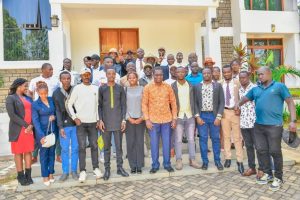
As the discussions deepened, youth empowerment was framed within sustainable frameworks designed to outlast a single meeting. Wandayi conveyed enthusiasm for initiatives that encourage students to lead local projects, promoting ownership, innovation, and accountability. Leadership development was similarly presented as a collaborative process, enriched by the fresh perspectives and energy that student leaders bring. His role as host amplified these ideas, ensuring that youth voices were not only heard but valued.
Reflecting on the engagement, Wandayi’s pleasure stemmed from the potential unlocked through focused and respectful dialogue. Mutual collaboration on youth empowerment promised programs grounded in student realities, while co-created leadership development initiatives offered depth and relevance. In this setting, Wandayi emerged as a facilitator who understands that meaningful change often begins with listening.
The talks reinforced a clear message: youth empowerment thrives when collaboration is genuine and inclusive. Wandayi articulated a vision of leadership development that prioritizes accessibility and broad participation. By hosting Onagi student leaders, he created space for ideas to flourish and for dialogue to move closer to action. This approach offers a model for how senior leaders can engage directly and productively with the next generation.
Ultimately, Cabinet Secretary James Wandayi’s hosting of Onagi student leaders—marked by evident pleasure and centered on mutual collaboration for youth empowerment and leadership development—presents a compelling blueprint for partnership. The discussions illuminated pathways where students and national leaders align around shared goals. Wandayi’s initiative demonstrates that focused, respectful engagement with youth can spark enduring progress, provided the conversations continue and the commitments made are carried forward into action.


