 ADVERT

 ADVERT
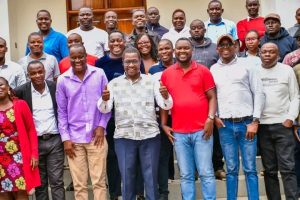
Cabinet Secretary James Wandayi hosted a cross-section of journalists at his Sijimbo home for collaborative and productive discussions, a move that spotlights the media’s critical role in shaping public discourse, informing citizens, and educating communities. In Kenya’s vibrant yet volatile political arena—particularly in Siaya County, where local roots often fuel national narratives—this gathering transcended a simple meet-and-greet. It signaled a deliberate pivot toward genuine partnership between political leadership and the fourth estate, fostering trust in a space where scrutiny and power frequently collide. Media practitioners immersed in Siaya’s political storytelling, from grassroots campaigns to Cabinet corridors, viewed the event as a masterclass in proactive engagement—one capable of reshaping accountability and citizen empowerment across the country.
The media’s democratic mandate demands fearless illumination, especially in regions like Siaya where governance continues to grapple with infrastructure gaps, youth unemployment, and untapped energy potential along Lake Victoria. Journalists are tasked with dissecting public policy, amplifying marginalized voices, and challenging leaders on service delivery, yet these efforts often invite accusations of partisanship or state hostility. Wandayi’s decision to host the engagement at his Sijimbo homestead disrupted this entrenched antagonism. Rooted in Siaya’s political heartland and symbolic of his journey from community advocate to Energy and Petroleum Cabinet Secretary, the setting became neutral ground for candid exchange. Unlike impersonal boardrooms, a home environment encourages vulnerability and rapport, yielding deeper insights. Discussions reportedly addressed portfolio pressure points, including Kenya Power tariff concerns, electric mobility rollouts, and Siaya-specific initiatives such as rural electrification for agro-processing. Rather than scripted optics, the engagement enabled nuanced reporting that transforms skepticism into informed public understanding.
Media–politics relations in Kenya have grown increasingly strained in recent years, shaped by polarized coverage during the 2022 elections and persistent concerns over media freedom under the current administration. In Siaya—custodian of Jaramogi Oginga Odinga’s political legacy and home to influential leaders such as Wandayi and Governor James Orengo—the stakes are particularly high. The county continues to face development challenges even as national frameworks like Vision 2030 and the Bottom-Up Economic Transformation Agenda (BETA) promise inclusive growth. By convening a diverse mix of journalists, from seasoned public broadcasters to digital media innovators, Wandayi ensured broad-spectrum amplification. Rural Siaya narratives were thus able to penetrate Nairobi-centric echo chambers, countering misinformation that often thrives in digital spaces. This exchange also strengthened leadership outcomes, as sustained exposure to hard questions refined policy clarity—an attribute Wandayi honed during his tenure as Minority Leader through a balance of sharp rhetoric and political empathy.
The productivity of the discussions reflected Wandayi’s pragmatic evolution from opposition firebrand to executive implementer. Journalists reportedly pressed for clarity on tangible matters such as 2025/26 energy budget allocations to Western Kenya, petroleum price stabilization mechanisms, and grid expansion plans for wards including Rarieda and Alego Usonga. Such scrutiny extracts commitments with direct socioeconomic implications—employment opportunities for Gem youth, reliable electricity for Lake Victoria fishermen, and corruption-resistant procurement processes. This co-creative engagement humanized high office, countering public perceptions of distant and insulated political elites. Siaya’s socioeconomic pulse—from Bondo traders to technology-oriented youth—resonates strongly in Wandayi’s political identity, lending authenticity to the dialogue. At a time when Afrobarometer surveys point to declining public trust in government, transparent engagement of this nature serves as a practical mechanism for rebuilding confidence, one verifiable commitment at a time.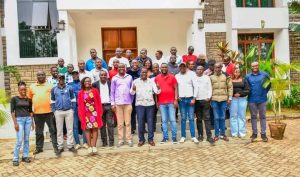
ADVERTBeyond the immediate setting, the ripple effects of the Sijimbo engagement promise to elevate public discourse more broadly. A better-informed media cultivates a more demanding citizenry—one that celebrates progress such as green energy hubs while persistently questioning delays at both county and national levels. Sijimbo thus sets a powerful precedent, reimagining leaders’ homes as spaces for dialogue rather than fortified retreats. It challenges peers—locally and nationally—to move away from combative press briefings toward intimate, substantive forums. For journalists, the encounter reinforces a nation-building role, chronicling Siaya’s gradual transition from a purely political stronghold into a development-oriented frontier. Drawing inspiration from global practices such as U.S. cabinet salons or Nordic civic assemblies, this localized Kenyan adaptation strengthens democratic resilience in an era of digital information overload.
Skeptics may dismiss such engagements as elite schmoozing, but emerging outcomes suggest otherwise. Clarified budget priorities, reinforced anti-cartel strategies, and accelerated last-mile electrification projects demonstrate tangible impact—fueling small enterprises and easing rural-to-urban migration pressures. Media coverage tracing Wandayi’s political ascent points to consistent follow-through, from support for national irrigation initiatives benefiting Siaya’s agricultural sector to sustained advocacy for equitable energy access. The outreach magnifies these efforts, educating communities on the connection between national policy and local outcomes while equipping youth groups across political divides with the information necessary for effective civic advocacy.
Ultimately, Cabinet Secretary James Wandayi’s Sijimbo initiative stands out as a beacon for constructive media–politics engagement. It reinforces the media’s duty to inform, educate, and shape public discourse while drawing leaders into more authentic and accountable roles. Within Siaya’s richly layered political terrain, the engagement plants seeds for transparent governance, empowered communities, and resilient journalism. As the 2026 electoral cycle approaches, this blueprint calls for open doors, rigorous questioning, and mutual respect—affirming that Kenya’s unity and democratic progress are forged through informed, courageous conversation.
James Kilonzo Bwire is a Media and Communication Practitioner.
ADVERT


