 ADVERT

 ADVERT
Bangladesh is in mourning following the death of former prime minister Khaleda Zia, the country’s first woman to hold the top job, who passed away at the age of 80 after a prolonged illness.
The veteran opposition leader died early Monday morning while undergoing treatment at Evercare Hospital in Dhaka, where she had been on life support.
Doctors said her condition had become “extremely critical” in recent days, with multiple organ complications making further treatment impossible due to her age and frail health.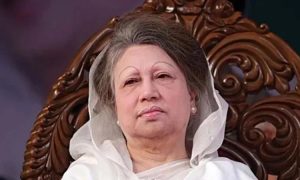
“Our beloved leader is no longer with us. She passed on at 6am today,” her party, the Bangladesh Nationalist Party (BNP), announced in a statement posted on Facebook, triggering an outpouring of grief across the nation.
Khaleda Zia etched her name into history in 1991 when she led the BNP to victory in Bangladesh’s first democratic election in two decades, becoming the nation’s first female prime minister. Her rise marked the beginning of a new chapter in Bangladeshi politics, one that would be defined for decades by her fierce rivalry with Sheikh Hasina, leader of the Awami League.
 ADVERT
The two women alternated between power and opposition, shaping national discourse through bitter political battles that came to symbolise Bangladesh’s deeply polarised politics.
Zia returned briefly to office in 1996 and later served a full term from 2001 to 2006, stepping down ahead of general elections. Her career, however, was dogged by corruption allegations, which she consistently denied, insisting the charges were politically motivated.
Born into relative obscurity, Zia first entered public life as the wife of former president Ziaur Rahman. After his assassination in a military coup in 1981, she stepped into politics, eventually rising to lead the BNP and transforming herself from a shy housewife into one of South Asia’s most formidable political figures.
In 2018, she was jailed on corruption charges under Hasina’s government. She was later released following mass anti-government protests that toppled Hasina and forced her into exile last year.
Despite her declining health, the BNP had announced that Zia was preparing to contest the upcoming general elections expected in February, the first since the political upheaval. Her death now leaves a major void in the opposition camp.
Crowds gathered outside Evercare Hospital as news of her death spread, with police struggling to control the surging mourners. Family members, including her son Tarique Rahman, were reportedly by her side during her final moments.
Interim leader Muhammad Yunus urged the nation to pray for Zia, describing her as a “source of immense inspiration.” Newspapers paid glowing tributes, with Prothom Alo calling her the “uncompromising leader,” while The Daily Star hailed her as a “defining figure of Bangladesh’s democratic struggle.”
The BNP is now looking ahead to a possible return to power, with Tarique Rahman, who recently returned from 17 years in exile, widely seen as the party’s future leader.
As Bangladesh reflects on her life and legacy, Khaleda Zia will be remembered as a tenacious survivor, a polarising force, and a woman who broke barriers to lead a nation through some of its most turbulent political chapters.


