 ADVERT
 ADVERT
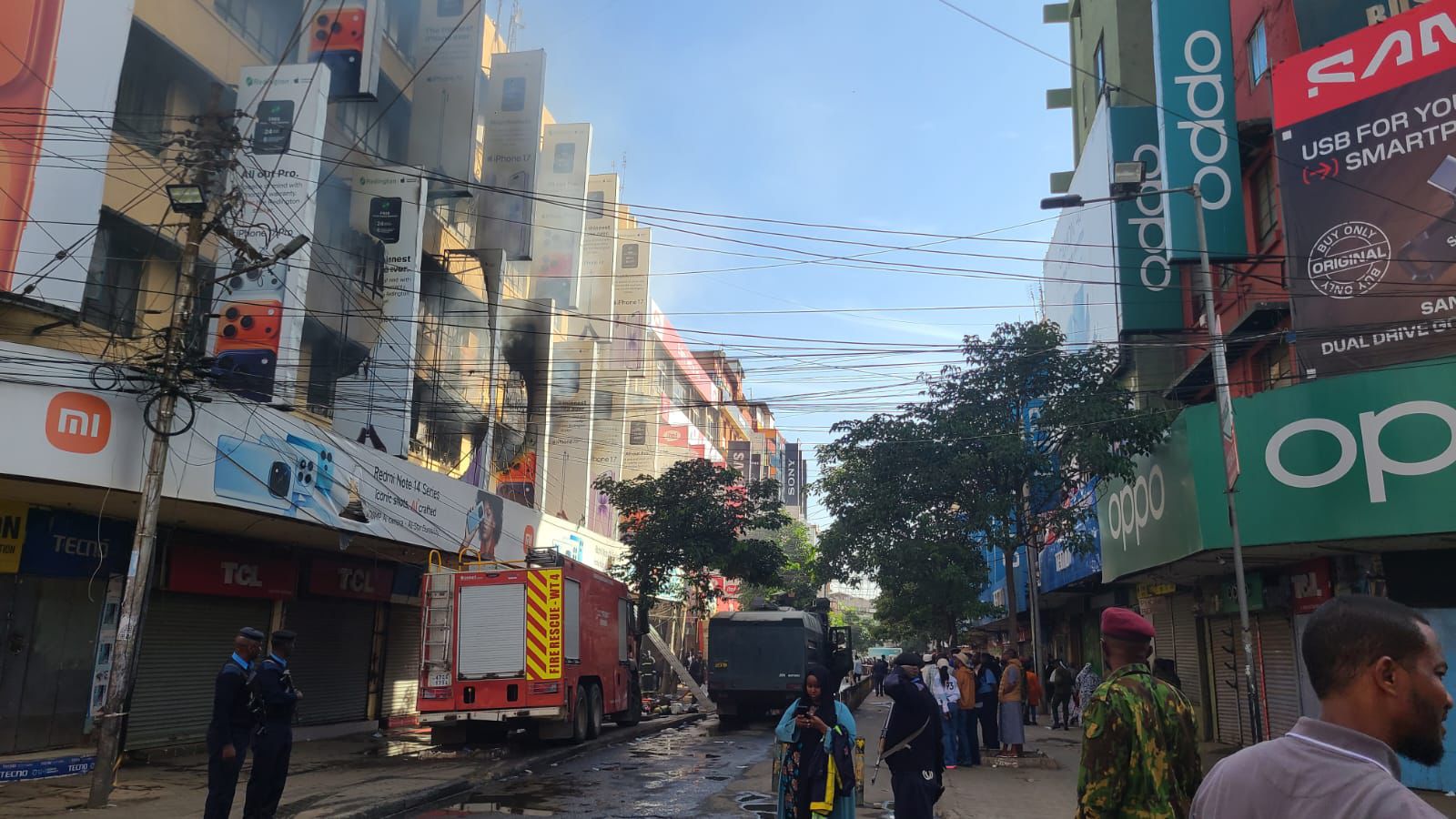
A devastating fire that engulfed Ramogi House on Luthuli Avenue last Tuesday evening, raging into the early hours of Wednesday, has once again exposed the vulnerabilities of Nairobi’s aging commercial buildings. While firefighters heroically contained the blaze to a single floor, the incident – sparked by welding activities amid stores brimming with flammable textiles and mobile phone batteries – underscored critical gaps in fire safety that demand immediate action.
Authorities confirmed the fire originated in a textile shop, fueled by highly combustible materials and toxic fumes from burning batteries. Nairobi County Assistant Director of Fire Services Wilson Wanjiru highlighted the operation’s greatest hurdle: the building’s design featuring only one exit, which trapped heat and smoke, severely hampering evacuation and firefighting efforts. “If you have one exit, there is humidity and a lot of heat – that’s a very big challenge,” Wanjiru noted, adding that delayed access to the ignition point further complicated the response.
Though no lives were lost and neighboring businesses managed to salvage goods, the blaze renewed alarming concerns about fire risks in the city’s densely packed trading hubs like Luthuli Avenue. With crowds attempting to loot exposed shops amid the chaos, the episode served as a stark reminder of how quickly disasters can escalate in Nairobi’s central business district.
Experts and officials agree: such tragedies are preventable with proactive reforms. Foremost among recommended changes is stricter enforcement of building codes to ensure multiple exits, improved ventilation, and emergency staircases in older structures. Retrofitting these buildings – perhaps incentivized through tax relief or low-interest loans – could address longstanding design flaws that turn minor incidents into major threats.
Equally critical is tighter regulation of high-risk activities. The welding that ignited the fire highlights the need for a mandatory “hot-work” permit system, requiring contractors to clear flammable items, maintain on-site extinguishers, and conduct work outside trading hours. Violations should carry steep penalties to deter unsafe practices in occupied premises.
 ADVERT
Storage of hazardous goods also warrants scrutiny. Limiting quantities of textiles, batteries, and electronics per shop, while mandating fire-resistant cabinets and segregated zones, could drastically reduce fuel for potential blazes. Routine inspections by county authorities would help enforce these standards.
On the prevention front, making automatic sprinklers, smoke detectors, fire alarms, and extinguishers compulsory – backed by regular maintenance checks – would provide vital early warnings and suppression. Clear emergency signage, illuminated exits, and annual fire drills for tenants could further empower occupants to respond effectively.
Broader systemic improvements are essential too. Enhancing the Nairobi Fire Brigade’s arsenal with specialized equipment for toxic environments and narrow streets, alongside better police coordination to manage crowds and prevent looting, would streamline future responses. In the long term, urban planners must rethink over-densification in high-risk areas, incorporating wider access roads and reliable hydrant networks.

The Ramogi House fire, while contained, echoes previous infernos in Gikomba and downtown Nairobi, revealing recurring patterns of non-compliance and oversight. Coordinated action from Nairobi City County, national regulators, building owners, and businesses is now imperative. By learning these hard lessons and implementing robust safeguards, the city can protect its vibrant commercial lifeblood – and, more importantly, the lives that depend on it.


