 ADVERT

 ADVERThttps://youtu.be/Sny2O4mVqxU?feature=shared
In mid-2025, Kenyan social media went into overdrive with a sensational claim: Bernard (or Benard) Ted Odote, a relatively low-profile entrepreneur from Siaya County, had allegedly been ranked by Forbes as Africa’s 23rd richest person, boasting a $1 billion net worth. The viral narrative crowned him Kenya’s first and only dollar billionaire and anointed him Nyanza’s undisputed richest individual.
Blog posts on platforms such as Who Owns Kenya (WOK) and TUKO.co.ke, amplified by WhatsApp forwards and X (formerly Twitter) threads, painted Odote—branded “The Thinking Rhino”—as the mastermind behind a vast empire spanning entertainment, procurement, agri-tech, renewable energy, scrap metal, and logistics.
It was a compelling story.
It was also completely false.
What followed was a textbook example of how Kenya’s weak information ecosystem can manufacture billionaires overnight—and how myths flourish where transparency fails.
The Forbes Claim: Entirely Fabricated
 ADVERT
At the heart of the saga lies a glaring falsehood. Forbes has never ranked Bernard Odote—nor any Kenyan—among Africa’s billionaires in 2025. The Forbes Africa Billionaires List, published early in the year and unchanged through year-end, contains no Kenyan names whatsoever.
Africa’s billionaire class remains dominated by familiar heavyweights: Aliko Dangote, Johann Rupert, Nassef Sawiris, and a handful of others from Nigeria, South Africa, and Egypt. Kenya has never produced a Forbes-certified dollar billionaire in modern rankings.
There is no entry for Bernard Odote, Benard Odote, or any variation thereof. The alleged $1 billion valuation and “23rd richest in Africa” ranking exist only within unverified blogs, SEO-driven clickbait, and social media echo chambers feeding off each other.
The Real Bernard Odote: Successful, Yes—Billionaire, No
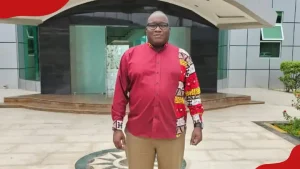
That said, Benard Odote is a real and legitimate entrepreneur—and an accomplished one.
A Kenyatta University graduate with MCIPS certification, Odote built his career in procurement and supply chain management, with stints at East African Breweries Limited (EABL) and Nestlé. He later founded ventures under the House of Procurement Group (HOP) and The Odote Group (TOG), focusing on port logistics, global sourcing, agri-tech (CropSoko), renewable energy (PowerCom Pawa), and asset disposal.
These are credible, niche businesses serving African markets.
What they are not is a billion-dollar conglomerate. Claims linking Odote to unrelated companies—such as Homeboyz Radio, owned by the Rabar family—are entirely baseless. The billionaire myth appears to be the product of recycled hype, strategic exaggeration, and traffic-chasing digital publishing.
So Who Really Holds Wealth Power in Nyanza?
Stripped of fantasy, Nyanza’s real wealth landscape in 2025 is far more complex—and far murkier.
There is no authoritative ranking of the region’s richest individuals. Kenyan wealth is famously opaque, buried in family trusts, offshore holdings, land banks, political networks, and proxy companies.
Since the advent of devolution in 2013, Nyanza—like many regions—has witnessed the rise of a quiet class of nouveau riche. While devolution promised grassroots empowerment, repeated Auditor-General and EACC reports have documented procurement fraud, inflated tenders, ghost projects, and questionable asset accumulation across several Nyanza counties.
These dynamics have minted sudden millionaires—and whispered billionaires—often protected by political power and institutional silence.
Compounding this is Nairobi’s notorious “wash-wash” underworld—slang for money laundering, fake currency syndicates, advance-fee fraud, and illicit financial schemes. Though not region-specific, a notable number of well-connected wheeler-dealers from Nyanza have been linked—directly or indirectly—to these high-risk networks operating in elite urban circles.
Frequently Cited Wealth Power Brokers in Nyanza
Within this opaque ecosystem, the following figures are often mentioned—informally and without verified net-worth figures:
The Raila Odinga Family Estate: The Odinga political dynasty commands strategic assets in energy, manufacturing, and real estate, including interests linked to Spectre International and Kisumu-based industrial ventures. While publicly understated, the family’s long political and commercial history fuels persistent estimates running into the hundreds of millions.
The Nyachae Family: The late Simeon Nyachae’s legacy through the Sansora Group spans manufacturing, agriculture, banking, and real estate—placing the family among the most enduring wealth holders linked to the broader Nyanza bloc.
Raphael Tuju: A Rarieda native and former Cabinet Secretary whose once-formidable media, hospitality, and Karen real estate empire ran into high-profile debt battles involving billions owed to regional banks.
Sammy Wakiaga: A discreet hospitality and transport magnate frequently topping informal “richest Luo” lists, with significant tourism and travel investments.
Edwin Ochieng’ Yinda: Former Alego-Usonga MP turned shipping, port logistics, and tea brokerage heavyweight, with interests spanning Venus Tea Brokers and Supply Linkages Ltd.
Evans Odhiambo Kidero: Former Nairobi Governor and ex-Mumias Sugar CEO, whose wealth—largely anchored in prime Nairobi real estate and corporate interests—has been the subject of EACC scrutiny over unexplained assets running into billions of shillings.
Evans Gor Semelang’o: A flamboyant and influential businessman with deep roots in Nyanza, Semelang’o controls diversified interests in petroleum, real estate, transport, media, and hospitality. His portfolio—spanning ventures such as oil marketing, luxury property, and entertainment—has long placed him among the region’s most talked-about private wealth holders, though exact figures remain undisclosed.
Evans Nyagaka Anyona: Founder of ENA Coach, one of Kenya’s largest long-distance bus companies, with a fleet exceeding 70 luxury buses and interests across the transport sector.
Edwin Ng’ong’a: Tourism magnate behind Centurion Safaris, leveraging Lake Victoria and regional tourism circuits.
Matiku Akedi: A low-profile Siaya-based businessman whose name surfaces periodically in local wealth conversations, though details remain largely private.
The Uncounted Billions: Governors, Proxies, and Political Wealth
Beyond named businessmen lies an even murkier layer: former and current governors in Nyanza whose wealth cannot be meaningfully quantified.
Across counties such as Kisumu, Siaya, Homa Bay, and Migori, governors wield enormous influence over multi-billion-shilling budgets. Investigators have repeatedly flagged patterns where wealth is accumulated through proxies, family members, politically connected firms, and tender networks, making direct attribution nearly impossible.
Nationally, the EACC has linked several governors to unexplained wealth running into billions of shillings, reinforcing long-held suspicions that devolved power has become one of Kenya’s most potent wealth-creation tools—for a select few.
Myths Thrive Where Transparency Fails
The Bernard Odote saga is not just a viral embarrassment—it is a warning.
It exposes how easily misinformation can distort public understanding, manufacture false heroes, and distract from the real, systemic drivers of inequality and elite enrichment.
Odote’s actual story is still worth telling: a disciplined professional building African supply chains through legitimate enterprise. But crowning him a Forbes billionaire does a disservice to truth—and to the public.
In Nyanza, as in the rest of Kenya, true wealth does not hide behind fake rankings. It thrives in opacity, political insulation, weak disclosure laws, and silence.
Until transparency becomes non-negotiable, fiction will continue to masquerade as fact, and the real beneficiaries of Kenya’s economy will remain shielded from scrutiny.
The richest person in Nyanza is not a viral myth. They are operating in plain sight—protected by the very system that allows such myths to flourish.