
Six senior Kenyan judges have filed a high-stakes lawsuit against Attorney General Dorcas Oduor, Treasury Principal Secretary Chris Kiptoo, and Solicitor General Shadrack Mose, accusing the state of openly defying a binding court order to pay them Sh124 million in damages.
The case, lodged today before Justice John Chigiti, claims the top officials have violated constitutional obligations under Article 47 and the Fair Administrative Action Act by failing — for nearly 18 months — to honour Justice Chacha Mwita’s October 2024 judgment.
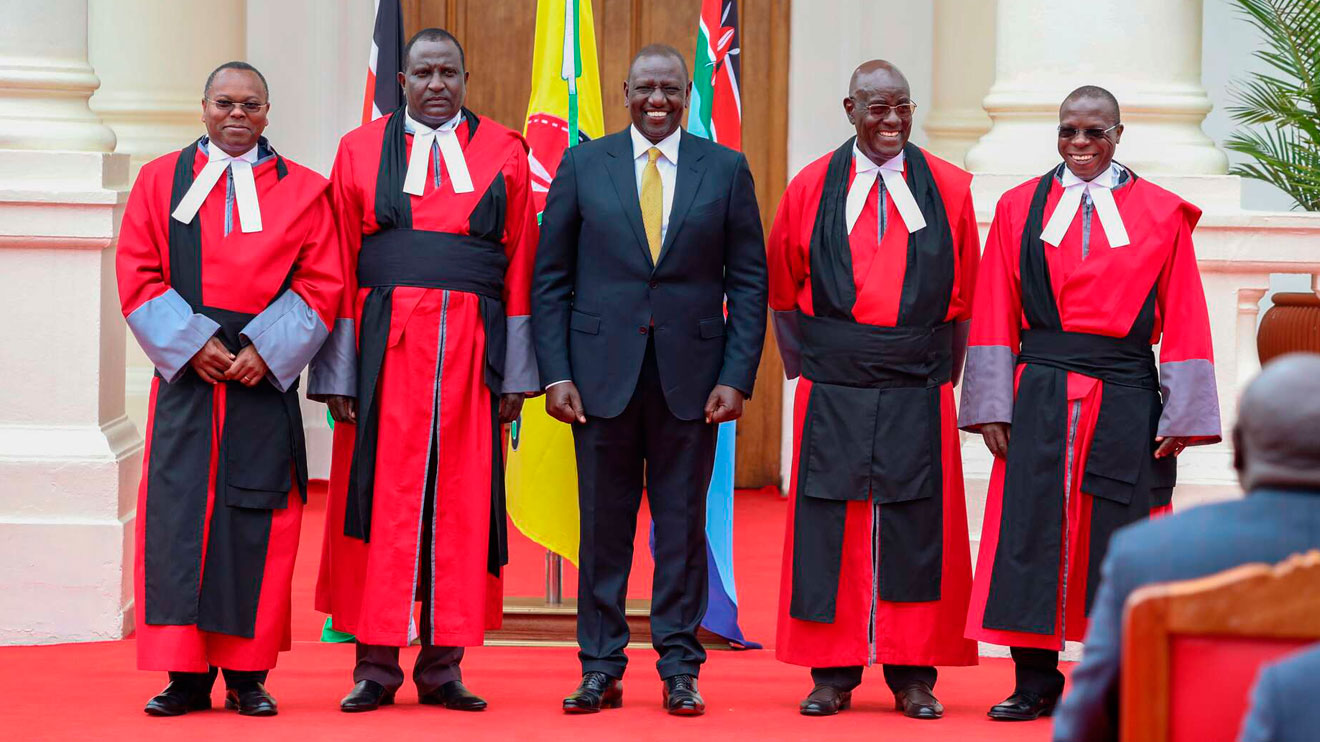
The petitioners are Court of Appeal Justices Aggrey Muchelule, Weldon Korir, Joel Ngugi, and George Odunga, together with Environment and Land Court Judges Evans Makori and Judy Omange. They are represented by prominent lawyer Elisha Ongoya.
Each judge was awarded Sh20 million in general damages plus a share of Sh4 million in global costs, totalling Sh124 million. The compensation is for the “public humiliation, loss of dignity, emotional distress and career stagnation” they suffered after the Judicial Service Commission recommended them for elevation in July and August 2019.
Former President Uhuru Kenyatta refused to gazette their appointments, publicly branding them “unfit” on the basis of undisclosed intelligence dossiers never presented to the JSC or the affected judges. The three-year impasse created a constitutional crisis, forcing the six to remain in lower judicial positions while junior colleagues were sworn in ahead of them.
It was only in September 2022, under President William Ruto, that the judges were finally appointed and sworn in — ending years of what the court later described as “unbridled impunity” and “manifest injustice.”
Justice Mwita’s landmark ruling declared the delay and public shaming unconstitutional. Despite repeated demands, notices of intention to sue since December 2024, and the clear terms of the decree, the National Treasury has released zero shillings to date.
“The respondents have failed, neglected and/or refused to discharge a clear constitutional and statutory duty to satisfy a valid and subsisting court decree,” Ongoya told the court.
“The continued refusal constitutes unreasonable, unfair and unlawful administrative action.”
In supporting affidavits, the judges detail profound personal and professional injury:
“Despite the clear findings and orders of the court, the former President persisted in his refusal… and continued making public pronouncements that the claimants were unfit to hold judicial office,” one sworn statement reads.
“To date, no official from any arm of government has approached my clients to tender even an apology, let alone payment,” Ongoya emphasized.
The suit arrives amid a national backlog of more than Sh233 billion in unsatisfied court awards against government entities. Observers warn that if sitting judges cannot compel the Executive to obey judicial orders, public confidence in the rule of law — already fragile — will suffer further damage.
The six are seeking urgent mandatory orders directing the AG, Treasury PS and Solicitor General to effect immediate payment of the decreed sum. Because state property cannot be attached or auctioned, they argue that direct judicial compulsion is the only effective remedy left.
Will the government finally honour the court’s judgment, or will this become another high-profile exhibit of selective compliance with the law?
Legal analysts say the outcome could set a critical precedent for the enforceability of court decrees against the state itself.
After years of public ridicule, stalled careers and broken judicial promises, these six judges are no longer waiting quietly. They are demanding justice — both in principle and in cash.