
 ADVERTISEMENT
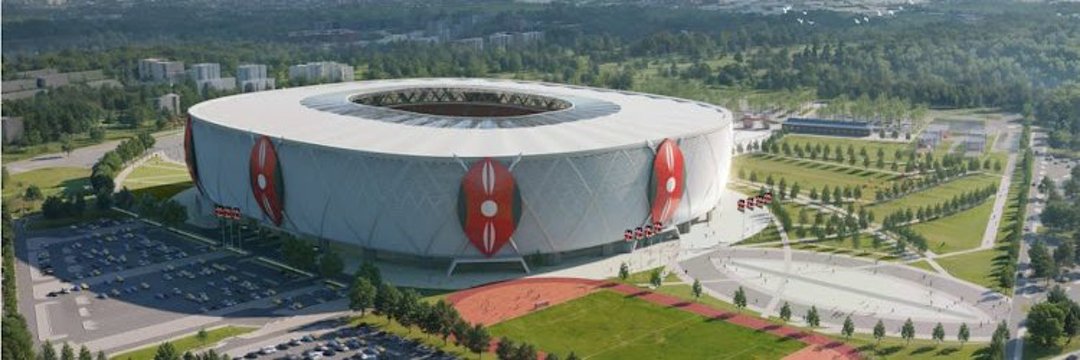
 Kenya’s skyline is being reshaped as the ultra-modern 60,000-seater Talanta Stadium — a cornerstone venue for the 2027 Africa Cup of Nations — races toward completion, marking a historic leap in the nation’s sporting infrastructure.
Construction crews have pushed the flagship project into the home stretch, with core structural work now reported at roughly two-thirds finished and tracking toward a late-2025 handover. Once complete, Talanta will stand among the largest and most advanced stadiums in East Africa, symbolizing Kenya’s ambition to become a leading hub for major continental and global events.
Nestled along Ngong Road’s Jamhuri Grounds, this purpose-built arena breaks from tradition by focusing exclusively on football and rugby — ditching the typical athletics track for an intimate, pitch-centric fan experience that meets stringent CAF and FIFA standards. Its sleek, fully covered design and cutting-edge infrastructure are expected to set new benchmarks for stadiums on the continent.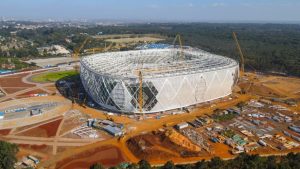
Beyond daily matchdays, Talanta’s versatility has been a priority for designers and planners. The venue is being equipped with world-class broadcast facilities, Video Assistant Referee (VAR) technology, goal-line systems, and hospitality suites, making it equally suited for high-profile concerts, cultural festivals, and national celebrations long after the final whistle.
The project forms the heart of a broader masterplan dubbed Talanta Sports City, which includes auxiliary fields, training pitches, and upgraded transport infrastructure — such as a dedicated railway link — to ensure seamless access and connectivity around the complex.
President William Ruto, who officiated the groundbreaking in March 2024, has touted Talanta as a legacy asset that will elevate Kenya’s sporting and creative economy while creating thousands of jobs during and after construction. Yet, the scale and cost of the project — financed through a landmark KSh44.7-billion infrastructure security listed on the Nairobi Securities Exchange — have sparked debate about long-term economic impact and public value.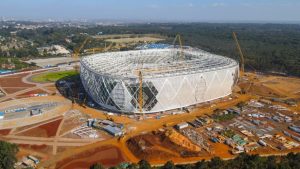

Adding a cultural layer to the conversation, Nairobi Governor Johnson Sakaja has championed a proposal to rename the facility “Raila Odinga International Stadium” in tribute to the late statesman, generating public excitement and renewed attention on the stadium’s national significance.
With less than a year to go before the projected completion date, anticipation is building among fans, athletes, and cultural creatives alike. As Kenya prepares to co-host the continent’s biggest football showpiece, Talanta Stadium promises not just to host matches — but to redefine the future of sports and entertainment in East Africa.


