
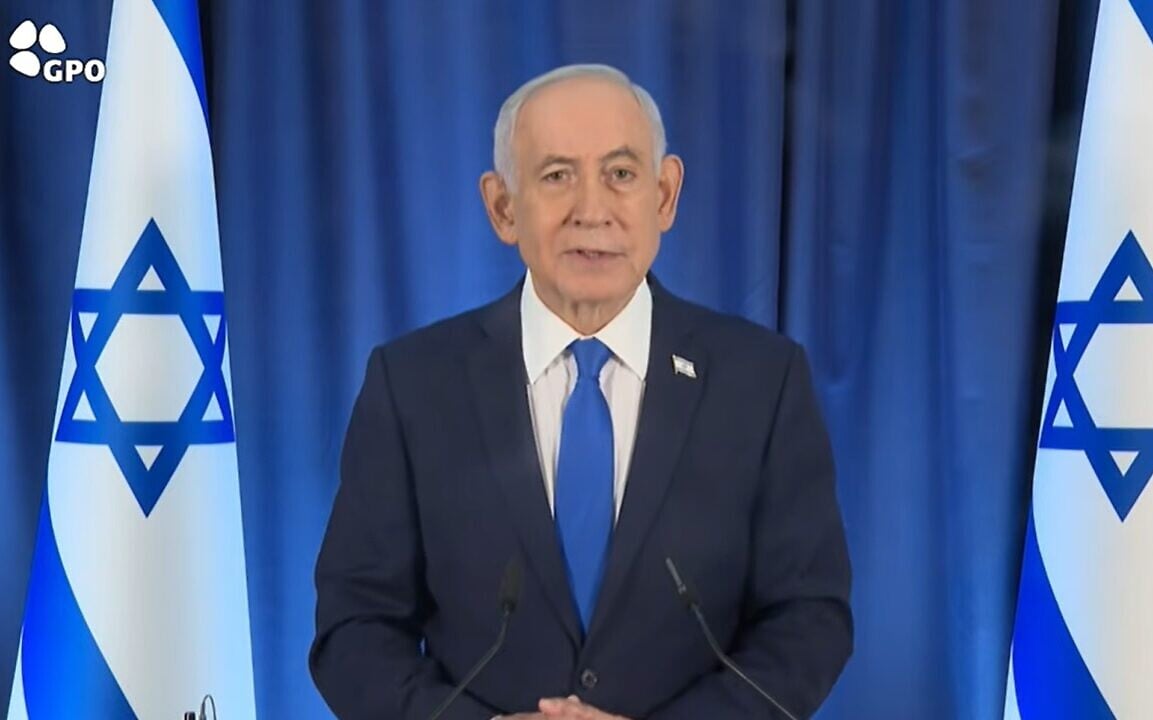
Israeli Prime Minister Benjamin Netanyahu has declared that Israel is “stronger than ever” as the country presses deeper into a widening war with Iran, delivering his first major public address since the conflict erupted nearly two weeks ago.
In a defiant press conference, the Israeli leader said sustained joint operations with the United States had inflicted significant damage on Iran’s military infrastructure and nuclear programme, while shifting the strategic balance of power in the Middle East.
Netanyahu said Israeli strikes had eliminated key nuclear scientists and dealt heavy blows to the powerful Islamic Revolutionary Guard Corps and the Basij paramilitary forces, two pillars of Iran’s security establishment.
“Iran is no longer the same Iran,” Netanyahu declared, arguing that the ongoing military campaign had disrupted Tehran’s efforts to shield sensitive nuclear and ballistic missile projects by moving them deeper underground.
The Israeli premier also directed sharp remarks at Iran’s newly installed supreme leader, Mojtaba Khamenei, whom he portrayed as heavily influenced by the Revolutionary Guards. However, Netanyahu stopped short of confirming whether Israel was considering targeting senior Iranian leaders or regional militant figures aligned with Tehran.
In an unusual appeal, he addressed the Iranian public directly, urging citizens to challenge their leadership and shape the future of their country.

“We are standing by your side,” Netanyahu said, suggesting that political change in Iran would ultimately have to come from within.
His remarks echoed earlier calls by former US president Donald Trump, who has repeatedly urged Iranians to rise up against their government amid the escalating conflict.
Netanyahu further claimed that the war had opened new doors for Israel diplomatically, hinting that several countries in the region were quietly strengthening ties with the Jewish state as tensions with Iran intensify.
“This would not have been possible in the past,” he said, adding that Israel was now forging strategic partnerships that could reshape the Middle East’s geopolitical landscape.
Yet the conflict continues to ripple across the region. Missile exchanges and air raids have raised fears of a wider confrontation that could draw in more countries and destabilize global energy markets.
Oil prices have surged above $100 a barrel as tensions threaten shipping through the strategic Strait of Hormuz, one of the world’s most critical oil transit routes.
Despite the confident tone of his remarks, Netanyahu acknowledged that the collapse of Iran’s leadership was far from certain, cautioning that any transformation in Tehran would ultimately depend on internal forces rather than foreign intervention.
For now, the Israeli prime minister insists the military campaign will continue with full force until its objectives are achieved — a signal that the war between Israel and Iran may be entering an even more decisive and unpredictable phase.


