
 ADVERTISEMENT
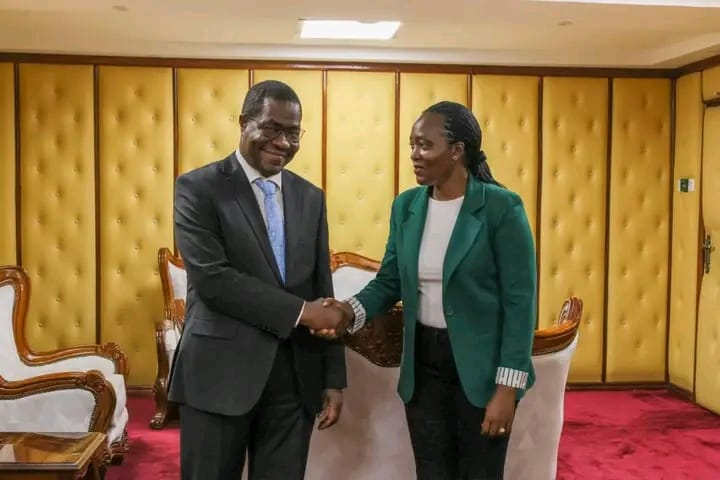
 Cabinet Secretary for Energy and Petroleum Opiyo Wandayi welcomed his Defence counterpart, Hon. Soipan Tuya, for a courtesy call at the KASNEB Offices earlier today, marking a pivotal moment in Kenya’s governance landscape. This encounter, steeped in a shared commitment to advancing national interests, transcends mere protocol; it signals a deliberate fusion of defence readiness and energy security, two pillars essential for Kenya’s stability amid evolving regional threats and global energy transitions.
In an era where energy shortages can cripple military operations and economic growth, their discussions on collaborating for sustainable energy solutions underscore a pragmatic recognition that no single ministry can safeguard the nation alone. Wandayi, with his firm grasp of petroleum dynamics and renewable potentials, and Tuya, embodying the vigilance of national defence, exemplified how inter ministerial dialogue can propel Kenya towards self reliance, ensuring that power grids remain resilient even as defence forces patrol borders under duress.
At the heart of this engagement lies the thematic imperative of policy alignment, a cornerstone for effective implementation of joint initiatives. Kenya’s energy sector, long confronted by structural vulnerabilities, now intersects directly with defence imperatives. The possibility that operational readiness could be constrained by energy instability illustrates why unified planning is indispensable. Wandayi’s leadership in advancing sustainable solutions aligns seamlessly with Tuya’s mandate to secure critical infrastructure, reinforcing the logic that energy planning must anticipate national security demands.
Their emphasis on regular consultations signals more than administrative courtesy. It reflects strategic foresight aimed at embedding cooperation within governance structures. By prioritizing continued collaboration, the two ministries lay the groundwork for integrated frameworks that treat energy not merely as a utility, but as a strategic national asset intertwined with defence preparedness.
This collaboration arrives at a defining moment as Kenya advances its broader aspirations for transformation and renewable expansion. While energy innovation strengthens economic prospects, its alignment with defence priorities elevates it to the realm of national resilience. The symbolism of meeting at KASNEB, a center associated with professional excellence and institutional discipline, reinforces the seriousness of the commitment to structured cooperation.
Discussions on joint initiatives point toward shared protection of critical infrastructure, coordinated policy execution, and long term planning that anticipates emerging risks. Such synergies speak directly to Kenya’s complex landscape, where climate pressures, geopolitical tensions, and internal security considerations demand a unified state response. Effective policy alignment becomes the bridge connecting sectoral ambition to national stability.

Beyond institutional corridors, the implications are far reaching. When energy systems are secured through coordinated defence planning, reliability improves, and national confidence deepens. Economic activity thrives in an environment where infrastructure is protected and supply chains are resilient. The thematic core remains clear: energy security and national defence are mutually reinforcing responsibilities that cannot operate in isolation.
Wandayi’s call for sustained consultations establishes a mechanism for continuity rather than episodic engagement. This structured partnership model strengthens governance by replacing fragmentation with coherence. It also signals an understanding that resilience is built through steady alignment, shared accountability, and disciplined execution of agreed priorities.
Ultimately, the meeting at KASNEB reaffirms a fundamental principle of statecraft: national progress depends on breaking institutional silos. By convening this engagement, Wandayi and Tuya have articulated a vision in which energy fuels defence capacity and defence safeguards energy infrastructure. The strength of this approach lies not in rhetoric but in deliberate policy synchronization anchored in national commitment.
In an unpredictable environment, such collaboration positions Kenya to safeguard its sovereignty and secure its development trajectory. The thematic message is unmistakable. Defence and energy must move in tandem, guided by aligned policy, sustained consultation, and unwavering dedication to the national interest.


