
 ADVERTISEMENT
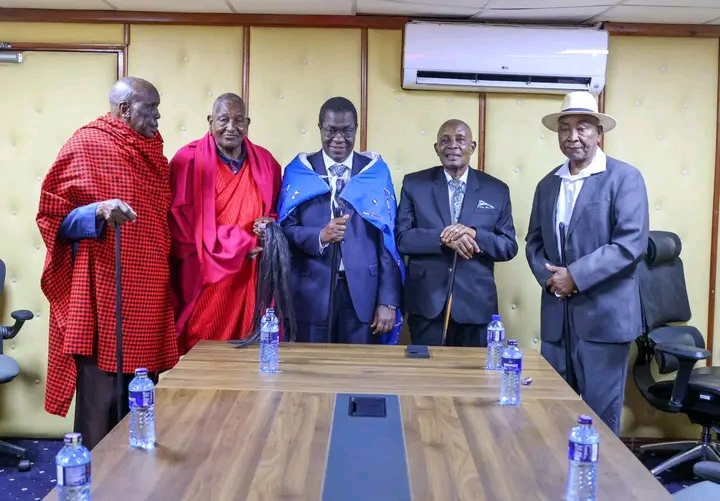
 Energy and Petroleum CS James Wandayi hosted a delegation of opinion leaders from Kajiado North Constituency at his office earlier today, appraising them on the Government of Kenya’s (GoK) transformative energy programs unfolding in their region and beyond. This was not mere protocol; it was a strategic bridge between national policy and local aspirations, convened in the bustling heart of Nairobi where governance meets ground realities. Under the banner of #PoweringTheNewKenya, Wandayi laid bare ambitious initiatives—from solar mini-grids to geothermal expansions—igniting a conversation that positions Kajiado North as a beacon of equitable progress in Kenya’s energy renaissance.
Kajiado North, with its vast arid expanses and tenacious pastoralist communities, has long battled energy scarcity. For years, families relied on dim kerosene flames and unreliable off-grid alternatives, stifling economic vitality despite the region’s immense, untapped solar potential. Wandayi’s briefing unveiled a targeted arsenal to reverse this history: the Kenya Off-Grid Solar Access Project (KOSAP) delivering last-mile connections to thousands of households, geothermal probes in the Rift Valley harnessing subterranean heat for steady baseload power, and resilient mini-grids designed to bypass outdated transmission infrastructure.
Crucially, concrete action is following policy rhetoric. Over 500 kilometers of new power lines are slated for Kajiado County, electrifying schools, health centers, markets, and small enterprises. The implications are transformative. Students can study under reliable LED lighting; solar-powered pumps can sustain drought-prone lands; women-led agro-enterprises can scale through refrigeration and cold storage. Wandayi anchored this vision in measurable outcomes, aligning it with Kenya’s commitment to achieve 100 percent electrification by 2030 and repositioning Kajiado North from the margins to the vanguard of sustainable energy deployment.
The meeting’s real strength lay in its people-centered approach. By engaging elders, youth advocates, and women representatives as opinion shapers, Wandayi elevated them from passive listeners to narrative architects. He fielded pointed questions on costs, timelines, and land access, forging trust through openness. In Kenya’s often polarized political landscape, this approach exemplifies inclusive leadership: a Cabinet Secretary demystifying megawatts, committing to dialogue, and equipping local influencers with tangible success stories.
From Olkaria’s 20-megawatt geothermal expansions to job-creating solar incentives and the Namanga trade corridor being prepared for electric mobility, the message was clear—energy is not merely infrastructure, but an economic catalyst. This was not a top-down directive. It was collaborative governance, tailoring national ambitions to arid-region realities such as drought-resilient irrigation, community charging hubs, and climate-smart livelihoods.
This outreach signals a decisive shift in Kenya’s energy paradigm, dismantling long-standing urban bias that historically sidelined regions like Kajiado. Anchored in President William Ruto’s Bottom-Up Economic Transformation Agenda (BETA), Wandayi highlighted how energy underpins dairy cold chains, digital innovation hubs, and climate resilience. The numbers reinforce the narrative: national electrification has risen from 50 percent in 2017 to approximately 75 percent today, with rural areas recording gains exceeding 20 percentage points.

Pilot projects in Kajiado have already reduced energy costs by up to 40 percent, while subsidized connection models are expanding access for low-income households. With renewables now accounting for nearly 90 percent of Kenya’s grid mix, the country continues to attract global climate finance and private investment. Wandayi did not shy away from challenges—land acquisition hurdles, project delays, and community concerns were addressed candidly. His commitments to local employment quotas and continuous public forums signal a governance style rooted in accountability.
The opinion leaders departed not as spectators, but as champions—prepared to mobilize communities, track implementation milestones, and leverage devolution for county-level revenue growth from energized markets and eco-tourism. Nationally, this approach narrows inequality, unlocking opportunities where youth can run digital enterprises from rangelands or deploy drone technology for livestock management on stable power networks.
Wandayi’s candor cuts through public cynicism, reframing obstacles as collective challenges rather than bureaucratic excuses. As these voices ripple outward across Kajiado North, the engagement affirms the essence of #PoweringTheNewKenya: urgent, inclusive, and forward-looking.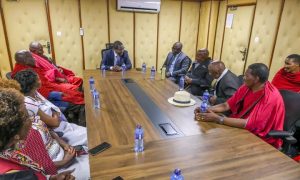
Kajiado North is no longer waiting in the dark. It is blazing a trail—demonstrating how energy, when deployed with equity and intent, becomes a catalyst for hope, prosperity, and national unity. Kenya’s new dawn is not abstract; it is being electrified, one connection at a time.
James’ Bwire Kilonzo is a Media and Communication Practitioner.


