
 ADVERTISEMENT
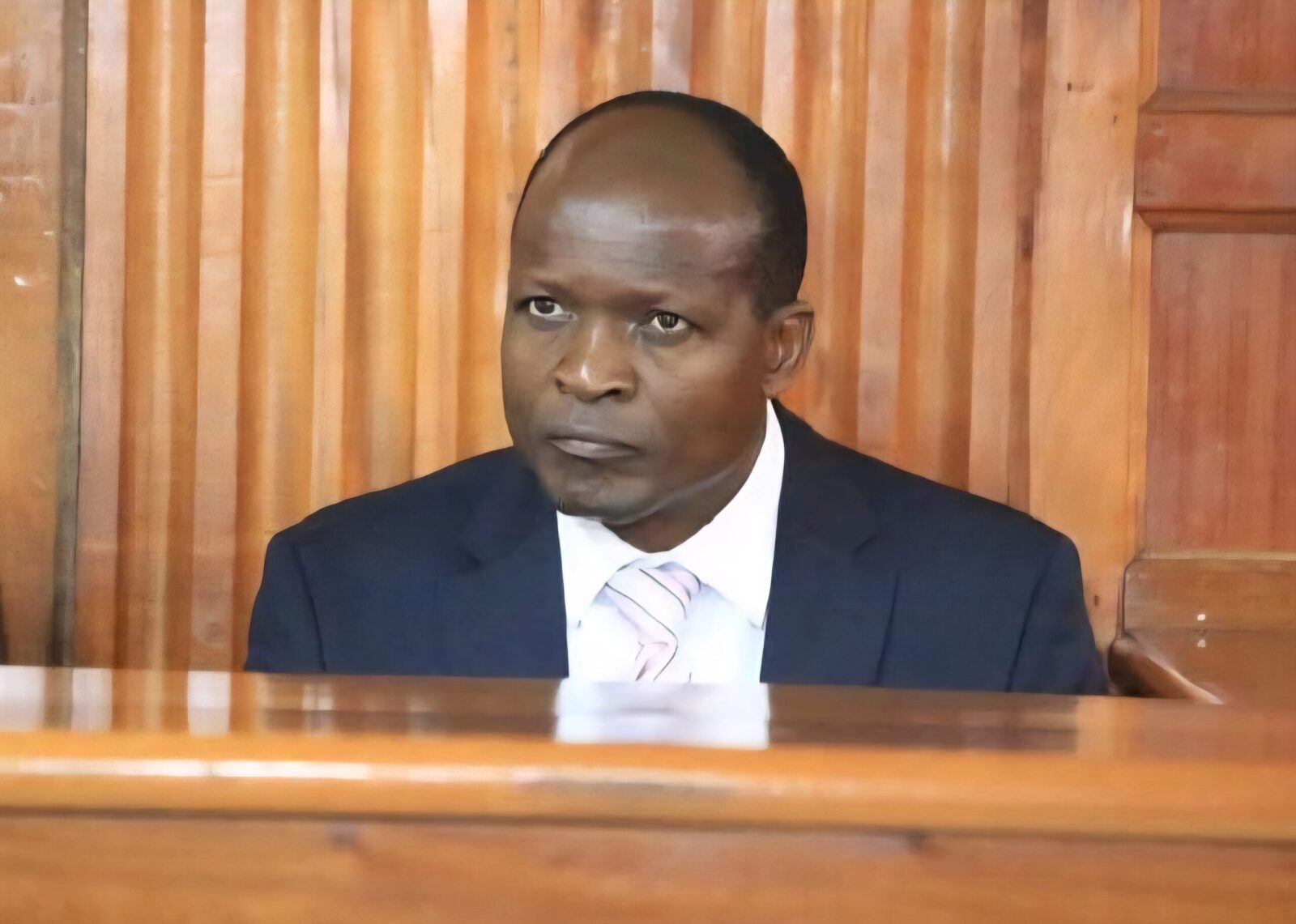
 Former Migori Governor Zacharia Okoth Obado has mounted a forceful last-ditch defence in the high-profile murder trial of university student Sharon Beryl Otieno, urging the High Court to acquit him for lack of evidence.
Through Senior Counsel Kioko Kilukumi, Obado told the court in final submissions that the prosecution had failed to establish any direct link between him and Sharon’s brutal killing, insisting the case rests purely on suspicion arising from their admitted intimate relationship.
“I did not kill Sharon,” the defence team declared, stressing that suspicion — however strong — cannot replace proof beyond reasonable doubt.
Sharon was murdered on the night of September 3–4, 2018, in a case that sent shockwaves across Kenya. Her body was later discovered near River Owade in Homa Bay County.
A postmortem revealed she died from severe haemorrhage caused by penetrating force trauma, with evidence of manual strangulation. She was approximately 28 weeks pregnant at the time of her death.
Obado is jointly charged with his former personal assistant Michael Juma Oyamo and former county clerk Caspal Ojwang Obiero. The trio faces a murder charge over Sharon’s death, which they have consistently denied.

In January 2025, the court acquitted them on a second count relating to the unborn child but ruled that they had a case to answer regarding Sharon’s killing.

While acknowledging a romantic relationship with Sharon, Obado conceded that DNA tests showed a 99.9 percent probability he fathered the unborn child. However, his lawyers argued that the affair was neither clandestine nor a motive for murder.
According to the defence, Obado had been financially supporting Sharon, including covering her upkeep and medical expenses. They further claimed the two had reached an amicable understanding and that Sharon had abandoned plans to expose their relationship to the media.
In a sharp critique of the prosecution, the defence team accused investigators of prematurely zeroing in on Obado because of the pregnancy while allegedly ignoring other possible suspects.
They pointed to threatening messages Sharon reportedly received from an unidentified woman, arguing that this lead was never thoroughly pursued.
“The prosecution has merely painted the 1st accused with the colours of suspicion,” the defence submitted, maintaining that the evidence on record falls short of the legal threshold required for a murder conviction.
The case — one of Kenya’s most closely watched murder trials — now awaits the court’s determination following the closing arguments.
With emotions still raw years after Sharon’s killing, the forthcoming judgment is expected to draw intense public scrutiny and could mark a defining moment in the long-running legal saga.


