
 ADVERTISEMENT
 The Kenya Meteorological Department (KMD) has moved swiftly to dispel alarm after a purported heatwave alert circulated widely on social media, clarifying that the message did not originate from the department and should be treated as misinformation.
In an official statement released on Monday, KMD cautioned the public against sharing unverified weather alerts, stressing that only advisories issued through its official and verified platforms should be considered accurate and reliable.
According to the department, the intense heat being felt across large parts of the country is seasonal and expected, not an extreme or abnormal heatwave. January, February and March are historically Kenya’s hottest months, based on long-term national temperature climatology.
“The elevated daytime temperatures currently being experienced are in line with normal seasonal patterns,” KMD explained, urging Kenyans not to misinterpret the conditions as a weather emergency.
KMD attributed the prevailing heat to predominantly sunny and dry conditions, which are typical at this time of year. Clear skies allow more solar radiation to reach the ground during the day, driving temperatures higher, especially in arid and semi-arid regions.
In its weather outlook for January 27 to February 2, 2026, the department forecasts continued sunny and dry conditions over most parts of the country. However, isolated light showers may occur in a few areas, including:

Highlands on both sides of the Rift Valley
Lake Victoria Basin
Parts of the Rift Valley
Coastal region
South-eastern lowlands
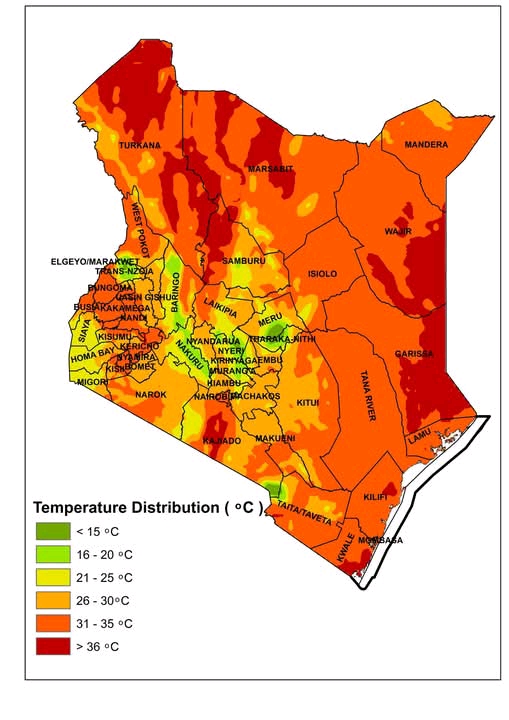
Average daytime temperatures above 30°C are expected in:
The Coast
North-eastern and North-western Kenya
South-eastern lowlands
Other regions such as parts of the Lake Victoria Basin, Rift Valley and Western Kenya will also experience relatively high daytime temperatures.
Interestingly, KMD noted a sharp contrast between day and night temperatures. Night-time lows below 10°C are anticipated in parts of the Central Highlands, North and Central Rift Valley, and areas near Mount Kilimanjaro, a common feature of this season.
The department reaffirmed that it is closely monitoring national weather patterns and will issue official alerts if conditions change.
Kenyans were once again urged to rely on credible, official sources for weather updates, warning that false alerts can trigger unnecessary panic and confusion.


