
By James Bwire
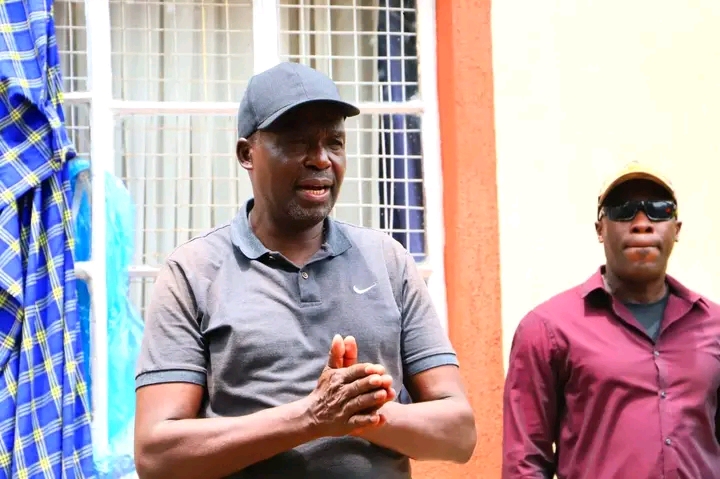
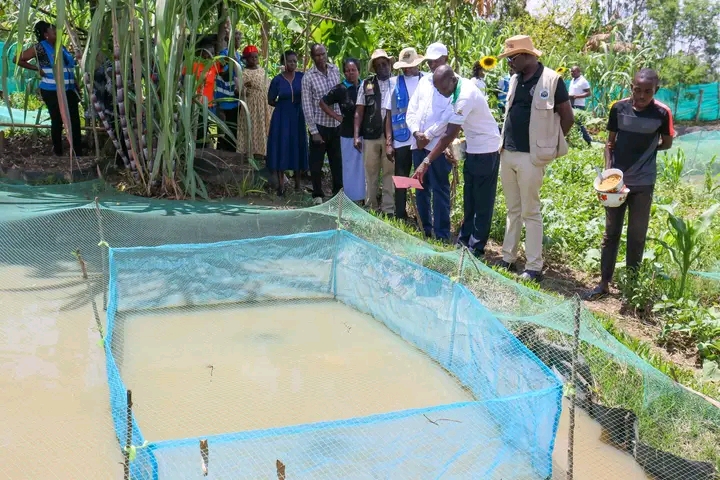
CECM Siaya County Sylvester K’Okoth oversaw monitoring efforts that spotlight a transformative shift in Siaya’s aquaculture landscape, where smallholder fish farmers are alchemizing modest grants into engines of enduring prosperity. Through the County Department of Agriculture’s Aquaculture Business Development Programme ABDP, groups across the county have secured targeted funding to launch Farmer Field Schools FFS, innovative hubs for hands on training, peer collaboration, and practical troubleshooting. Far from mere handouts, these investments represent a savvy devolved strategy, empowering farmers to tackle real world hurdles in a sector brimming with potential for food security, job creation, and rural revitalization. In Siaya, where water rich environments meet a legacy of fishing communities, this bottom up model is redefining agriculture, proving that strategic support ignites self sustaining progress.
Central to these schools is a pivotal experiment, rigorously comparing high end commercial fish feeds with cost effective local formulations. Commercial options accelerate growth but inflate expenses, often claiming 50 to 70 percent of total production costs, a crippling burden for resource strapped smallholders practicing intensive aquaculture. Guided by county extension experts, farmers are validating that well balanced homemade feeds, blending accessible ingredients like maize bran, cassava peels, and other agro byproducts, deliver comparable results at a fraction of the price. This is not theoretical, as shared trial data is spreading rapidly within communities, equipping farmers with practical knowledge to slash overheads while maintaining fish quality and environmental responsibility. These discoveries reinforce a broader lesson that innovation flourishes when farmers are empowered to test, measure, and refine solutions within their own production systems.
Diversification has emerged as an equally powerful strategy for resilience. Farmers are increasingly integrating fish farming with crop production, livestock keeping, and agroforestry to buffer against climate shocks and market volatility. This integrated approach aligns with the Long Rains Campaign 2026 component on Climate Smart Farming Systems, which promotes adaptive techniques that enhance productivity while protecting natural resources. Extension officers are going beyond technical training by guiding farmers to develop Vision Journeys, structured roadmaps that outline long term goals, performance benchmarks, and growth strategies. These plans map out everything from pond expansion and feed optimization to value addition and market penetration. By sharing these roadmaps openly, farmers are cultivating a culture of planning, transparency, and mutual accountability that strengthens entire communities rather than isolated enterprises.
Skeptics may question whether modest grants can truly alter the trajectory of rural livelihoods in the face of mounting agricultural challenges such as erratic rainfall, rising input costs, and youth migration from rural areas. Yet the evidence emerging from Siaya suggests that targeted support, when paired with structured learning, can produce exponential impact. The Farmer Field School model prioritizes experiential learning, ensuring that knowledge is internalized and applied rather than merely heard. Farmers are recording improved feed conversion ratios, higher survival rates, and measurable reductions in production costs. Savings generated from feed innovation are being reinvested into pond improvement, fingerling quality, and better management practices. The result is not just increased profitability but stronger business discipline and long term sustainability.
The broader economic implications are significant. Aquaculture holds enormous potential for counties like Siaya that are endowed with favorable water resources and a tradition of fishing. By strengthening local production systems, the county is contributing to improved household incomes, enhanced food security, and reduced pressure on capture fisheries. Women and youth are increasingly participating in aquaculture value chains, creating new avenues for employment and entrepreneurship. This grassroots transformation aligns with the national agenda of building a resilient, bottom up economy that empowers communities to drive their own development rather than depend solely on external interventions.
Leadership plays a critical role in sustaining this momentum. Through consistent monitoring, responsive extension services, and strategic program design, the county government is demonstrating that devolution can deliver tangible results when guided by vision and accountability. However, long term success will require continued investment in market linkages, quality assurance systems, and climate responsive planning. Strengthening cooperative structures, improving cold chain infrastructure, and embracing digital marketing platforms can help farmers secure better prices and stable demand. At the same time, maintaining feed quality standards will ensure that cost cutting does not compromise nutritional value or environmental sustainability.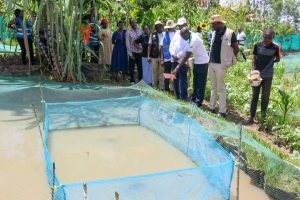
Ultimately, the story unfolding in Siaya is not simply about grants disbursed or ponds stocked. It is about a shift in mindset. Farmers are embracing experimentation, data driven decision making, and collaborative learning as foundations for progress. They are proving that modest financial injections, when matched with knowledge and collective vision, can unlock extraordinary outcomes. CECM Siaya County Sylvester K’Okoth’s oversight underscores a governance approach that values partnership with farmers rather than prescription from above. If nurtured and scaled thoughtfully, this model offers a powerful blueprint for transforming rural economies across the country.
In the end, farmers in Siaya are indeed turning grants into gold, not through luck or short term gains, but through disciplined innovation, diversification, and forward planning. Their journey affirms a timeless truth that sustainable development flourishes where empowerment, accountability, and local ingenuity intersect.
James’ Kilonzo Bwire is a Media and Communication Practitioner.