

 ADVERTISEMENT
 In the heart of Pidh Dero village, Kagwa sub-location, West Uyoma in Rarieda constituency, a quiet but powerful story of hope unfolded as Engineer Nicolas Gumbo joined members of Kagwa United Community-Based Organization (CBO) for a consultative engagement and education fundraiser. This was not a routine political courtesy call. It was a statement of intent—one that placed education, economic empowerment, and grassroots leadership at the centre of Siaya’s future.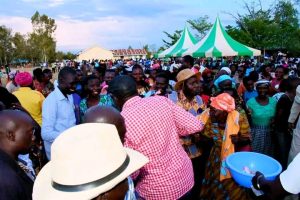
As a gubernatorial aspirant for Siaya County, Gumbo’s presence carried symbolism and substance in equal measure. At a time when poverty continues to deny many bright students the chance to pursue their dreams, the fundraiser aimed at sponsoring needy but gifted learners from the clan reflected a leadership philosophy anchored in action rather than slogans. In a county where talent is abundant but opportunity scarce, such initiatives underscore a simple truth: real governance begins at the grassroots.
Economic empowerment in Siaya cannot thrive on promises alone. It requires community-driven solutions that mobilize local strengths into sustainable outcomes. Kagwa United CBO embodies this spirit, turning collective effort into tangible results by prioritizing education sponsorship for deserving students.
During the engagement, Gumbo did not posture as a distant politician. He listened. Residents spoke candidly about soaring school fees, shrinking bursaries, and economic pressure driven by unpredictable agricultural yields. In response, Gumbo outlined practical, scalable models—microfinance linked to clan-based cooperatives, vocational training hubs, and youth skills development in agribusiness, renewable energy, and digital entrepreneurship.
His message was clear: empowered communities are the backbone of development.
Education remains the most powerful tool for social mobility, yet in Siaya it often feels like a privilege rather than a right. The Pidh Dero fundraiser exposed a painful reality—each year, promising students drop out of school, their potential buried under poverty.
Gumbo’s vision of a “strong, inclusive, and progressive Siaya” resonates deeply against this backdrop. Armed with engineering precision and public service experience, he proposes a reimagined education ecosystem: transparent, digital bursary systems; countywide scholarships based on merit and need; strategic partnerships with universities and technical institutions; and modern laboratories and workshops in public schools.
These are not abstract ideas. They are extensions of what CBOs like Kagwa United are already proving—community ownership drives accountability and lasting impact.
The engagement at Pidh Dero also laid bare systemic challenges facing Siaya: misallocated resources, elite capture of bursaries, and a growing youth population locked out of meaningful economic opportunity. West Uyoma, rich in fertile land and resilient people, should be a production hub—not a symbol of neglect.
Gumbo’s consultative leadership style favors dialogue over directives. He envisions fish-farming cooperatives in Uyoma linked to markets through county-supported cold chains, generating income that feeds directly back into education. His proposal for a dedicated youth and community empowerment desk within the governor’s office would formally integrate CBOs into county planning—potentially sponsoring thousands of students and reversing Siaya’s brain drain.
Skeptics may dismiss such engagements as campaign theatrics. But Gumbo’s track record suggests a different narrative. Engineers understand progress as a process—assess, design, implement, evaluate, and scale. His approach contrasts sharply with leadership models that surface only during election seasons.
With youth unemployment in Nyanza exceeding national averages, Gumbo’s solutions are grounded in urgency and practicality: vocational centres, green energy apprenticeships, climate-smart agriculture, and bursary reforms insulated from political patronage.
At Pidh Dero, stories of children studying in under-resourced schools while trekking long distances for water reinforced a central lesson—education cannot thrive in isolation. Gumbo’s integrated development agenda links learning with infrastructure, water access, roads, and economic opportunity.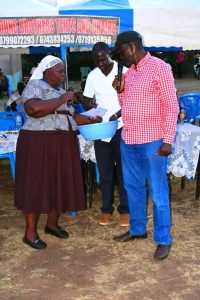
Building a progressive Siaya demands unity across clans, sub-locations, and constituencies. Kagwa United’s success proves that when communities rally around shared goals, transformative outcomes follow. Gumbo’s message was unequivocal: every child, regardless of background, deserves a fair chance.
As the 2027 elections approach, Siaya faces a defining choice—leaders embedded in community-driven development, or those who appear only when votes are at stake. Gumbo’s vision promises transparent systems, efficient resource use, and measurable impact defined by transformed lives, not headlines.
From Pidh Dero to every corner of Siaya County, the blueprint is taking shape. An educated, empowered youth population can drive innovation in agriculture, fisheries, renewable energy, and eco-tourism. In such a Siaya, young people stay, build, and lead at home.
The journey has begun. And for many in West Uyoma, hope is no longer theoretical—it is being funded, mentored, and built from the ground up.


