 ADVERT
 ADVERT
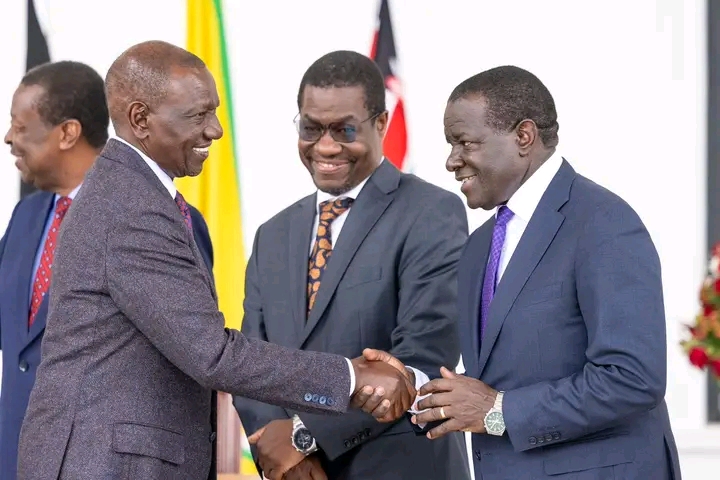
Cabinet Secretary Opiyo Wandayi was honoured to be at State House, Nairobi, to witness H.E. William Ruto assent to the Value Added Tax (Amendment) Bill, 2026. This event underscores a direct government action to address longstanding pressures in the energy sector. The bill targets the high costs that have burdened fuel prices at pumps across the country. By lowering these prices, the reform aims to ease the financial strain on everyday households and businesses that depend on affordable energy to function. Wandayi’s presence at the signing highlights the administration’s unified approach to implementing changes that prioritize public needs over persistent economic challenges.
The assent to this bill represents more than a procedural step; it signals a deliberate policy shift toward stabilizing the energy sector at its core. Kenya has long grappled with volatile energy costs that ripple through every layer of the economy. Households face higher expenses for cooking, heating, and transportation, while businesses struggle to maintain operations without passing on those costs to consumers. This amendment directly confronts those issues by adjusting the tax structure on value added components in the energy supply chain. President Ruto’s decision to sign it into law demonstrates leadership focused on immediate relief, ensuring that energy remains accessible rather than a barrier to daily life. Cabinet Secretary Wandayi, as the head of Energy and Petroleum, embodies this commitment by standing witness to a reform that aligns ministry goals with national priorities.
Intertwining this news with broader implications reveals how the bill reinforces the government’s pledge to deliver affordable energy. Affordable energy is not a luxury but a foundation for household stability. Families rely on it for basic needs, and any escalation in costs disrupts budgets and planning. Businesses, from small traders to larger enterprises, need predictable energy pricing to invest, expand, and hire. The amendment cushions these groups by reducing the tax burden that has previously amplified pump prices. This move acknowledges that energy affordability directly supports economic participation for all Kenyans, preventing exclusion from essential services. Wandayi’s honour in attending the signing event emphasizes the Energy and Petroleum ministry’s role in championing such protections.
Reliability in energy supply emerges as another key theme strengthened by this reform. Unstable prices have historically led to inconsistent access, forcing households and businesses to ration usage or seek unreliable alternatives. The VAT amendment stabilizes the sector by creating a more predictable pricing environment, which encourages consistent supply chains. President Ruto’s assent ensures that fuel reaches pumps without excessive markups, benefiting transport networks that connect rural and urban areas. For households, this means dependable energy for daily routines; for businesses, it supports uninterrupted production. Wandayi’s involvement signals that the ministry will oversee implementation to maintain this reliability, turning policy into tangible outcomes.
Sustainable energy access for all Kenyans forms the overarching commitment woven into this bill. Sustainability here means building a system where energy is not only affordable and reliable but also enduring for future needs. The reform addresses immediate cost pressures while laying groundwork for long term sector health. Households gain from lower prices that allow better resource allocation, fostering stability that extends beyond energy to overall well-being. Businesses benefit by redirecting savings into growth, contributing to national development. President Ruto’s action, witnessed by Wandayi, positions the government as proactive in fulfilling promises of equitable energy provision. This bill moves Kenya closer to a reality where no citizen is left behind due to energy barriers.
 ADVERT
The interplay between this news event and its policy essence highlights a government responsive to public demands. Cabinet Secretary Wandayi’s presence at State House was no mere formality; it represented the Energy and Petroleum docket’s alignment with executive vision. The VAT amendment counters rising costs that have squeezed households and stalled businesses, directly intervening in pump price dynamics. By prioritizing stabilization, the reform ensures energy serves as an enabler rather than a hindrance. This commitment to affordability, reliability, and sustainability resonates with Kenyans who expect government to act decisively on essential services.
Looking at the bigger picture, President Ruto’s signing elevates energy policy as a cornerstone of national progress. Households cushioned from high costs can focus on education, health, and savings. Businesses stabilized in their energy expenses drive employment and innovation. Wandayi’s role underscores the ministry’s dedication to translating legislation into sector wide improvements. The bill’s passage marks a pivotal reform that binds immediate relief with sustained access, fulfilling the mandate of energy for all.
In essence, this landmark assent by H.E. William Ruto, with Cabinet Secretary Opiyo Wandayi in attendance, advances Kenya’s energy agenda. It stabilizes the sector through targeted tax adjustments, cushions households and businesses from cost escalations, and upholds the promise of affordable, reliable, sustainable energy. Such steps build trust in governance and pave the way for broader economic resilience.
James’ Kilonzo Bwire is a Media and Communication Practitioner.



