 ADVERT
 ADVERT
Samuel Onunga Atandi has been the exception in a constituency known for its unforgiving electoral cycle. In Alego-Usonga Constituency—where incumbents routinely served just one term—Atandi defied the odds, securing a rare second mandate and cementing his status as a political force.
But today, that once-solid political capital appears to be eroding, replaced by a growing chorus of discontent from the very electorate that propelled him to Parliament.
Atandi’s political journey especially in the last election circle painted the picture of a resilient outsider. After falling out with party power brokers in Orange Democratic Movement (ODM) Party, he successfully challenged his exclusion through the Inter-Parties Disputes Tribunal—an act that endeared him to voters who viewed him as independent-minded.
His re-election reinforced the perception of a leader accountable to the people rather than party elites. Expectations were high: constituents anticipated development-focused leadership anchored in local needs.
However, cracks began to show in 2024 during an NG-CDF bursary event at Sidok Primary School in West Alego. There, Atandi publicly floated his gubernatorial ambitions—remarks widely interpreted as a direct challenge to then ostracized Deputy Governor William Oduol Denge.
 ADVERT
At the time, Atandi was still aligned with Siaya Governor James Orengo, making the declaration politically intricate. Analysts suggest it marked the beginning of a perceived shift—from constituency service to personal ambition.
By 2025, relations between Atandi and Governor Orengo had soured dramatically. Speaking at a funeral in Hawinga, Atandi labeled Orengo’s leadership a failure and publicly endorsed William Oduol Denge as a preferred successor—remarks interpreted by critics as premature and destabilizing.
Soon after, Atandi found political alignment with James Opiyo Wandayi, and the attacks on Orengo intensified, often delivered in highly public community forums such as funerals and harambees.
Then came the Broadbased government arrangement and Atandi’s fortunes at the national level appeared to soar when he was appointed Chair of the powerful Budget and Appropriations Committee in the National Assembly—a position that elevated his profile within Kenya’s broader political landscape.
Yet back home, critics argue, this ascent coincided with growing detachment from grassroots concerns.
His claims that Governor Orengo had expelled a campus of Jaramogi Oginga Odinga University of Science and Technology from the FTC compound sparked public outrage. However, an official clarification from the county government attributed the dispute to contractual issues, not political interference.
The controversy fizzled, and a planned mass demonstration against Orengo—initially championed by Atandi—never materialized. For many constituents, it raised questions about judgment and credibility.
Compounding these tensions were perceptions of extravagance. Regular helicopter arrivals at his rural Malanga home and an increasingly visible affluent lifestyle have drawn criticism in a region where economic challenges remain acute.
“Leadership is about priorities,” said a local civil society observer. “The optics matter, especially when people are struggling.”
More recently, allegations have emerged that Atandi’s political machinery is targeting voter registration beyond his constituency borders—in areas such as Gem and Budalangi. Reports of mobilization efforts near registration centers like Nyadorera and Ngiya have sparked debate about the ethics and legality of such outreach.
While no formal violations have been confirmed, the claims have added to the perception of political overreach.
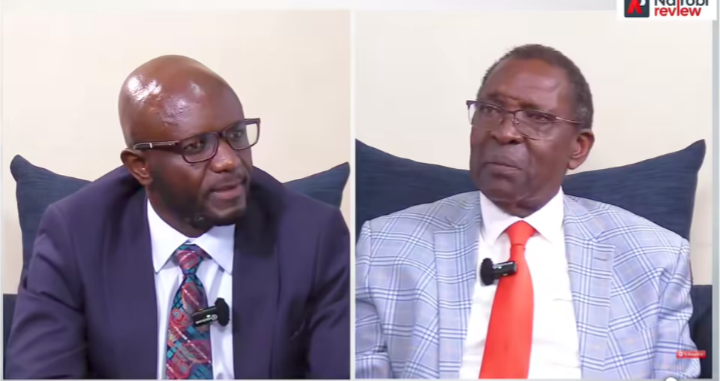
Perhaps the most damning public test of Atandi’s political instincts came ahead of the Linda Mwananchi rally in Kisumu. In a televised discussion with political analyst Herman Manyora, Atandi confidently predicted the rally would not take place—going further to allude to alleged insider knowledge on why the rally would not materialize.
The rally proceeded nonetheless, drawing large crowds and strong support for Governor James Orengo. Nairobi MP Babu Owino had earlier vowed resistance against any disruption attempts, making reference to his acumen in organizing goon activity. He was vindicated when the anticipated goon disruption was fore-stalled.
For observers, the episode underscored a growing disconnect between Atandi’s political assessments and on-the-ground realities.
Among newly registered voters, sentiment appears to be shifting.
A first-time voter from Nyadorera, who requested anonymity, expressed frustration: “I just registered and I’m excited to be voting for the first time in 2027. I received KES 200 from Mheshimiwa Atandi for registering but I already know I’ll support whoever runs against him.”
While anecdotal, such views echo a broader narrative of disillusionment circulating across sections of Alego-Usonga.
Despite the mounting criticism, it would be premature to write off Atandi’s political future. Incumbency, national influence, and established networks still offer significant advantages.
However, the road to a third term—once seen as assured—now appears increasingly uncertain.
The story of Samuel Onunga Atandi is evolving into a cautionary tale of political momentum tested by ambition, perception, and shifting public expectations. Whether he recalibrates or doubles down may determine not only his own future, but also the political direction of Alego-Usonga Constituency in the years ahead.



