 ADVERT
 ADVERT
Members of Parliament have put the (KETRACO) on the spot over a Sh75.6 million variance in its financial statements and a Sh2.3 billion backlog in unpaid wayleave compensation to landowners.
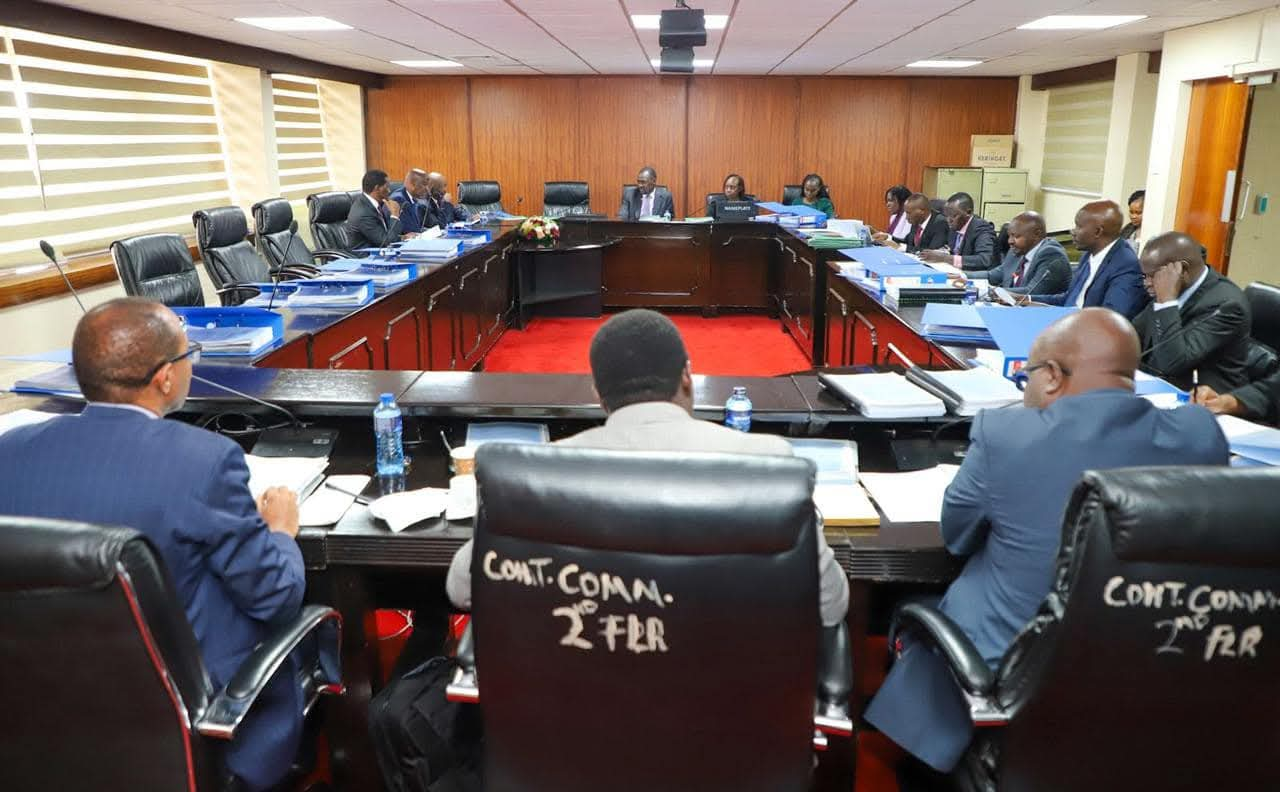
The tough questions were fired during a session of the Public Investment Committee on Commercial Affairs and Energy, chaired by Pokot South MP , as lawmakers examined the corporation’s audited accounts for the 2021/2022 financial year.
At the centre of the storm is a discrepancy between KETRACO’s books and those of the (KPLC). KETRACO reported outstanding balances of Sh4.64 billion for services rendered to KPLC, while KPLC’s records reflected Sh4.57 billion — leaving a Sh75.6 million gap.
Auditors further raised concern over the absence of a formal payment plan from KPLC as of the close of the financial year under review, casting doubt on the full recoverability of the debt.
Appearing before the committee, Acting Managing Director Eng. attributed the variance to withholding tax timing differences.
 ADVERT
“The Sh75.6 million difference relates to withholding tax on invoices processed by KPLC but not yet reconciled in our books at the time,” he explained.
According to Kibias, KPLC deducts and remits withholding tax to the before issuing certificates to KETRACO for reconciliation. He added that KPLC remitted Sh47.8 billion during the 2021/2022 financial year, including payments for pending invoices, and that receivables have since reduced to Sh2.3 billion as of February 2026.
Nyeri Town MP pressed management on the issue, seeking clarity on who ultimately bears responsibility for the withholding tax payments. Kibias maintained that KPLC, as the tax agent, deducts and remits the tax on KETRACO’s behalf before issuing the relevant certificates.
Beyond the accounting variance, lawmakers expressed deeper concern over Sh2.3 billion owed to landowners for wayleave compensation — payments made to property owners whose land is traversed by high-voltage transmission lines.
Management attributed the delays to inadequate budgetary allocations from the National Treasury, prolonged negotiations with landowners, incomplete documentation and ongoing court disputes over land ownership. However, auditors warned that delayed compensation exposes the corporation to legal suits, escalating costs and project implementation delays, noting that the accuracy and completeness of the pending balances could not be fully confirmed.
Kibias revealed that liabilities are largely project-based, with the Olkaria–Lessos–Kisumu transmission line carrying the largest outstanding amount at about Sh1.4 billion, particularly in Western Kenya where most wayleaves involve private landowners with title deeds.
Kaloleni MP sought details on the number of unresolved cases, while veteran lawmaker questioned the rationale behind delayed compensation.
“Why compensate at all if, five or six years down the line, landowners still cannot fully utilize their land?” Kiunjuri asked, arguing that transmission lines create long-term encumbrances that lock wananchi out of meaningful land use.
In his closing remarks, Kibias outlined ongoing projects aimed at stabilizing the country’s power supply, including the completion of an underground cable project in Nanyuki to support Rumuruti and Samburu County, and progress on the Isiolo–Nanyuki interconnector line expected to provide Meru and Isiolo counties with dual power sources. He also pledged to commission a long-delayed substation within the current financial year. 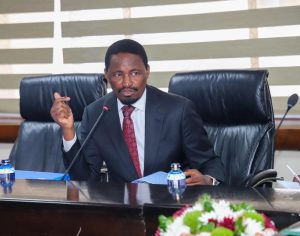
Vice-Chairman Hon. urged the agency to fast-track critical transmission projects to address persistent power shortages across the country.
The grilling underscores growing parliamentary pressure on state corporations to tighten financial controls and resolve compensation disputes even as Kenya pushes to expand and modernize its electricity transmission infrastructure.


