

• Thu. Oct 22nd, 2026
ADVERT

Sh75.6 Million Query, Sh2.3 Billion Wayleave Debt: MPs Turn Heat on KETRACO

ByEditor

Feb 25, 2026
ADVERT
ADVERT

Members of Parliament have put the (KETRACO) on the spot over a Sh75.6 million variance in its financial statements and a Sh2.3 billion backlog in unpaid wayleave compensation to landowners.

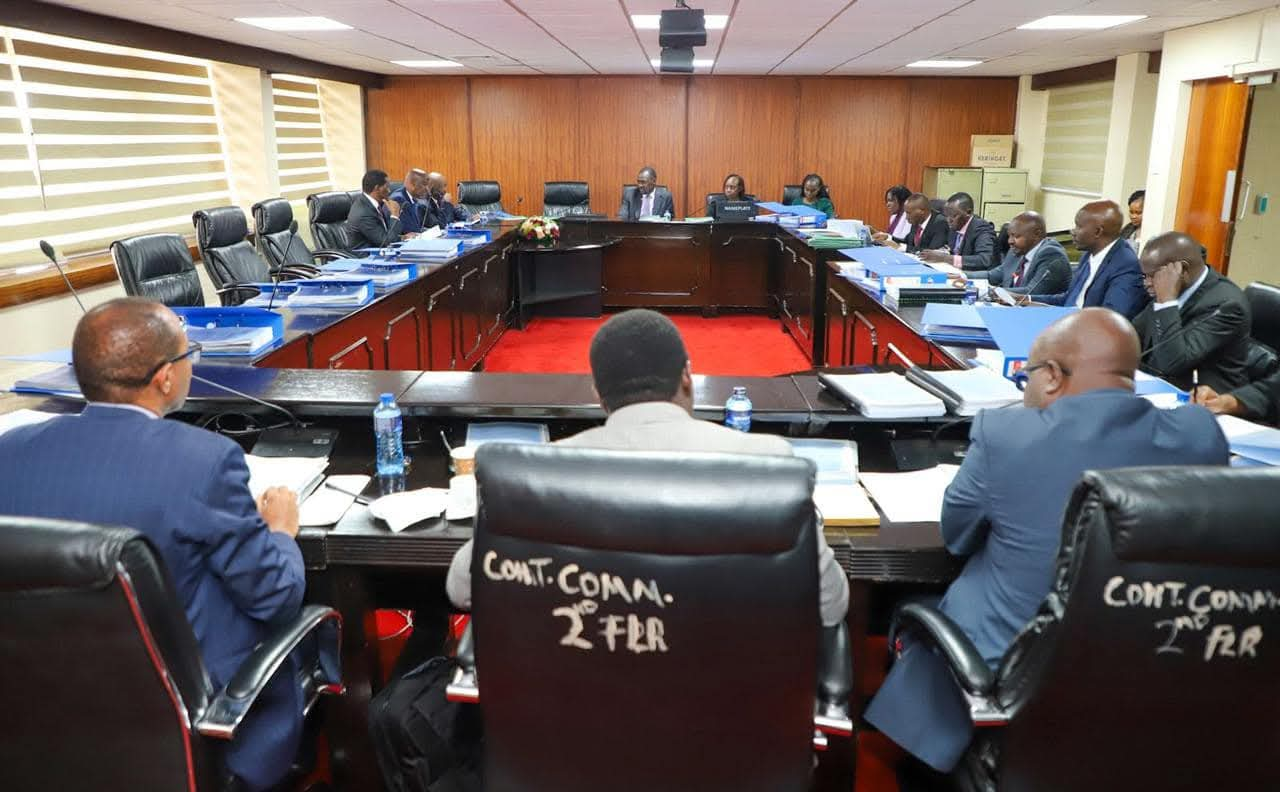
The tough questions were fired during a session of the Public Investment Committee on Commercial Affairs and Energy, chaired by Pokot South MP , as lawmakers examined the corporation’s audited accounts for the 2021/2022 financial year.

At the centre of the storm is a discrepancy between KETRACO’s books and those of the (KPLC). KETRACO reported outstanding balances of Sh4.64 billion for services rendered to KPLC, while KPLC’s records reflected Sh4.57 billion — leaving a Sh75.6 million gap.

Auditors further raised concern over the absence of a formal payment plan from KPLC as of the close of the financial year under review, casting doubt on the full recoverability of the debt.

Appearing before the committee, Acting Managing Director Eng. attributed the variance to withholding tax timing differences.

ADVERT

“The Sh75.6 million difference relates to withholding tax on invoices processed by KPLC but not yet reconciled in our books at the time,” he explained.

According to Kibias, KPLC deducts and remits withholding tax to the before issuing certificates to KETRACO for reconciliation. He added that KPLC remitted Sh47.8 billion during the 2021/2022 financial year, including payments for pending invoices, and that receivables have since reduced to Sh2.3 billion as of February 2026.

Nyeri Town MP pressed management on the issue, seeking clarity on who ultimately bears responsibility for the withholding tax payments. Kibias maintained that KPLC, as the tax agent, deducts and remits the tax on KETRACO’s behalf before issuing the relevant certificates.

Beyond the accounting variance, lawmakers expressed deeper concern over Sh2.3 billion owed to landowners for wayleave compensation — payments made to property owners whose land is traversed by high-voltage transmission lines.

Management attributed the delays to inadequate budgetary allocations from the National Treasury, prolonged negotiations with landowners, incomplete documentation and ongoing court disputes over land ownership. However, auditors warned that delayed compensation exposes the corporation to legal suits, escalating costs and project implementation delays, noting that the accuracy and completeness of the pending balances could not be fully confirmed.

Kibias revealed that liabilities are largely project-based, with the Olkaria–Lessos–Kisumu transmission line carrying the largest outstanding amount at about Sh1.4 billion, particularly in Western Kenya where most wayleaves involve private landowners with title deeds.

Kaloleni MP sought details on the number of unresolved cases, while veteran lawmaker questioned the rationale behind delayed compensation.

“Why compensate at all if, five or six years down the line, landowners still cannot fully utilize their land?” Kiunjuri asked, arguing that transmission lines create long-term encumbrances that lock wananchi out of meaningful land use.

In his closing remarks, Kibias outlined ongoing projects aimed at stabilizing the country’s power supply, including the completion of an underground cable project in Nanyuki to support Rumuruti and Samburu County, and progress on the Isiolo–Nanyuki interconnector line expected to provide Meru and Isiolo counties with dual power sources. He also pledged to commission a long-delayed substation within the current financial year. 

Vice-Chairman Hon. urged the agency to fast-track critical transmission projects to address persistent power shortages across the country.

The grilling underscores growing parliamentary pressure on state corporations to tighten financial controls and resolve compensation disputes even as Kenya pushes to expand and modernize its electricity transmission infrastructure.

ALSO READ

Ne-Yo Lights Up Nairobi as Stanbic Bank’s Mashujaa Day Concert Draws 3,500 Fans Grammy-winning R&B superstar headlines ‘One Night Only: Brunch Edition’ at Ulinzi Sports Complex as Stanbic Bank backs Kenya’s creative economy and local enterprise NAIROBI, October 21, 2026 — Nairobi’s entertainment scene came alive on Mashujaa Day as approximately 3,500 music fans gathered at Ulinzi Sports Complex for One Night Only: Brunch Edition with Ne-Yo, a premium live-music experience title-sponsored by Stanbic Bank. The concert, held on Tuesday, October 20, delivered an afternoon of live performances, music and networking, bringing together Kenyan and international talent for a celebration that blended world-class entertainment with opportunities for the country’s growing creative economy. Performances began at 3:30 pm and concluded shortly after 8:00 pm, maintaining the event’s signature daytime brunch format while giving fans an opportunity to experience some of the biggest names on the lineup before nightfall. Kenyan musician Mutoriah opened the show with an energetic set, setting the pace for the afternoon. UK-based band Sol and the Gang followed with a vibrant performance before three-time Grammy Award-winning American R&B star Ne-Yo took centre stage to close the concert in style. Top Kenyan DJs kept the predominantly millennial audience entertained throughout the event, sustaining the energy between performances and reinforcing Nairobi’s growing appetite for curated, premium music experiences. Stanbic Bank puts creative economy in the spotlight Beyond the music, the concert highlighted the commercial opportunities generated by Kenya’s live-entertainment industry, with Stanbic Bank positioning its sponsorship as an investment in the wider creative ecosystem. The production created business opportunities across multiple segments of the value chain, including artists, sound engineers, stage and technical crews, production specialists, hospitality providers, security personnel, vendors and micro- and small enterprises. For an industry that relies heavily on collaboration among creative professionals and service providers, events of this scale can stimulate local demand, support livelihoods and open new commercial opportunities for businesses operating behind the scenes. Michael Mutiga, Chief Executive of Stanbic Bank Kenya and South Sudan, said the concert demonstrated how large-scale entertainment can combine audience appeal with tangible economic activity. “Yesterday was a powerful demonstration of what happens when world-class entertainment meets meaningful local economic impact,” Mutiga said. He noted that bringing more than 3,000 fans together went beyond the performances on stage, generating business for artists, technical teams, vendors, hospitality partners and small enterprises involved in delivering the event. “Kenya’s creative sector is a dynamic driver of growth, and Stanbic Bank remains committed to strengthening this ecosystem, raising its commercial profile, and supporting the livelihoods anchored in it,” he added. Creative industry contributes 5.32% of Kenya’s GDP The sponsorship comes against the backdrop of the creative economy’s contribution to employment, enterprise development and national output. A 2021 report by the World Intellectual Property Organization (WIPO) and the Kenya Copyright Board (KECOBO) placed the creative industry’s contribution to Kenya’s gross domestic product at 5.32%, while estimating that the sector provided formal employment for approximately 195,000 people. The industry also supports livelihoods across the informal economy, including performers, independent producers, event organisers, designers, content creators, technicians and small businesses that supply goods and services to entertainment productions. Stanbic Bank’s approach underscores the potential of cultural events to serve as more than marketing platforms. By bringing together consumers, performers, businesses and corporate sponsors, such events can create opportunities for local talent, showcase production capabilities and connect home-grown enterprises to wider commercial networks. However, the long-term impact of such initiatives depends on whether the opportunities generated translate into sustained contracts, improved incomes and stronger business prospects for local players beyond individual events. Stanbic Bank celebrates premium daytime entertainment Lilian Onyach, Head of Brand and Marketing at Stanbic Bank Kenya, said the event was designed to offer clients and music enthusiasts a distinctive, world-class daytime entertainment experience. She said the turnout and audience energy reflected the vibrancy of Kenya’s entertainment market and the growing appeal of carefully curated live-music events. “We set out to offer our clients and music enthusiasts a distinctive, world-class daytime experience, and the turnout and energy yesterday proved just how vibrant Kenya’s entertainment market is,” Onyach said. She added that the afternoon schedule allowed the event to preserve its brunch atmosphere while showcasing the artistry, logistical expertise and commercial capacity of Kenya’s creative industry. The format also reflects a broader opportunity for event organisers and sponsors to diversify entertainment offerings beyond traditional late-night concerts, creating experiences that appeal to audiences seeking music, social interaction and premium hospitality in a single setting. Brand recognition reinforces Stanbic Bank’s market position The Ne-Yo concert adds to Stanbic Bank’s brand-building initiatives as the lender continues to pursue market visibility through entertainment, customer engagement and support for economic activity. The bank was recently named Overall Best Bank in Kenya at the Think Business Awards. At group level, its parent, Standard Bank Group, was ranked Africa’s Most Valuable Bank Brand by Brand Finance for the fifth consecutive year. Through sponsorships such as One Night Only, Stanbic Bank is seeking to connect its brand with experiences that attract consumers while supporting businesses and professionals in adjacent industries. As Kenya’s creative sector continues to evolve, the commercial value of live entertainment will increasingly depend on the ability of organisers, sponsors and industry players to convert audience demand into sustainable opportunities for artists, entrepreneurs and the wider workforce. At Ulinzi Sports Complex, Ne-Yo provided the headline attraction, but the broader story extended beyond the stage: a major public celebration that brought international music to Nairobi while spotlighting the economic potential of Kenya’s creative industries