 ADVERT
 ADVERT
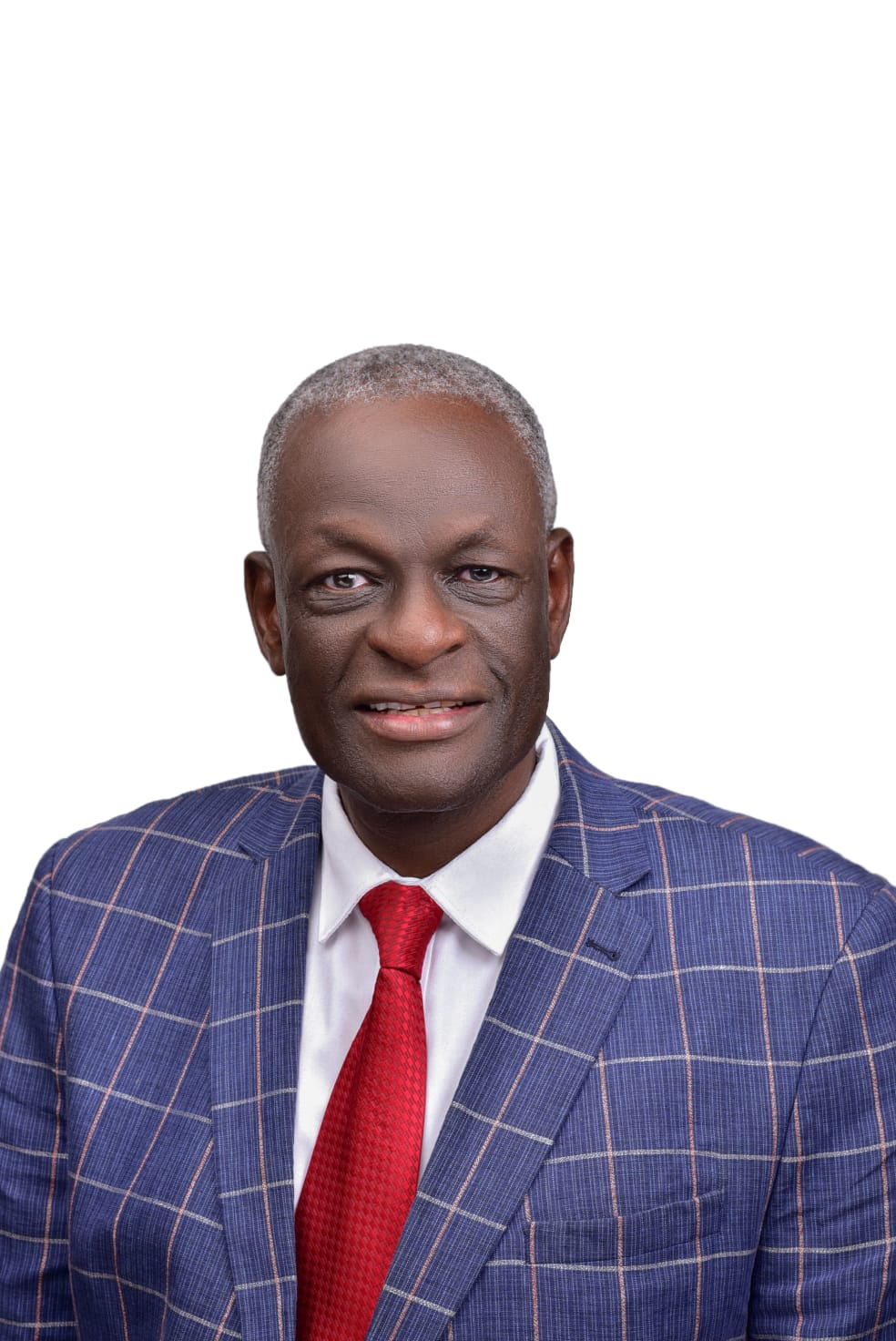
A storm of ideas—and no small measure of controversy—swept through Siaya on Saturday night as Dr. Johannes Orodi Dovens Odhiambo took to the set of HARD TALK and delivered a searing critique of Luo Nyanza’s political direction. Measured yet unflinching, his intervention has since reverberated across the region, igniting debate about identity, leadership, and the urgent need for a development-first agenda.
An accomplished scholar and widely regarded as one of Siaya’s finest professionals, Dr. Orodi’s voice carries both intellectual weight and grassroots credibility. His credentials are formidable: a 2007 Golden Award recipient of the Daimler UNESCO Engineering Awards, and a corporate member of both the Institution of Engineers of Kenya and the Kenya Society of Biological and Environmental Engineers. Yet it was not his résumé that commanded attention—but the clarity and urgency of his message.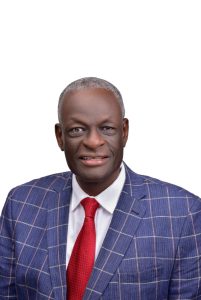
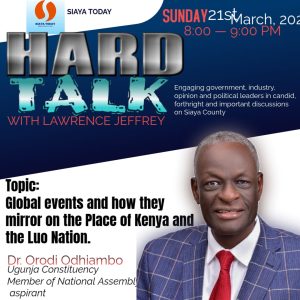
At the heart of his argument was a stark proposition: that the Luo nation must abandon what he termed an entrenched fixation with constitutionalism and endless politicking, and instead align with the development-driven momentum shaping the rest of Kenya.
“We must move from rhetoric to results,” he asserted, framing his critique as both a warning and an opportunity.
Dr. Orodi reserved some of his sharpest remarks for the so-called “broad-based government” arrangement, which he dismissed as politically cosmetic and developmentally hollow. Challenging Luo leaders aligned with the arrangement, he posed a simple but piercing question: what tangible gains can they point to after two years of participation?
 ADVERT
Citing flagship infrastructure such as the Sirare–Rodi Kopany–Homa Bay highway, he argued that many of the projects now paraded as fruits of inclusion were in fact conceived and budgeted long before recent political realignments involving ODM figures.
His critique then turned personal—and pointed. He questioned the developmental impact of Alego Usonga MP Samuel Atandi, who chairs the influential National Assembly Budget and Appropriations Committee, asking whether his position has translated into meaningful projects for his constituents.
Likewise, Energy Cabinet Secretary Opiyo Wandayi came under scrutiny. Dr. Orodi highlighted the contradiction between nationwide last-mile electricity rollouts and persistent outages within Wandayi’s own constituency, suggesting a troubling gap between national prominence and local delivery.
In perhaps his most provocative assertion, Dr. Orodi declared that the Orange Democratic Movement (ODM) is in visible decline—a development he framed not as a crisis, but as a necessary political evolution.
“ODM is not collapsing—it is transitioning,” he argued. “And that transition may finally liberate Luo politics from the constraints of a single dominant party.”
Drawing from his own political experience, he referenced his strong second-place finish in the 2025 Ugunja by-election, achieved after less than two months of campaigning on the Wiper ticket. For Dr. Orodi, the result was emblematic of a shifting political tide—one that could fully materialize in a more open and competitive environment.
Yet beyond the political analysis lay a deeper philosophical reflection. Invoking the imagery of Isaiah 18:1–7, he described the Luo as a people of intellect, stature, and generosity—renowned for their excellence as thinkers, engineers, civil servants, and managers. But he warned that these very strengths can become vulnerabilities in the often ruthless calculus of political power.
“Our intellectualism and commitment to service,” he observed, “can render us predictable—and therefore manipulable—in a game that often rewards cunning over competence.”
Importantly, Dr. Orodi challenged the notion that leadership is confined to elective office. He pointed to his own track record of grassroots impact—supporting water, electrification, and community development initiatives across Uranga, Usenge, Luanda K’Otieno, Yala, and beyond, including the Nyadiang’a Moyie and Luanda Kina water projects in West Alego.
“Transformation does not wait for titles,” he said. “It is driven by initiative.”

On the contentious issue of the proposed Siaya Nuclear Power Project, Dr. Orodi struck a cautious, almost philosophical tone. Questioning Kenya’s preparedness, he drew a stark comparison with persistent urban infrastructure failures.
“If we are still losing lives to poor drainage in Nairobi,” he asked, “are we truly ready to manage a nuclear facility of that magnitude? Development must be sequential—foundations first.”
He closed with a sobering reflection on the persistent infighting among Luo leaders, attributing it to external forces wary of the community’s latent potential when united.
“Division is not incidental—it is strategic,” he warned. “There are those who understand what a cohesive Luo nation could achieve—and are determined to prevent it.”
Dr. Orodi’s appearance has since catalyzed a broader conversation—one that transcends personalities and parties to confront deeper questions about direction, priorities, and the meaning of progress. As ODM grapples with internal strains and Kenya’s political terrain continues to evolve, his intervention may well mark the emergence of a new, intellectually grounded and development-focused discourse in Luo Nyanza.
For now, his message lingers with unmistakable force: the future will not be negotiated through rhetoric—but built through action.


