 ADVERT
 ADVERT
They fill stadiums with fiery speeches, wave unity flags at every rally, and swear they will end President William Ruto’s second term before it even begins. Yet behind the bravado, Kenya’s opposition faces a silent killer that no slogan can defeat: a crippling shortage of campaign cash.
While the president logs six high-energy “development tours” a day—complete with helicopters, branded convoys and wall-to-wall mobilisation—the opposition is quietly downsizing. Leaders now limit events to weekend church gatherings, roadside meet-and-greets and modest village stops. The reason is brutally simple: they can barely afford fuel for the cars, let alone the rest.
“It’s expensive to ferry supporters, print T-shirts, pay allowances, hire security and put up tents,” one opposition MP said plainly. “We simply cannot compete with the man in power. He has too much.”
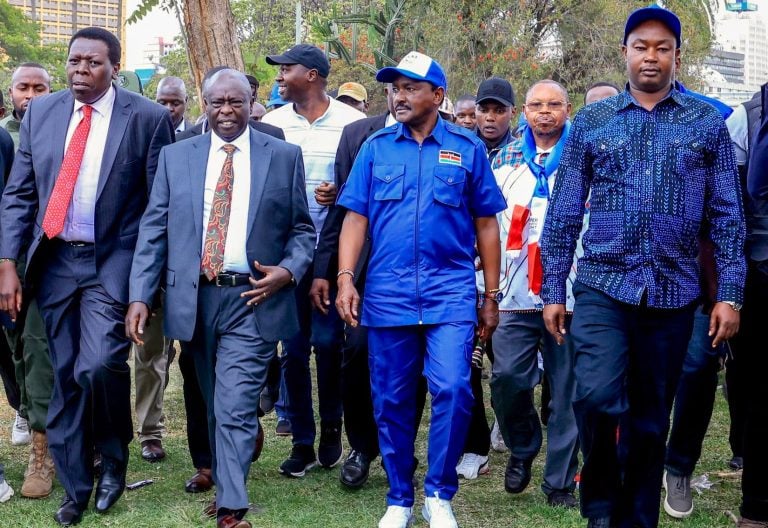
Two main coalitions are taking shape. One is the so-called “Alternative Government” grouping former Deputy President Rigathi Gachagua, Wiper leader Kalonzo Musyoka, Martha Karua, Eugene Wamalwa and Justin Muturi. The other is the Linda Mwananchi movement driven by Nairobi Senator Edwin Sifuna, James Orengo, Godfrey Osotsi and allied voices. Both share the same grim handicap: they are campaigning almost entirely on goodwill and small personal contributions while the ruling side reportedly taps into a proposed Sh17 billion State House budget and other state-linked resources.
Gachagua has already labelled the newly proposed National Infrastructure Fund “a vehicle to rig the polls,” accusing it of being designed to flood targeted constituencies with public money ahead of the vote.
 ADVERT
Kenya’s elections remain among the most costly on the continent. Helicopters alone can burn millions of shillings in a single week; add billboards, nomination fees, voter mobilisation, security details and allowances, and the numbers quickly become astronomical. Yet the Election Campaign Financing Act continues to gather dust. Enforcement remains weak, leaving the door wide open to opaque donations, illicit contributions and—in the worst cases—criminal money.
Civil-society voices have sounded the alarm for months. Campaign financing, many warn, is the single biggest hurdle standing between a united opposition and a credible shot at State House in 2027. Without urgent reform—and a serious war chest—the dream of a coordinated challenge risks collapsing under the weight of empty pockets.
Opposition strategists are now pursuing two narrow paths to survival. First, they are pushing hard for a single presidential flag-bearer to avoid splitting already scarce resources. Second, they are organizing low-budget retreats to pool whatever money they can raise among themselves. Rallies are deliberately kept modest: no lavish motorcades, minimal branded merchandise, crowds drawn organically rather than bussed in.
“We rely on goodwill from our team and supporters to hold events,” one MP explained. “This includes raising money from among ourselves.”
The contrast could not be starker. One side roars across the country with seemingly limitless logistical muscle. The other scrapes together weekend micro-rallies and prays the message alone will carry the day.
As the 2027 countdown accelerates, the hard reality is settling in: unity selfies and thunderous speeches will not win Kenya’s most expensive election yet. Without serious funding—and real campaign-finance transparency—the opposition’s grand alliance may end not in victory, but in bankruptcy.
The rhetoric is loud. The bank balances are dangerously quiet.


