 ADVERT
 ADVERT
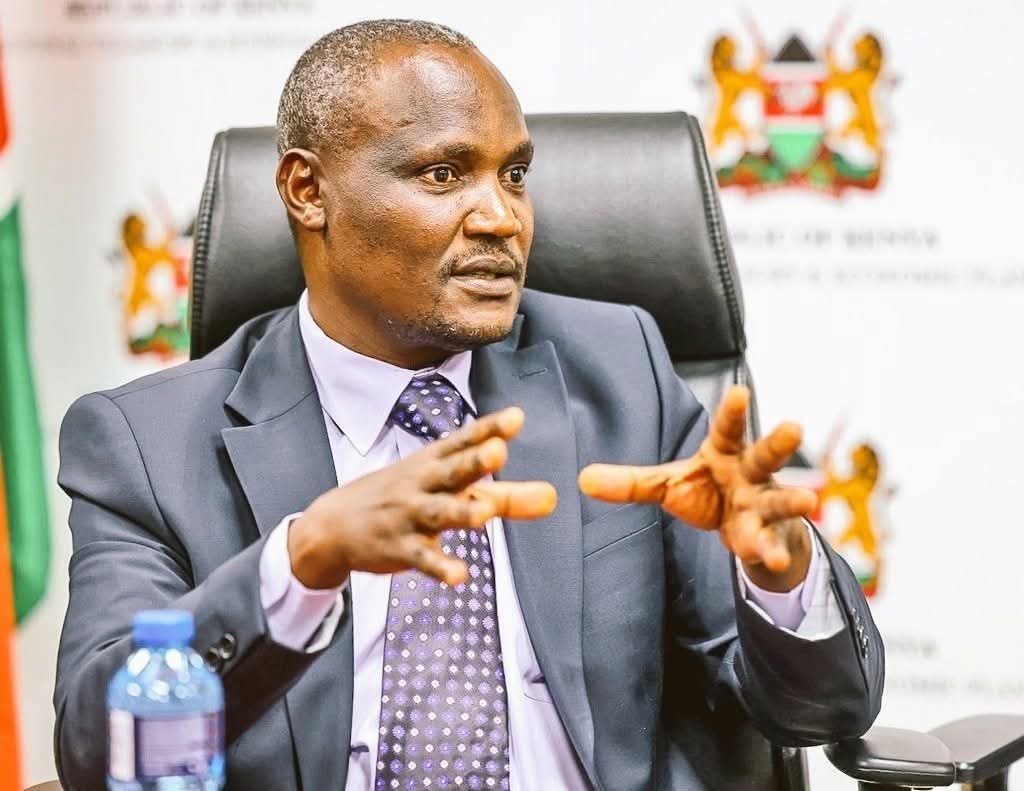
Six months after the passing of Orange Democratic Movement (ODM) Party founder Raila Odinga in late 2025, the party is experiencing a public leadership rift that highlights longstanding tensions between calls for institutional renewal and the preservation of the founder’s legacy. The exchanges between National Treasury Cabinet Secretary John Mbadi and members of the Odinga family, particularly Kisumu Woman Representative Ruth Odinga and EALA MP Winnie Odinga, underscore fundamental questions about succession, party governance, and political etiquette in Kenyan multiparty democracy.
The latest disagreement surfaced during an ODM activation event. Mbadi responded to appeals for greater tolerance toward dissenting voices within the party — including ODM Secretary General Edwin Sifuna — by questioning efforts to reintegrate individuals who had previously signalled their intention to leave. He emphasized respect for the current party leadership structure, naming Oburu Odinga as party leader and Simba Arati and Abdulswamad as deputy party leaders.
Mbadi further argued that the party must adapt to a “post-Raila era,” cautioning against continued reliance on the late leader’s pronouncements. “Baba is no more,” he stated, noting that six months had passed since Raila’s death. These remarks were interpreted by some as a direct challenge to the enduring influence of the Odinga family within ODM.
In response, Ida Odinga, Raila’s widow and Kenya’s ambassador to UNEP, urged party members to honour the late leader’s legacy, invoking the concept of the “living dead” — the enduring spiritual and ideological presence of departed national figures such as Raila and his father Jaramogi Oginga Odinga. At a subsequent funeral service in Kisii, Ruth and Winnie Odinga criticized Mbadi’s statements. Winnie emphasized that the National Treasury is a state office, not a platform for intra-party political attacks, while Ruth defended Raila’s foundational role in ODM’s identity and called for leaders to listen more attentively to grassroots members.
Mbadi later characterized the counter-criticisms as “juvenile politics” and invited political engagement on equal terms through elective office.
 ADVERT
Kenya’s Constitution is unambiguous on the status of political parties. Under Article 91 and associated provisions, parties are public institutions that must uphold internal democracy, inclusivity, and accountability to their members rather than functioning as the property of individuals or families. This principle seeks to prevent dynastic capture and promote organisational maturity.
From this perspective, arguments for a structured transition away from personality-driven leadership align with constitutional expectations for institutional development. Proponents of reform contend that ODM, like other major parties, must evolve to remain competitive and effective, particularly within the context of the current broad-based government arrangement and ahead of future electoral cycles.
At the same time, political realities in Kenya often intersect with cultural norms that place high value on respect for founders, elders, and legacies. Mbadi’s elevation to the influential position of Cabinet Secretary for the National Treasury occurred during Raila Odinga’s lifetime and with his apparent support. Critics view the timing and tone of Mbadi’s public remarks as demonstrating insufficient gratitude and respect toward the Odinga family, which provided the foundational platform for much of his political career. This tension between constitutional propriety and moral-political reciprocity remains at the core of the current discord.
The rift reflects broader challenges common to many African political parties founded around charismatic leaders: the difficulty of managing succession, balancing loyalty to founding ideals with pragmatic governance, and reconciling government responsibilities with party activism. Raila Odinga’s death removed a central unifying figure capable of mediating internal differences. The current exchanges reveal divergent orientations — one emphasizing institutional evolution and governmental deliverables, the other prioritizing ideological continuity and grassroots mobilisation.
While no single family can legitimately claim ownership of a political party under the Constitution, abrupt public marginalisation of the founder’s immediate family by beneficiaries of that founder’s patronage risks alienating core supporters in ODM’s traditional base. Conversely, excessive emphasis on family centrality could undermine the party’s institutional legitimacy and drive away reform-minded members.
ODM’s current internal contestations represent a critical juncture in its post-founding phase. A balanced resolution will likely require adherence to constitutional party rules, transparent internal dialogue, and a measure of mutual respect that acknowledges both the imperatives of institutional reform and the legitimate place of Raila Odinga’s legacy in the party’s identity.

How the party navigates this transition will offer insights not only into ODM’s future viability but also into the broader maturation of Kenya’s political system — specifically its capacity to move beyond personality politics while preserving the historical contributions that shaped it. For now, the public discourse serves as a reminder that successful democratic institutions depend as much on norms of civility and reciprocity as on formal constitutional provisions.



