 ADVERT
 ADVERT
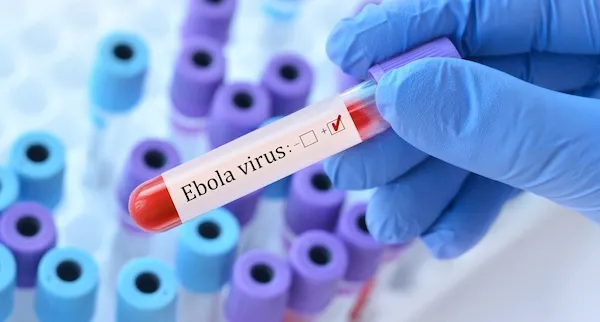
France has recorded a major public health milestone after its first-ever Ebola patient made a full recovery and was discharged from hospital, Health Minister Stéphanie Rist confirmed on Saturday.
The patient, a doctor who had recently travelled from the Democratic Republic of Congo (DRC), tested positive for the deadly haemorrhagic virus shortly after arriving in France on June 23. Despite the severity typically associated with Ebola, the physician displayed only mild symptoms, primarily headaches, and remained largely asymptomatic throughout treatment.
In a reassuring update, Minister Rist announced that the doctor had “left the medical establishment” and safely returned home, marking a successful containment and recovery effort in what had initially raised alarm across Europe.
French health authorities acted quickly to isolate the case and prevent any potential spread. Five passengers who had been in close contact with the doctor on the Air France flight were identified and placed under precautionary isolation. Officials have since indicated that no secondary infections have been reported, underscoring the effectiveness of France’s rapid response protocols.
This incident marks the first time Ebola has been detected on French soil. During the devastating 2014 West Africa outbreak, France treated two infected individuals, but both cases had been diagnosed prior to their arrival in the country.
 ADVERT
The case comes amid an ongoing Ebola outbreak in the Democratic Republic of Congo, declared on May 15. According to the latest government figures released on July 2, the outbreak has claimed at least 438 lives out of 1,406 confirmed infections.
Health experts warn that while isolated cases like the one in France can be successfully managed, the continued spread in the DRC remains a significant global health concern. International cooperation, surveillance, and rapid response mechanisms remain critical to preventing cross-border transmission.
France’s successful handling of the case highlights the preparedness of European health systems to manage highly infectious diseases. The patient’s recovery not only brings relief but also reinforces confidence in modern medical response capabilities against one of the world’s most feared viruses.
As global travel resumes at full scale, health authorities worldwide are being reminded that vigilance remains key — but so too is the growing ability to contain and treat even the most dangerous outbreaks.



