 ADVERT
 ADVERT
Kenya’s ambitious plan to establish its first nuclear power plant in Siaya County is running into stiff headwinds, with growing public resistance exposing a widening trust gap between policymakers and local communities.
Energy stakeholders are now warning that without urgent, coordinated public education and transparent engagement, the multi-billion-shilling project risks stalling before it begins.
At the heart of the push is a renewed call for aggressive sensitisation to counter deep-seated fears, misinformation, and uncertainty surrounding nuclear technology—issues that have entrenched opposition across parts of Central Sakwa and beyond.
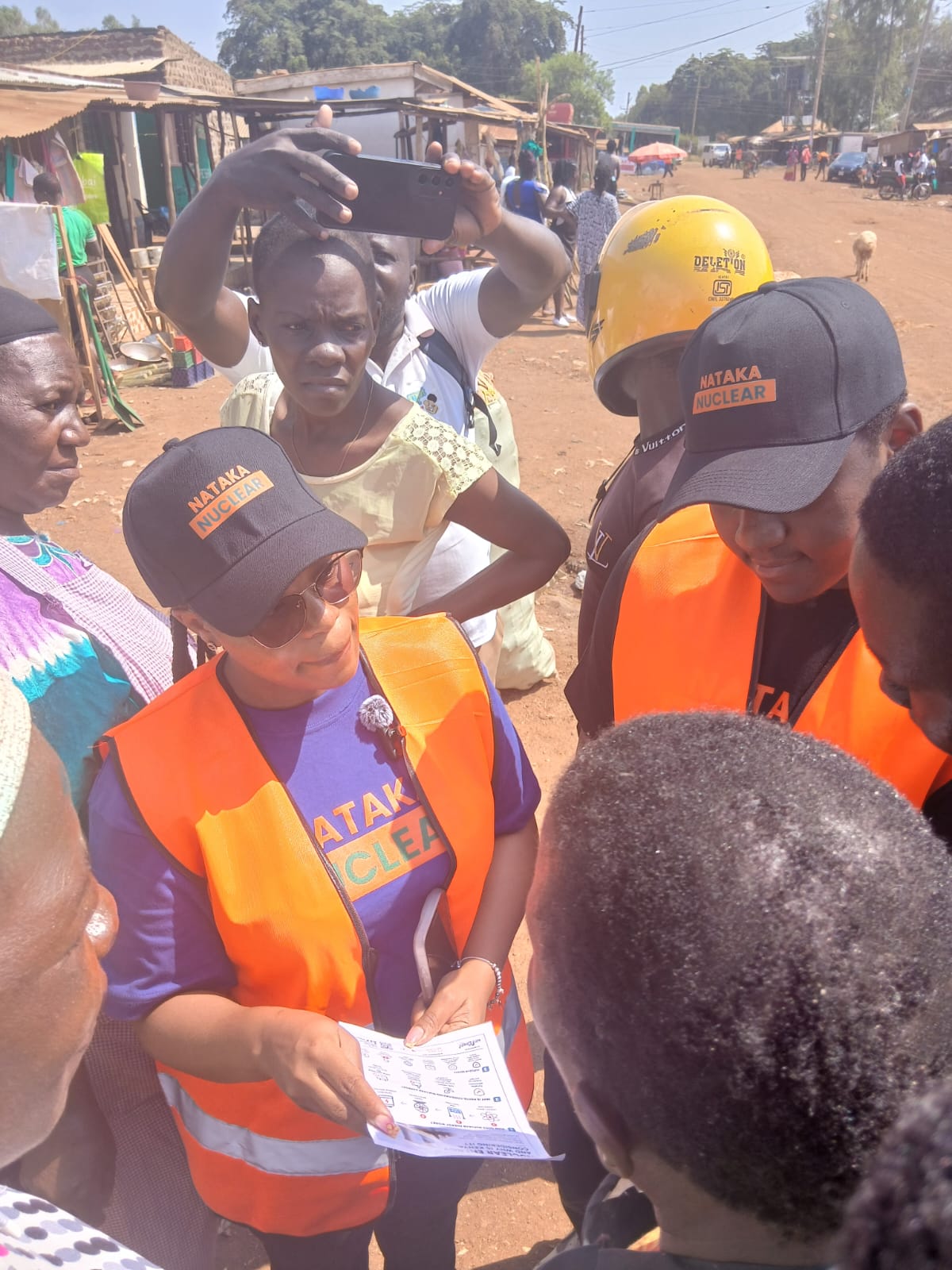
Speaking during a public awareness forum, WePlanet Africa Programme Coordinator Peter Gichuki said the current impasse reflects a failure of communication as much as it does public anxiety.
“This is no longer just an energy conversation—it is a trust issue,” Gichuki said. “Government agencies, civil society, and local leaders must speak with one voice to demystify nuclear energy and provide credible, consistent information. Without that, acceptance will remain elusive.”
 ADVERT
The proposed plant, spearheaded by the Nuclear Power and Energy Agency (NuPEA), is central to Kenya’s long-term plan to secure stable, low-carbon electricity. But on the ground, that vision is being overshadowed by fears of displacement, safety concerns, and a perceived lack of transparency.
Kenya Young Generation in Nuclear President Linet Kerubo sought to allay safety concerns, noting that modern nuclear plants are engineered with advanced, multi-layered protection systems designed to prevent radiation leaks and environmental harm.
“Globally, nuclear energy is among the most regulated and safest power sources,” she said. “But safety assurances alone are not enough—people need clarity, honesty, and engagement.”
Indeed, the most volatile issue remains land and livelihoods.
Uncertainty over who will be displaced—and how compensation will be handled—has triggered widespread anxiety, with many residents fearing forced eviction from ancestral land.
“Right now, entire communities feel threatened,” Kerubo acknowledged. “In reality, only a fraction of households may be affected. But without clear, accessible information, fear fills the vacuum.”
Stakeholders are now urging the government to establish permanent information centres, roll out sustained grassroots engagement, and communicate in local dialects to ensure inclusivity and understanding.
They argue that sporadic forums are insufficient, calling instead for continuous, structured dialogue that allows residents to interrogate the project and receive factual, up-to-date responses.
Equally concerning is the silence of local political leadership—a gap residents say has left them navigating a complex national project without guidance or representation.
“We are being asked to accept what we do not fully understand,” said one attendee. “There has been no clear explanation of the risks, the benefits, or what happens to us.”
As Kenya positions nuclear energy as a cornerstone of its future power mix, the unfolding situation in Siaya highlights a critical reality: infrastructure alone cannot power progress—public trust must.
Until concerns over safety, displacement, compensation, and environmental impact are addressed with transparency and urgency, resistance is likely to harden.
For now, the success of Kenya’s nuclear ambitions may depend less on policy and technology—and more on whether the government can win the confidence of the people of Siaya.



