 ADVERT
 ADVERT
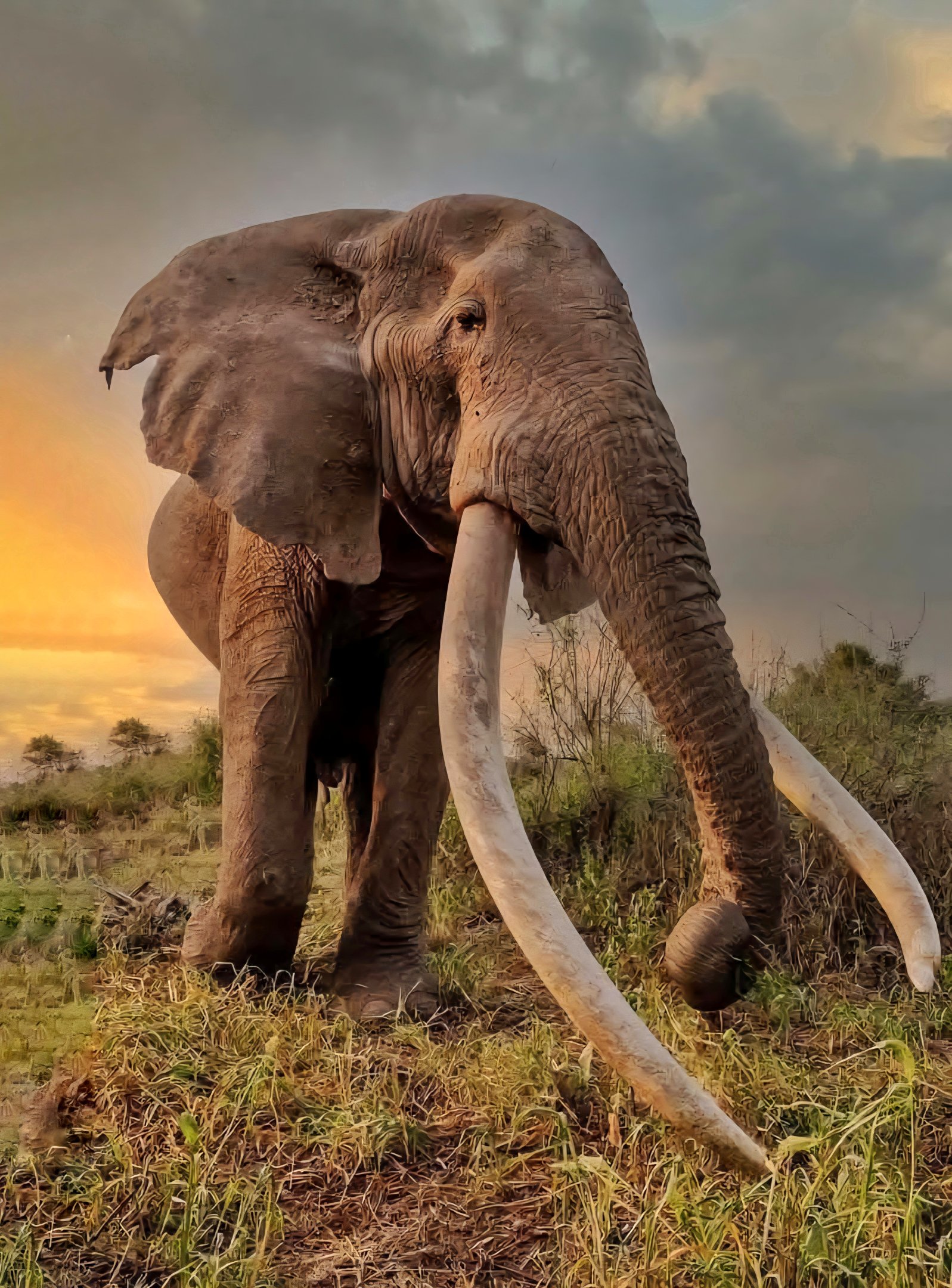
Amboseli National Park, Kenya — A heavy silence settled over the sweeping plains of Amboseli at dawn as Kenya, and indeed the world, woke to heartbreaking news: Craig, the iconic super tusker elephant, is dead. He was 54 years old.
Towering yet tranquil, Craig was no ordinary elephant. With tusks weighing over 100 pounds each, sweeping almost to the ground, he belonged to an ultra-rare class of elephants known as super tuskers—a vanishing symbol of Africa’s natural magnificence. His passing marks not just the loss of an animal, but the fading of a living legend.
Born in 1972 to the revered matriarch Cassandra, Craig carried one of the most precious genetic lineages left in the wild. At a time when poaching and habitat loss have decimated populations of large-tusked elephants, Craig stood as a defiant reminder of what conservation can still save.
Yet it was not only his size that captured hearts across continents—it was his soul.
Despite his imposing stature, Craig was famously calm and approachable. He moved gracefully through Amboseli’s dusty corridors, often pausing as tourists and researchers admired him from a respectful distance. Never aggressive, never hurried, Craig became Amboseli National Park’s unofficial ambassador, a favourite of photographers, conservationists and visitors from around the globe.
For decades, his presence told a powerful story: that elephants could coexist with people, and that protection works.
 ADVERT
Craig’s long life was no accident. It was the result of relentless protection by the Kenya Wildlife Service (KWS), conservation partners, and the surrounding communities who understood his value—not just to tourism, but to Kenya’s natural heritage.
He was closely monitored, shielded by enhanced anti-poaching operations, and supported by habitat conservation initiatives that allowed him to roam freely and safely. In 2021, his global stature was further cemented when East African Breweries Limited (EABL), through its iconic Tusker brand, symbolically adopted him—turning Craig into a national and international conservation icon.
While Craig is gone, his legacy endures. He leaves behind offspring who carry his rare genes, offering hope that future generations may yet see elephants of such majesty walk Africa’s plains again.
More importantly, Craig leaves a lesson: that when nations, institutions, and communities commit to protecting wildlife, miracles are possible—even in an age of extinction.
As tributes pour in from across the world, Craig’s story stands as both a celebration and a warning. The age of super tuskers is slipping away. Whether it ends entirely depends on what humanity chooses next.


