 ADVERT
 ADVERT
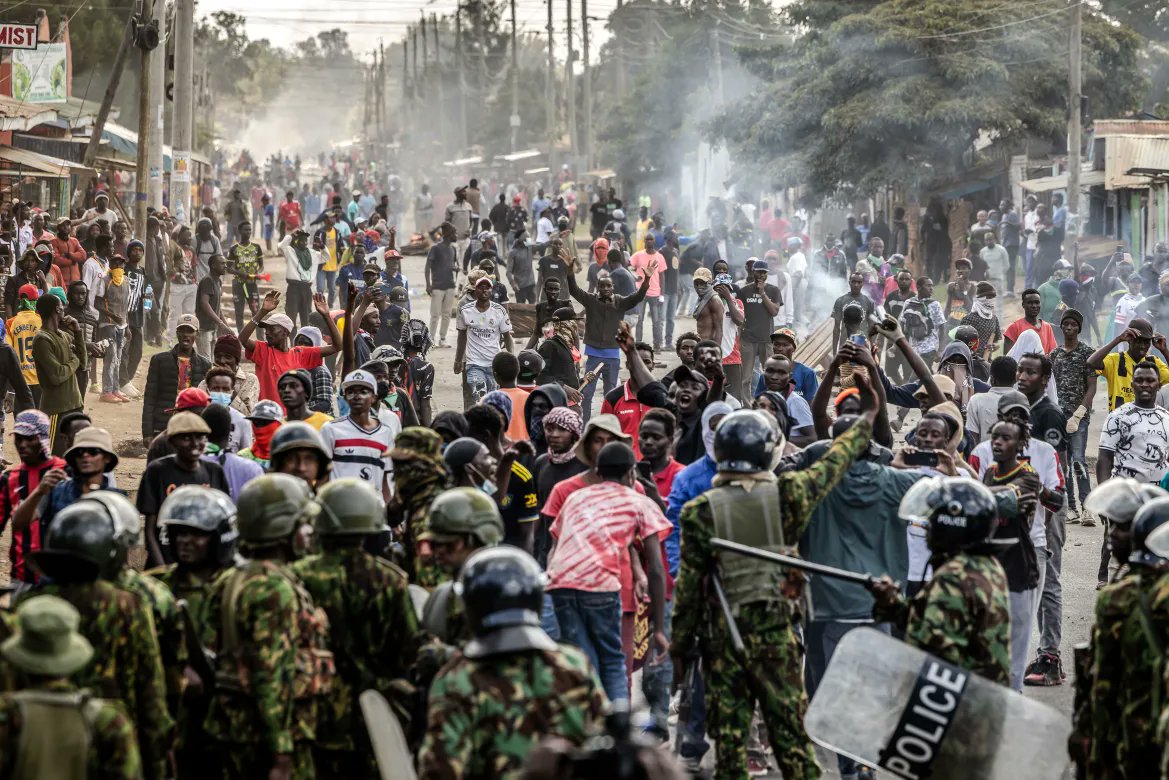
At least one person was shot dead and several others injured on Tuesday as violent protests erupted in Nanyuki, Laikipia County, over the construction of a controversial US-funded Ebola quarantine centre.
The unrest saw hundreds of demonstrators clash with police near the Laikipia Air Base, where the facility—designed to quarantine American nationals arriving from the Democratic Republic of Congo (DRC)—is nearing completion. Protesters lit fires, hurled stones, and chanted anti-government slogans, while police responded with tear gas, water cannons, and live ammunition.
An AFP journalist witnessed a man lying motionless after being shot in the head, as chaos unfolded in the streets. According to Hussein Khalid, director of Vocal Africa, the victim’s death has been confirmed, pending notification of his family. The Kenya Red Cross also reported at least one injury caused by a tear gas canister.
In a moment that has since gripped the public imagination, a video showing a protester dramatically escaping from police custody during the chaos has gone viral on social media, further amplifying attention on the unfolding crisis.
Dozens of protesters were arrested, including some apprehended by plainclothes officers in heavily militarized operations.
 ADVERT
The quarantine facility—set to host up to 50 isolation beds and reportedly staffed by American personnel—has ignited widespread anger among residents and political leaders alike. Many Kenyans are questioning the decision to host potentially infected individuals from abroad, particularly given that the country has never recorded a confirmed case of Ebola.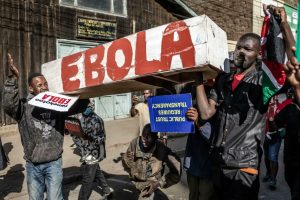
“Laikipia is not a dumping site,” said protester Priscilla Waimani, draped in a Kenyan flag. “We cannot accept decisions that put our lives at risk.”
Another demonstrator, Mwangi Wangai, clad in personal protective equipment (PPE), echoed the sentiment: “Americans should deal with their Ebola cases on their own soil.”
Despite a temporary suspension order issued by Kenya’s High Court, construction of the facility has continued, further fuelling public anger. Earlier protests on June 1 reportedly left two people dead under unclear circumstances.
President William Ruto has defended the project, citing decades of US-Kenya health cooperation and substantial financial support.
“The American people have stood with us for 25 to 30 years on health matters,” Ruto said. “It would be most unfortunate—and inhuman—if we declined their request to build this facility at their own cost.”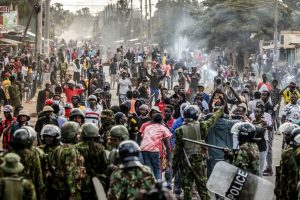
The United States has pledged approximately $13.5 million toward Kenya’s Ebola preparedness, including infrastructure and response systems.
While Kenya’s Health Ministry maintains that the facility will serve both Kenyans and Americans, critics argue that messaging from Washington suggests it is primarily intended for US citizens—raising concerns about sovereignty, public health risk, and transparency.
The project stems from a broader and controversial bilateral health agreement signed last year, under which Kenya reportedly agreed to share extensive health data in exchange for billions in aid.
The fallout is already being felt in Kenya’s critical tourism sector. Industry players report a decline in bookings, even in Nairobi—over 200 kilometres from Nanyuki.
Eva Mwangi, head of sales at Tribe Hotels, revealed that approximately 10% of corporate bookings have been cancelled since news of the quarantine centre broke.
“The government must reassure both citizens and international visitors about safety measures,” she said. “Clear, proactive communication is key.”
The World Health Organization (WHO) recently declared the Ebola outbreak in the DRC a global health emergency, with over 550 confirmed cases and more than 100 deaths. Neighboring Uganda has reported 19 cases, mostly involving cross-border infections.
Speaking from Bunia in northeastern DRC, WHO official Abdirahman Mahamud emphasized the need for community engagement in any response strategy.
“You cannot have a successful preparedness or response unless you bring the community along,” he said.
As tensions simmer, the Nanyuki protests underscore a deeper national debate—balancing international cooperation with domestic safety concerns. For many Kenyans, the question remains stark: should the country shoulder global health risks in exchange for aid?
With construction ongoing despite legal and public resistance, the crisis is far from over—and could define Kenya’s public health policy and foreign relations for years to come.


