
 ADVERTISEMENT
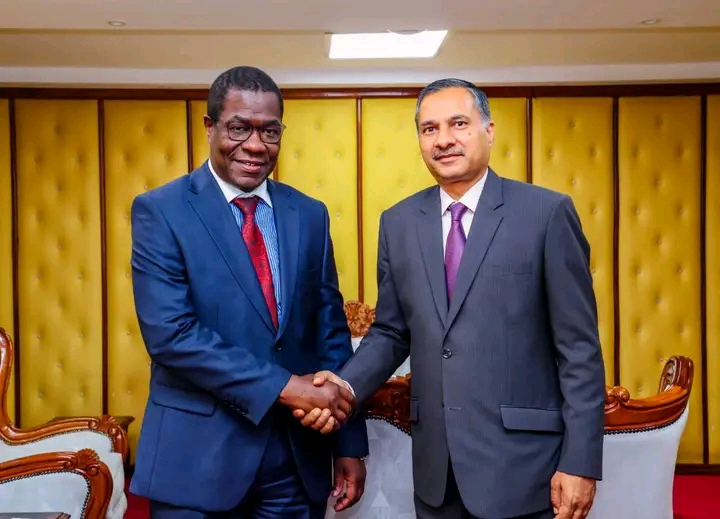
 Cabinet Secretary of Energy and Petroleum James Wandayi received His Excellency Dr. Adarsh Swaika, the High Commissioner of India, who made a courtesy call on him at KASNEB offices. We held bilateral discussions focused on the forthcoming India Energy Week (IEW’26) in Goa, India, as well as the shared interests between India and Kenya, reflecting the depth and dynamism of our long-term partnership. We also discussed expanding cooperation in key areas such as renewable energy among other issues anchored in the enduring relationship between our two countries. This encounter underscores a pivotal moment in Kenya’s energy diplomacy, where strategic alliances can propel the nation toward energy security and sustainable development amid global transitions.
In an era where energy transitions define geopolitical strategies, the Wandayi-Swaika dialogue signals Kenya’s proactive engagement with India, a global powerhouse in renewables. India’s hosting of IEW’26 in Goa from February 2026 positions it as a premier platform for showcasing innovations in clean energy, attracting over 50,000 participants and 1,000 exhibitors from across the globe. For Kenya, attending this event is not merely ceremonial; it represents a tangible opportunity to benchmark against India’s ambitious targets, such as achieving 500 GW of non-fossil fuel capacity by 2030. Wandayi’s emphasis on bilateral discussions highlights how Kenya can leverage this partnership to address chronic challenges like intermittent power supply and high electricity costs, which stifle industrial growth in regions like Siaya County and Luo Nyanza.
Kenya’s energy landscape, marked by a heavy reliance on geothermal and hydro sources, stands to gain immensely from India’s expertise in solar and green hydrogen. The shared interests articulated in the meeting extend beyond rhetoric, touching on practical collaborations that could accelerate Kenya’s Bottom-Up Economic Transformation Agenda (BETA). For instance, India’s success with the International Solar Alliance—co-founded with France—offers lessons for Kenya’s ambitions under the National Electrification Strategy, aiming for universal access by 2030. By deepening ties, Kenya could import affordable solar technologies, mirroring how India has scaled rooftop solar to over 10 GW installed capacity, thereby empowering rural communities in Siaya with off-grid solutions that boost agricultural productivity and youth employment.
The dynamism of the Kenya-India partnership, as reflected in these talks, is rooted in historical goodwill and mutual economic complementarity. Since the days of non-aligned movements, both nations have championed South-South cooperation, evolving into robust trade ties worth over KSh 100 billion annually. Wandayi’s courtesy call at KASNEB, a hub for professional standards, subtly nods to capacity-building needs in Kenya’s energy sector, where skilled manpower gaps hinder project execution. India’s vocational training models, like those under the Skill India initiative, could bridge this void, training Kenyan engineers in advanced battery storage and smart grids—critical for integrating variable renewables into the national grid.
Expanding cooperation in renewables, as discussed, aligns seamlessly with Kenya’s devolved governance framework, where counties like Siaya play frontline roles in community empowerment. Siaya’s potential in solar-powered irrigation and mini-grids could transform widow and youth programs, reducing energy poverty that exacerbates gender disparities. India’s experience with decentralized energy in rural Uttar Pradesh demonstrates scalable models: community-owned solar projects that generate income while cutting kerosene use. By anchoring discussions in this enduring relationship, Wandayi positions Kenya to co-develop such initiatives, potentially through joint ventures at IEW’26, fostering grassroots mobilization and aligning with President Ruto’s vision for inclusive growth.
Critically, these bilateral overtures come at a juncture when Kenya faces headwinds from fossil fuel volatility and climate imperatives. Global oil price shocks, exacerbated by geopolitical tensions, underscore the urgency of diversifying beyond thermal plants, which still account for 15% of Kenya’s mix. India’s pivot toward green hydrogen—targeting 5 million tonnes annual production by 2030—offers a blueprint for Kenya’s nascent hydrogen roadmap. Collaborative R&D could yield electrolyzer technologies tailored to Kenya’s geothermal surplus, creating exportable green fuels and positioning East Africa as a hydrogen hub. Wandayi’s engagement thus reflects astute leadership, prioritizing long-term resilience over short-term imports.

The KASNEB setting for the meeting adds symbolic weight, emphasizing professional integrity in energy governance. As Kenya reforms its petroleum sector under the Energy Act 2019, Indian investments in downstream refining—building on past successes like the Indian Oil Corporation’s stakes—could enhance local value addition. Discussions on “other issues” likely encompassed LNG terminals and EV infrastructure, areas where India’s Adani Group and Reliance Industries have pioneered mega-projects. For Siaya, this translates to job creation in assembly plants for solar panels, empowering local youth and aligning with community development mandates.
Yet, realizing this potential demands bold policy strokes from Wandayi. Kenya must streamline regulatory approvals to attract FDI, learning from India’s single-window clearances that expedited 100 GW renewable additions. Public-private partnerships, modeled on India’s SECI auctions, could de-risk investments in Siaya’s wind corridors along Lake Victoria. Moreover, integrating gender lenses—drawing from India’s women-led solar enterprises—would amplify impacts on widows’ cooperatives, turning energy access into economic agency.
Looking ahead to IEW’26, Wandayi’s proactive stance heralds a new chapter in Kenya-India synergy. This partnership transcends energy, weaving into broader themes of digital infrastructure and climate finance. As Goa hosts global leaders, Kenya’s delegation—led by such visionary engagements—can secure memoranda that catalyze KSh 500 billion in projects over five years. The enduring relationship, now invigorated, promises not just megawatts but empowered communities, from Nairobi’s skyscrapers to Siaya’s farms.
In conclusion, Cabinet Secretary Wandayi’s dialogue with High Commissioner Swaika exemplifies strategic diplomacy that harnesses historical bonds for future prosperity. By prioritizing renewables and shared interests, Kenya charts a course toward energy sovereignty, inclusive growth, and regional leadership. As IEW’26 approaches, this partnership stands as a beacon for African-Asian collaboration, urging sustained commitment to turn discussions into transformative realities.
James’ Bwire Kilonzo is a Media and Communication Practitioner.


