 ADVERT
 ADVERT
Fresh shake-ups within the Presidential Escort Unit have now intensified speculation that President William Ruto’s security apparatus is undergoing an internal crisis following a string of embarrassing and potentially catastrophic breaches around the Head of State.
In what security insiders are interpreting as an emergency restructuring, Deputy Inspector General of Police Eliud Lagat has effected sweeping transfers within the Presidential Escort Unit (PEU), the elite formation tasked with protecting the President.
Among the most significant changes is the removal of Commandant Noah Kirwa Maiyo from the PEU to the Kenya Police Headquarters Vigilance Unit. His deputy, Judah Matthews, has meanwhile been sent on leave pending retirement. Taking over command is William Sawe, previously the Commanding Officer of the elite Recce Sub-Unit, with George Kirera appointed Deputy Commandant.
The reshuffle also saw Josphat Sirma elevated from Deputy Commanding Officer of the Recce Sub-Unit to Commanding Officer, while Rere Kipkoech was moved from SOB One to the Vigilance Unit.
Though officially framed as routine transfers, the timing has raised eyebrows within both political and security circles, coming almost immediately after the alarming Kilifi security scare in which a young man breached the presidential perimeter and moved dangerously close to President Ruto before officers subdued him.
 ADVERT
Within Kenya’s security establishment, the incident is increasingly being viewed not as an isolated lapse but as evidence of deeper structural problems surrounding the President’s protection.
The public may have laughed off the incident online, but among trained security professionals the reaction has been far more serious.
“What people saw was not merely a man rushing toward the President,” says former presidential guard George Musamali. “What trained officers saw was failure in anticipation.”
According to Musamali, elite close-protection officers are trained to identify behavioral disturbances long before a potential threat physically advances toward the principal.
“A restless person inside a crowd behaves differently,” he explains. “Their eyes move differently, their body tension changes, they keep calculating movement. Trained officers are supposed to detect that before the situation escalates.”
Musamali believes the bigger problem may have been obstruction within the presidential inner ring itself.
“My suspicion is that the elite GSU officers may not even have had a clean operational view,” he says. “Too many unofficial people now gravitate around the President during rallies. Political mobilizers, bouncer-types, local power brokers — they crowd the formation and interfere with trained personnel.”
That observation is now feeding into growing criticism that unofficial “political bodyguards” and civilian loyalists have increasingly inserted themselves into presidential functions, blurring the line between elite protection officers and political hangers-on.
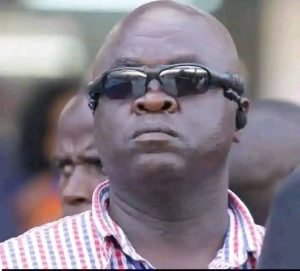
One name repeatedly surfacing in political discussions is Billy Arocho Otunga, whom critics describe as a bouncer-style operative rather than a formally trained presidential protection specialist. Though there is no official indication that he belongs to the Presidential Escort Unit, his visibility around political events has fueled debate over whether political loyalty is beginning to overshadow professional close-protection doctrine.
Security experts warn that elite presidential protection is among the most technical and psychologically demanding assignments within law enforcement. It requires precision positioning, threat anticipation, disciplined movement and rapid extraction coordination.

“It is not about appearing tough,” Musamali says. “Presidential protection is not nightclub security.”
According to the former guard, the greatest danger emerges when unofficial actors become too comfortable inside the presidential ecosystem and begin facilitating informal access for familiar faces.
“That is how infiltration happens,” he warns. “Someone waves through a friend because they recognize them politically. But elite security does not operate on friendship or excitement.”
The Kilifi incident has now amplified wider concerns that President Ruto’s highly populist political style may be stretching security protocols beyond safe limits.
Unlike heavily insulated heads of state, Ruto has built his political brand around physical closeness to ordinary wananchi. He thrives in roadside rallies, spontaneous interactions and emotionally charged crowd engagements. While politically effective, that style dramatically complicates modern close-protection operations.
Critics argue that the presidency may now be paying the price for prioritizing political optics over sterile operational discipline.
Even many Kenyans opposed to Ruto politically are beginning to express unease over the visible looseness around his security detail.
“Wakenya hatupendi William Ruto lakini ile design security yake imelala pia inatupea wasiwasi,” one Kenyan remarked online after the Kilifi breach, reflecting a sentiment increasingly cutting across political divides.
Indeed, behind the jokes and memes lies a serious constitutional concern. The presidency is not merely an individual office but the anchor of national stability. Any successful attack on a sitting president would immediately plunge the country into uncertainty.
The online jokes that “now Kindiki would have been President” if the Kilifi intruder had carried a weapon may sound humorous, but security professionals quietly admit the implications are chilling.
If the man had possessed a knife, firearm or explosive device, Kenya could have been confronting a full-blown national crisis.
Now the sweeping reshuffles within the Presidential Escort Unit are being interpreted as an attempt to restore discipline and professionalism before another breach occurs.
Yet critics argue that personnel transfers alone will not solve the deeper problem if unofficial political operatives continue crowding elite operational spaces.
Social media users, meanwhile, have reacted to the reshuffle with characteristic Kenyan sarcasm, with some jokingly claiming: “Kumbe hawa wote ni ‘YAMUNEE’. Wanandi tupu!”
But beneath the humor lies growing public recognition that something may indeed be fundamentally wrong within the presidential security architecture.
For former guard Musamali, the solution is straightforward.
“The new Presidential Escort Commandant must reclaim the inner ring completely,” he says. “Remove confusion. Remove theatrics. Remove unofficial actors. Presidential security cannot become a political carnival.”
Because if recent events have exposed anything, it is that presidential security failures rarely begin dramatically.
Sometimes they begin with one distracted moment, obstructed visibility and too many people pretending to be part of the shield.



