 ADVERT

 ADVERT
The commissioning of key Last Mile Connectivity projects in Sigowet/Soin Constituency by Energy and Petroleum Cabinet Secretary Opiyo Wandayi, alongside area MP Justice Kemei, was more than a ceremonial milestone—it was a powerful statement of intent.
At its core, the Last Mile Connectivity Programme represents the government’s most direct promise to bridge inequality and bring development to the doorstep of ordinary citizens. When national leaders step into villages to witness the flicker of electricity for the first time, they affirm a simple but profound truth: development is not abstract policy—it is lived experience.
From Barageiwet to Kesainet to Chebobta, the impact of electrification will be immediate and transformative. These are not just geographical points but vibrant communities poised for change. Access to reliable electricity redefines daily life—extending business hours, enabling refrigeration for food and medicine, improving education outcomes, and unlocking economic potential.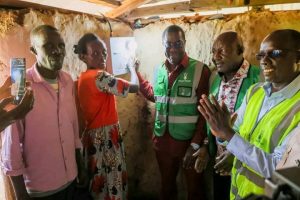
Electricity is not a luxury. It is the foundation upon which modern livelihoods are built.
By targeting multiple wards within the same constituency, the programme reflects a deliberate push toward spatial equity—ensuring development is not concentrated in select pockets but distributed fairly. This approach is critical in addressing long-standing disparities between urban centers and rural communities.
 ADVERT
Beyond households, the electrification of public institutions such as schools and health facilities carries far-reaching implications. A powered health center can safely store vaccines and run essential equipment. A lit classroom can extend learning beyond daylight hours and support digital education. Efficient public institutions, in turn, translate into better service delivery for citizens.
This is why Last Mile Connectivity must be viewed not just as an infrastructure project, but as a cornerstone of human development.
Under President William Ruto’s administration, universal electricity access has been positioned as central to economic transformation. And rightly so. Reliable power is a key input for industrialization, enterprise growth, and job creation. Small and medium enterprises—the backbone of Kenya’s economy—depend on electricity to mechanize operations, scale production, and compete in modern markets.
In rural and peri-urban areas, electrification is already catalyzing agro-processing, cold storage solutions, and digital commerce. It is enabling farmers to preserve produce, traders to expand operations, and young entrepreneurs to tap into online opportunities.
The logic is simple: when people gain access to power, they gain control over their economic futures.
However, ambition must be matched with accountability. The credibility of the Last Mile Connectivity Programme depends on transparency in implementation, equitable resource allocation, and consistent maintenance. Electrification should never become a tool of political patronage, where access is determined by loyalty rather than need.
Clear project selection criteria, open reporting mechanisms, and independent oversight are essential to ensure no community is left behind.
Equally important is sustainability. Expanding the grid must go hand in hand with reliable supply, affordable tariffs, and resilient infrastructure. There is little value in connection without consistent power—or power that citizens cannot afford to use.
Looking ahead, Kenya’s electrification strategy must also align with global energy transitions. Integrating renewable energy sources, promoting energy efficiency, and investing in technical capacity will ensure the system remains adaptable and future-proof.
Financing remains another critical consideration. While electrification delivers undeniable social and economic returns, it requires significant investment. Innovative models—ranging from public-private partnerships to targeted subsidies—can help accelerate rollout without overburdening taxpayers. But these must be implemented transparently, with safeguards to protect vulnerable populations.
Crucially, communities themselves must remain at the center of this transformation. Meaningful public participation—from planning to implementation—fosters ownership, accountability, and sustainability. When citizens understand their rights and responsibilities, they become active custodians of the infrastructure that serves them.
The projects launched in Kericho County are a promising step forward. But their true success will not be measured by the fanfare of commissioning ceremonies. It will be judged by whether the lights stay on, whether businesses grow, whether students excel, and whether communities thrive.
If implemented with integrity, inclusivity, and long-term vision, the Last Mile Connectivity Programme could stand as one of Kenya’s most defining development achievements—proof that strategic infrastructure investment can restore dignity, expand opportunity, and transform lives.
In the end, powering homes is not just about electricity. It is about empowering people.


