 ADVERT
 ADVERT
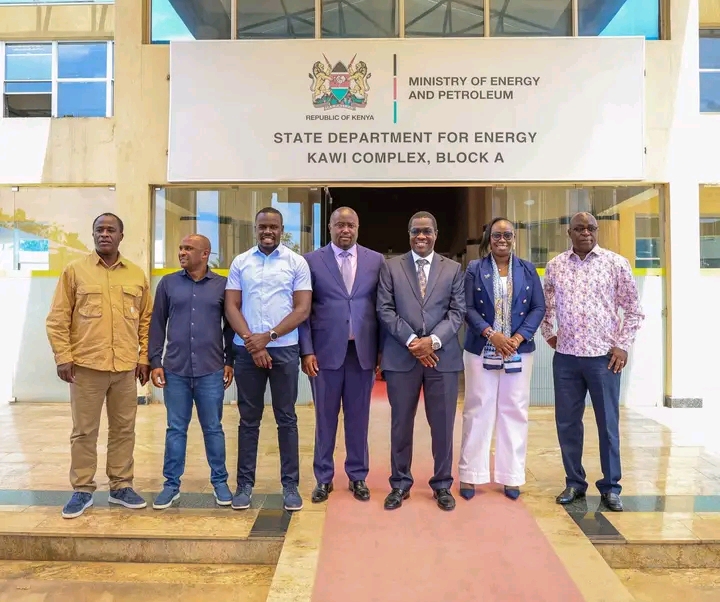
Cabinet Secretary for Energy and Petroleum James Wandayi today spearheaded wide-ranging consultations with elected leaders from Kisii and Nyamira Counties, marking a pivotal moment in Kenya’s quest for universal energy access. Accompanied by Energy Principal Secretary Alex Wachira and a cadre of senior Ministry officials, Wandayi engaged local leaders in substantive discussions that underscored the Ministry’s unwavering commitment to the Government of Kenya’s (GoK) Last Mile Connectivity Program.
This initiative, a cornerstone of President William Ruto’s Bottom-Up Economic Transformation Agenda (BETA), seeks to extend electricity to the farthest corners of the country, particularly underserved rural areas such as the Gusii region. Far from being ceremonial, the consultations represented a strategic fusion of national policy with grassroots realities, illustrating how collaborative governance can electrify Kenya’s future under the banner of #PoweringTheNewKenya.
In Kisii and Nyamira—counties long burdened by energy poverty despite vibrant agricultural potential and growing populations—Wandayi’s visit carried significant weight. These regions, defined by rolling tea plantations, busy markets, and resilient communities, have historically remained on the periphery of Kenya’s power grid. The intensified phase of the Last Mile Connectivity Program aims to reverse this trend by deploying critical infrastructure including poles, transformers, wiring, and meters to connect homes, schools, health facilities, and small enterprises.
Wandayi emphasized close collaboration with local leadership, acknowledging that county assemblies, Members of Parliament, and governors possess invaluable insights into terrain, community priorities, and cultural dynamics. PS Wachira complemented this engagement with technical clarity, outlining implementation timelines, funding structures, and adaptive solutions such as solar-hybrid systems for off-grid areas. Senior Ministry officials further mapped high-impact clusters in Kitutu Chache, Bobasi, North Mugirango, and Kitutu Masaba, ensuring inclusivity from ward to national level. This was not a top-down exercise, but devolution in practice—national resources meeting local wisdom to deliver tangible results.
The importance of these consultations extends well beyond Kisii and Nyamira. Kenya’s energy sector stands at a defining crossroads, where access to power has become a prerequisite for economic liberation rather than a luxury. The ripple effects are transformative: students in Nyamira studying under electric light instead of kerosene lamps; farmers in Kisii powering irrigation systems to boost productivity; and women entrepreneurs energizing salons, mills, and workshops that fuel household incomes.
 ADVERT
With an ambitious target of connecting 1.1 million households by 2026, the Last Mile Program aligns seamlessly with the GoK’s vision of an inclusive, electrified economy. Wandayi’s proactive outreach addresses long-standing concerns over urban bias in infrastructure delivery, demonstrating that Kenya Power and Lighting Company (KPLN), under Ministry oversight, can achieve equitable national coverage. Early engagement with elected leaders also mitigates delays linked to land access or community resistance, accelerating delivery while reducing costs. Scaled nationally, this model could propel Kenya toward full electrification by 2030 and cement its status as a continental leader in sustainable energy.
The consultations also exposed deeper structural priorities necessary for Kenya’s energy renaissance. The hilly terrain and dense settlement patterns of the Gusii region demand tailored interventions such as mini-grids and smart metering to manage demand efficiently. Wandayi and Wachira addressed these realities directly, committing to increased funding from the Energy and Petroleum Development Levy to build climate-resilient infrastructure capable of withstanding erratic weather patterns.
The implications for Nyanza and Western Kenya are profound. Energy deficits have long constrained youth employment and agribusiness expansion. Reliable power could unlock vocational training centres producing local solar technicians, attract investment in cold storage and agro-processing, and reduce rural-to-urban migration by revitalizing local economies. While critics may cite past delays or uneven rollouts, the current engagement signals a decisive reset. Wandayi’s emphasis on accountability—through shared monitoring dashboards—and Wachira’s technical stewardship rooted in geothermal expansion experience reflect a Ministry operating with renewed coherence and purpose.
Looking ahead, the Kisii–Nyamira consultations offer a blueprint for replication across the country. As Kenya advances toward Vision 2030 and Sustainable Development Goal 7 on clean energy, the Last Mile Program must evolve alongside global shifts toward a just energy transition. Wandayi’s focus on renewable integration—solar for daytime demand and wind pilots in highland regions—promises reduced fossil fuel dependence and expanded green job creation.
Local leaders, energized by the dialogue, pledged to mobilize communities around wayleaves and demand aggregation, ensuring that new connections translate into productive use. This collaboration resolves the long-standing dilemma of infrastructure without consumption. In counties such as Siaya and Homa Bay, similar engagements could unlock billions in productivity by empowering MSMEs that account for the bulk of Kenya’s economy. #PoweringTheNewKenya, in this context, is not a slogan but a policy commitment to equity and shared prosperity.
Ultimately, Cabinet Secretary James Wandayi’s engagement in Kisii and Nyamira was more than a consultative meeting—it was a catalyst for devolved development. By embedding elected leaders into the execution of the Last Mile Connectivity Program, alongside PS Wachira and Ministry experts, the government has sparked a movement poised to illuminate lives, economies, and aspirations across the Gusii heartland and beyond. As poles rise and meters hum, a New Kenya comes into view—innovative, inclusive, and unstoppable.
James’ Bwire Kilonzo is a Media and Communication Practitioner.


