 ADVERT
 ADVERT
On Monday, over a million Kenyan teenagers will begin Grade 10, marking the historic launch of senior school under the Competency-Based Curriculum (CBC). For many, it is a moment of excitement: new pathways in STEM, arts, or technical fields, with a focus on practical, hands-on learning that promises to prepare them for the modern world.
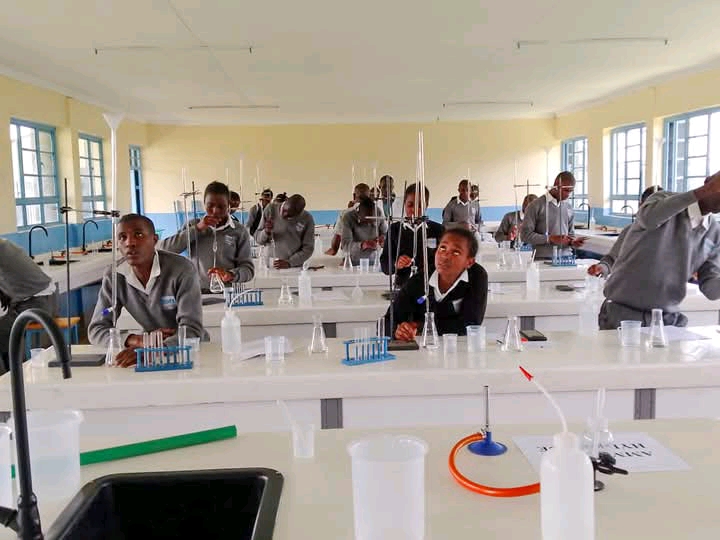
Yet in at least 1,600 senior secondary schools across the country, students pursuing science subjects will walk into classrooms without the most basic tool for practical education—a functional laboratory.
This shortfall exposes a stark gap between ambitious reform rhetoric and on-the-ground reality, raising urgent questions about equity, preparedness, and the long-term viability of Kenya’s education overhaul.
In November 2024, the government announced an ambitious plan to construct 2,600 laboratories in secondary schools starting January 2025. Of these, 1,600 were earmarked as physical labs specifically for existing secondary schools transitioning into senior schools—precisely the institutions now reported to lack functional facilities.
Education officials, including Principal Secretary Belio Kipsang, framed the initiative as critical preparation for the CBC pioneer cohort arriving in 2026. Some reports mentioned complementary virtual laboratories to bridge gaps in underserved areas.
 ADVERT
One year later, as classes resume, the number of schools without labs remains stubbornly at 1,600—the exact figure the government pledged to address. Recent analyses point to persistent infrastructure gaps, funding delays, and slow procurement as key culprits derailing the rollout.
Construction delays are not new to CBC implementation. Headteachers have repeatedly sounded alarms over inadequate classrooms, sanitation, and specialized facilities ahead of major transitions. Policy reversals—such as the 2022 decision to domicile junior secondary in primary schools after initially planning for secondary—further compounded structural shortcomings, leaving many institutions scrambling.
Under CBC senior school guidelines, science and mathematics are compulsory for all Grade 10 students, with pathways heavily emphasizing practical skills. The STEM track, promoted as a gateway to innovation and economic growth, requires fully equipped laboratories for experiments in physics, chemistry, and biology.
Without them, teachers are forced into theory-only instruction, undermining the curriculum’s core philosophy of competency over rote learning. Students in affected schools—many likely in rural or marginalized regions—risk falling behind peers in better-resourced institutions, entrenching educational inequality.
The laboratory crisis compounds other challenges: a reported shortage of nearly 59,000 teachers for senior school, textbook delays, and chaotic placement processes that saw hundreds of thousands of appeals and extended admission deadlines into January 2026.
The government has pointed to alternatives like mobile STEM kits and virtual laboratories as interim solutions. While innovative, experts and educators argue these cannot fully replace physical hands-on experience, especially for complex experiments.
Stakeholders, including parents and teachers’ unions, have criticized inconsistent policies and inadequate funding as root causes threatening to derail CBC entirely. Recent commentary warns that without urgent investment and accountability, the reform risks “collapsing under its own weight.”
As Kenya’s first CBC senior school cohort begins their journey, the missing laboratories stand as a stark reminder: grand visions require more than announcements—they demand timely delivery. For thousands of students eyeing futures in science and technology, the experiment has already begun, but the essential tools remain absent.
The question now is whether the government will finally equip these schools, or whether this generation will pay the price for delayed promises.


