 ADVERT
 ADVERT
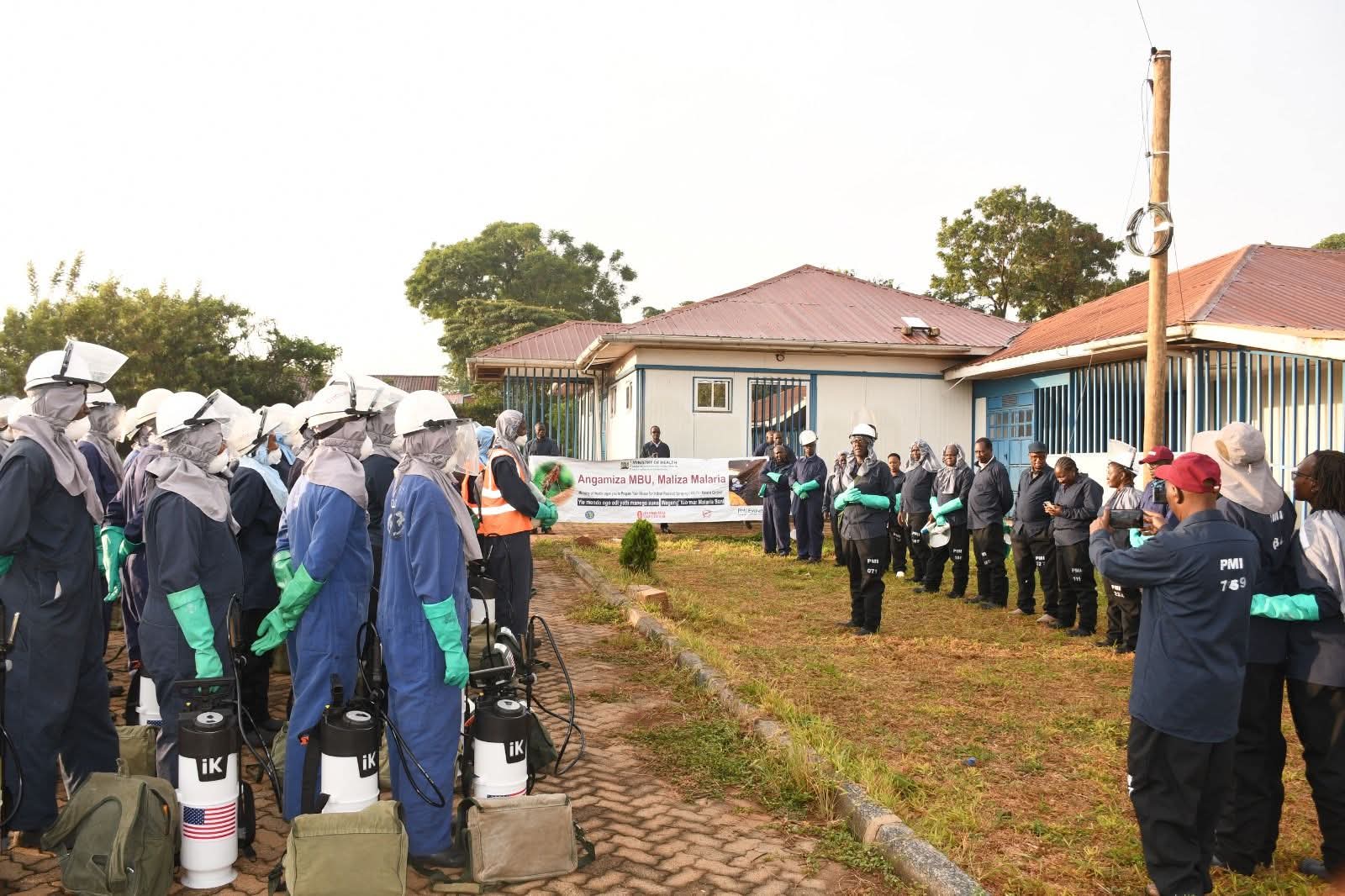
Siaya County has launched an ambitious, countywide Indoor Residual Spraying (IRS) campaign in a renewed push to curb malaria, one of the region’s most persistent public health threats.
The high-impact initiative was officially flagged off by the County Executive Committee Member for Health, Dr Martin K’Onyango, marking the start of comprehensive household spraying aimed at drastically reducing malaria transmission across the lakeside county.
The campaign is a joint effort between the County Government of Siaya, through the Department of Health, and PMI Evolve, a globally supported malaria control programme. It targets high-burden areas with the goal of interrupting mosquito breeding and transmission cycles at the household level.
Speaking during the launch, Dr K’Onyango said the IRS programme underscores the county’s commitment to preventive healthcare and evidence-based interventions.
“Malaria continues to exact a heavy toll on our communities, affecting productivity, school attendance, and household incomes. Indoor Residual Spraying is one of the most effective tools we have, and we are determined to ensure it reaches every targeted household,” he said.
 ADVERT
Indoor Residual Spraying involves applying long-lasting, WHO-approved insecticides on interior walls and surfaces of homes where malaria-carrying mosquitoes rest. The method has been proven to significantly reduce malaria cases when combined with other interventions such as treated mosquito nets, early testing, and prompt treatment.
Health officials noted that the campaign will be conducted by trained spray operators, with strict adherence to safety and environmental guidelines. Community sensitisation teams have also been deployed to educate residents on the benefits of IRS and address concerns related to the exercise.
PMI Evolve representatives lauded Siaya County for its sustained investment in malaria control, noting that strong county leadership and community cooperation are critical to achieving lasting results.
“IRS works best when communities open their homes and actively participate. Siaya has demonstrated leadership in embracing proven malaria control strategies,” a programme official said.
The IRS rollout forms part of Siaya County’s broader strategy to lower malaria prevalence, reduce outpatient burden in health facilities, and improve overall public health outcomes. The county remains one of Kenya’s malaria-endemic regions, making sustained interventions critical.
Residents have been urged to cooperate with spray teams and allow access to their homes, as officials emphasized that the success of the campaign hinges on full community participation.
As the spraying teams fan out across villages and wards, Siaya County is betting that a coordinated, science-driven approach will finally turn the tide against a disease that has for decades weighed heavily on its people.


