


• Fri. Oct 23rd, 2026
ADVERT

Mystery Collapse at the Presidential Gates: Elite GSU Guard Dies Suddenly at Mombasa State House – Investigators Probe Last Meal as Family Awaits Answers

ByEditor

Feb 27, 2026
ADVERT
ADVERT

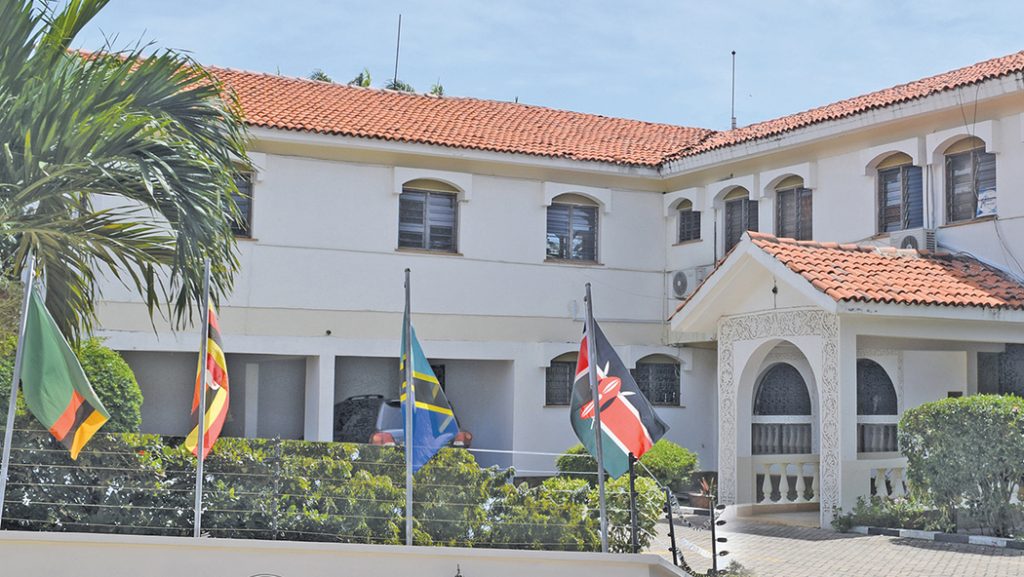
In the tightly guarded precincts of Kenya’s Mombasa State House, where every shadow is watched and every movement scripted for the nation’s top leadership, a routine morning shift turned tragic on February 25. A police constable from the elite General Service Unit (GSU) G Company – the very unit entrusted with protecting President William Ruto, his family, and key state residences – collapsed at his post, complained of abdominal pain, and was declared dead on arrival at hospital.

No foul play has been confirmed, but the swift launch of a detective probe focused squarely on “what the deceased ate, when, and where” has fueled whispers of a deeper mystery. With the President and his family absent at the time, questions are mounting: Was this a tragic natural death in one of Kenya’s most secure compounds, or could something more sinister lurk behind the elite guard’s final hours?

According to reports from The Star and corroborated by Kahawa Tungu, the incident unfolded in the early hours of Wednesday, February 25, 2026, inside the Mombasa State House compound (often referred to interchangeably with the presidential State Lodge in local security parlance). The officer, whose identity has not been publicly released, was found unconscious at his assigned duty station by colleagues.

He had reportedly complained of abdominal pain moments before collapsing. In the fall, he sustained a visible injury to his chin. Fellow officers rushed him to nearby Jocham Referral Hospital, where doctors pronounced him dead on arrival. His body was immediately transferred to the mortuary, pending a full postmortem examination.

The news sent ripples of panic through the on-duty team. Senior Mombasa county officials descended on the scene as part of the initial response. The victim’s family was notified and was expected to arrive in Mombasa on Thursday, February 26, to witness or participate in the autopsy process. As of early February 27, no official update on postmortem findings has emerged publicly.

ADVERT

The fallen officer belonged to GSU G Company, a specialized detachment responsible for guarding all State Houses and Lodges nationwide – including the President’s official residences, the Deputy President’s, and private premises. This unit forms the ironclad inner circle of presidential security: roughly 200 handpicked officers drawn from the best-trained personnel across police formations, supported by National Intelligence Service elements.

These are not ordinary constables. They undergo rigorous vetting and training to handle high-stakes threats – from armed intruders to potential insider risks. Armed GSU personnel with rifles are the exception at public events, underscoring their elite status. When the President travels or addresses crowds, layers of local police supplement them under strict command protocols.

Yet this death exposes a vulnerability rarely discussed: the physical and mental toll on those who stand watch 24/7 in sweltering heat, under constant vigilance, often far from their families. A similar incident occurred in April 2025 when Sergeant Daniel Kipruto Kangogo, attached to the elite Presidential Escort Unit, collapsed while attempting to board a vehicle and later died. That case, too, left many unanswered questions about underlying health strains in the force.

Detectives from the Directorate of Criminal Investigations (DCI) have taken over, treating the death as suspicious enough to warrant a detailed inquiry into the officer’s final meals. This is standard procedure in high-security environments, where poisoning – accidental or deliberate – cannot be ruled out without exhaustive checks. Samples will likely test for toxins, contaminants, or pre-existing conditions exacerbated by diet.

No CCTV footage or witness accounts beyond the abdominal pain complaint have been released. The President’s absence at the time rules out any immediate link to a high-profile visit, but the location itself – a symbolic fortress of state power – elevates the incident beyond a routine medical emergency.

Investigative journalists and security analysts note that such probes often aim to close loopholes: Could food supplied to guards have been compromised? Were there lapses in on-site medical response or routine health screenings for elite personnel? In a country where presidential security has faced scrutiny (recall the October 2025 spear attack on a GSU officer at Nairobi’s State House Gate D, which exposed perimeter gaps), this death raises fresh concerns about wellness protocols for those guarding the guardians.

This is not just one man’s tragedy. It spotlights systemic issues:

– Health Screening Gaps? Presidential guards operate in extreme conditions. Do mandatory annual medicals catch silent killers like cardiac issues, infections, or stress-related ailments? The chin injury from the fall suggests he may have been alone when symptoms struck – a potential red flag for lone-post protocols.

– Food and Logistics Security: State House catering and supplies for security personnel are tightly controlled. Yet the explicit focus on “what he ate” implies investigators are tracing suppliers, fellow officers’ meals, and even off-duty consumption. Accidental food poisoning from street vendors or contaminated water is possible in coastal Mombasa’s humid climate, but the probe’s intensity hints at ruling out intentional tampering.

– Morale and Retention: Sudden deaths in elite units erode confidence. With ongoing national security challenges – from protests to border threats – losing even one highly trained officer matters. Families of fallen officers often speak of inadequate support; will this case prompt better welfare measures?

Opposition voices and civil society may soon demand transparency, especially given Kenya’s history of opaque investigations into state-linked incidents. Transparency here – releasing the postmortem promptly and naming the officer respectfully – could rebuild trust.

The postmortem, now likely completed or imminent with family involvement, will be pivotal. Pathologists will examine for natural causes (e.g., aneurysm, infection, heart failure), toxins, or trauma. Toxicology results could take days or weeks.

Until then, the mystery lingers inside those fortified walls. A young or mid-career constable – details withheld – gave his life in service, only for his final moments to become a puzzle for the very system he protected.

As Kenya mourns yet another guardian lost on duty, the real test lies in the answers that emerge. Was it a cruel twist of fate, a preventable health failure, or something darker? The nation – and the fallen officer’s colleagues who must return to those same posts – deserves nothing less than the full truth.

ALSO READ

Ne-Yo Lights Up Nairobi as Stanbic Bank’s Mashujaa Day Concert Draws 3,500 Fans Grammy-winning R&B superstar headlines ‘One Night Only: Brunch Edition’ at Ulinzi Sports Complex as Stanbic Bank backs Kenya’s creative economy and local enterprise NAIROBI, October 21, 2026 — Nairobi’s entertainment scene came alive on Mashujaa Day as approximately 3,500 music fans gathered at Ulinzi Sports Complex for One Night Only: Brunch Edition with Ne-Yo, a premium live-music experience title-sponsored by Stanbic Bank. The concert, held on Tuesday, October 20, delivered an afternoon of live performances, music and networking, bringing together Kenyan and international talent for a celebration that blended world-class entertainment with opportunities for the country’s growing creative economy. Performances began at 3:30 pm and concluded shortly after 8:00 pm, maintaining the event’s signature daytime brunch format while giving fans an opportunity to experience some of the biggest names on the lineup before nightfall. Kenyan musician Mutoriah opened the show with an energetic set, setting the pace for the afternoon. UK-based band Sol and the Gang followed with a vibrant performance before three-time Grammy Award-winning American R&B star Ne-Yo took centre stage to close the concert in style. Top Kenyan DJs kept the predominantly millennial audience entertained throughout the event, sustaining the energy between performances and reinforcing Nairobi’s growing appetite for curated, premium music experiences. Stanbic Bank puts creative economy in the spotlight Beyond the music, the concert highlighted the commercial opportunities generated by Kenya’s live-entertainment industry, with Stanbic Bank positioning its sponsorship as an investment in the wider creative ecosystem. The production created business opportunities across multiple segments of the value chain, including artists, sound engineers, stage and technical crews, production specialists, hospitality providers, security personnel, vendors and micro- and small enterprises. For an industry that relies heavily on collaboration among creative professionals and service providers, events of this scale can stimulate local demand, support livelihoods and open new commercial opportunities for businesses operating behind the scenes. Michael Mutiga, Chief Executive of Stanbic Bank Kenya and South Sudan, said the concert demonstrated how large-scale entertainment can combine audience appeal with tangible economic activity. “Yesterday was a powerful demonstration of what happens when world-class entertainment meets meaningful local economic impact,” Mutiga said. He noted that bringing more than 3,000 fans together went beyond the performances on stage, generating business for artists, technical teams, vendors, hospitality partners and small enterprises involved in delivering the event. “Kenya’s creative sector is a dynamic driver of growth, and Stanbic Bank remains committed to strengthening this ecosystem, raising its commercial profile, and supporting the livelihoods anchored in it,” he added. Creative industry contributes 5.32% of Kenya’s GDP The sponsorship comes against the backdrop of the creative economy’s contribution to employment, enterprise development and national output. A 2021 report by the World Intellectual Property Organization (WIPO) and the Kenya Copyright Board (KECOBO) placed the creative industry’s contribution to Kenya’s gross domestic product at 5.32%, while estimating that the sector provided formal employment for approximately 195,000 people. The industry also supports livelihoods across the informal economy, including performers, independent producers, event organisers, designers, content creators, technicians and small businesses that supply goods and services to entertainment productions. Stanbic Bank’s approach underscores the potential of cultural events to serve as more than marketing platforms. By bringing together consumers, performers, businesses and corporate sponsors, such events can create opportunities for local talent, showcase production capabilities and connect home-grown enterprises to wider commercial networks. However, the long-term impact of such initiatives depends on whether the opportunities generated translate into sustained contracts, improved incomes and stronger business prospects for local players beyond individual events. Stanbic Bank celebrates premium daytime entertainment Lilian Onyach, Head of Brand and Marketing at Stanbic Bank Kenya, said the event was designed to offer clients and music enthusiasts a distinctive, world-class daytime entertainment experience. She said the turnout and audience energy reflected the vibrancy of Kenya’s entertainment market and the growing appeal of carefully curated live-music events. “We set out to offer our clients and music enthusiasts a distinctive, world-class daytime experience, and the turnout and energy yesterday proved just how vibrant Kenya’s entertainment market is,” Onyach said. She added that the afternoon schedule allowed the event to preserve its brunch atmosphere while showcasing the artistry, logistical expertise and commercial capacity of Kenya’s creative industry. The format also reflects a broader opportunity for event organisers and sponsors to diversify entertainment offerings beyond traditional late-night concerts, creating experiences that appeal to audiences seeking music, social interaction and premium hospitality in a single setting. Brand recognition reinforces Stanbic Bank’s market position The Ne-Yo concert adds to Stanbic Bank’s brand-building initiatives as the lender continues to pursue market visibility through entertainment, customer engagement and support for economic activity. The bank was recently named Overall Best Bank in Kenya at the Think Business Awards. At group level, its parent, Standard Bank Group, was ranked Africa’s Most Valuable Bank Brand by Brand Finance for the fifth consecutive year. Through sponsorships such as One Night Only, Stanbic Bank is seeking to connect its brand with experiences that attract consumers while supporting businesses and professionals in adjacent industries. As Kenya’s creative sector continues to evolve, the commercial value of live entertainment will increasingly depend on the ability of organisers, sponsors and industry players to convert audience demand into sustainable opportunities for artists, entrepreneurs and the wider workforce. At Ulinzi Sports Complex, Ne-Yo provided the headline attraction, but the broader story extended beyond the stage: a major public celebration that brought international music to Nairobi while spotlighting the economic potential of Kenya’s creative industries