 ADVERT
 ADVERT
The Orange Democratic Movement is quietly exploring ways to mend its deepest internal rift. Senior leaders are now weighing reconciliation with the breakaway “Linda Mwananchi” faction led by Nairobi Senator Edwin Sifuna and Embakasi East MP Babu Owino, even as that group challenges its expulsion and eyes alliances beyond ODM.
The move comes as pressure builds from party trustees, Raila’s widow Ida Odinga, Luo elders and even government-aligned veterans for a united front before the National Delegates Conference scheduled for March 27. With the controversial ODM-UDA Memorandum of Understanding due to expire on March 7, the stakes are enormous for a movement that once defined Kenyan opposition politics.
The fracture began after the March 2025 MoU between Raila and President William Ruto’s UDA, which created a broad-based government. Following Raila’s death, his elder brother Dr Oburu Oginga took the helm and continued the policy of cooperation under the slogan “Linda Ground.”
Opposing that path is the Linda Mwananchi faction, which accuses the Oburu camp of betraying Raila’s legacy by allowing the government to gradually absorb the party. The group — including Siaya Governor James Orengo, Deputy Party Leader Godfrey Osotsi, Kisii Senator Richard Onyonka, Saboti MP Caleb Amisi and others — insists ODM must stay a strong opposition force ready to field its own presidential candidate in 2027.
Tensions erupted in February when the National Executive Committee voted to remove Sifuna as Secretary-General, a decision the faction immediately labelled unconstitutional. Sifuna has since petitioned the Political Parties Tribunal, with a hearing set for March 12. In response, the rebels have held defiant rallies across Western Kenya, drawing huge crowds while branding their rivals “tumbocrats” more interested in personal gain than public service.
 ADVERT
Babu Owino captured the frustration sharply: “Some people left in ODM are only looking after their stomachs. You cannot sing ‘two-term’ when the youth are jobless, the education sector is in shambles, and families of those killed during protests are yet to be compensated.” Orengo was equally direct: “We will not allow anyone to sell the party… No one will break this party, nor will it be swallowed by another.”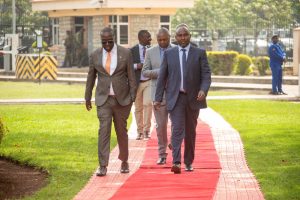
Sifuna has repeatedly insisted that any extension of the MoU beyond March 7 would require Raila’s personal signature — pointing out that the original agreement deliberately contained no renewal clause. “Anybody who wants to extend this MoU… you must go to Bondo and get Baba’s signature,” he declared recently.
Initial hardline attempts to discipline the rebels have softened. National Treasury Cabinet Secretary John Mbadi, once among the loudest voices calling for expulsion, has now urged dialogue, warning that the divisions are tearing the Luo community apart. In mid-February he hosted the Luo Council of Elders, who joined the call for an immediate truce.
Even more telling has been the intervention of ODM’s respected trustees — former Attorney General Amos Wako, treasurer Timothy Bosire and financial director Joshua Kawino — quietly backed by Ida Odinga. The trio has launched behind-the-scenes shuttle diplomacy to bring both camps together before the National Delegates Conference. Ruaraka MP TJ Kajwang’ confirmed the effort: “The trustees are begging both sides to come and reason.” Kibra MP Peter Orero added that in politics, “we always must have back channels.”
Analysts believe the drama will end in some form of accommodation. Political commentator and former MP Danson Mungatana has predicted a deal before the conference. Meanwhile, the Sifuna camp has not ruled out broader opposition talks with figures such as Rigathi Gachagua and Kalonzo Musyoka, raising the possibility of a new anti-Ruto alliance if reconciliation fails.
Proponents argue that a reunited ODM remains Kenya’s strongest opposition vehicle, especially with the upcoming conference offering a chance to elect fresh leadership and chart a clear post-Raila direction. For the Oburu camp, bringing the rebels back would silence claims that the party has been captured by the government and restore its credibility in core strongholds.
The alternative — a permanent split — risks by-elections, defections and the erosion of the ODM brand that Raila spent two decades protecting.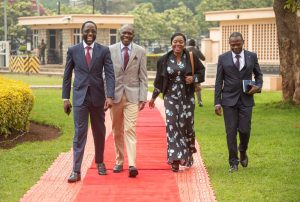
As the March 7 MoU deadline approaches and the March 27 conference looms, the coming days will reveal whether ODM’s old guard and its young firebrands can find common ground. Both sides claim to be guided by Baba’s legacy. The real test is whether that legacy is powerful enough to hold the party together now that the man who once bridged every divide is no longer here to do so. The answer could reshape Kenyan opposition politics for years to come.


