 ADVERT
 ADVERT
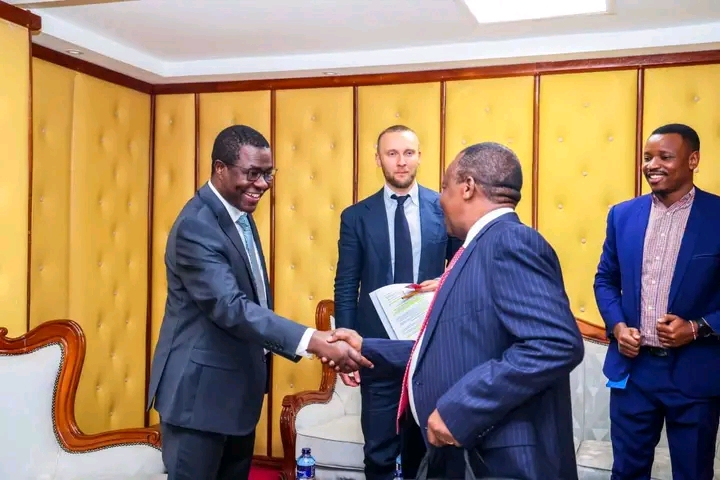
Cabinet Secretary of Energy and Petroleum Opiyo Wandayi met with the Danish delegation led by Søren Knudsen Møller, Deputy Head of Mission at the Royal Danish Embassy, to discuss areas of mutual interest between Kenya and the Kingdom of Denmark. This engagement underscores the growing importance of bilateral cooperation in the energy and petroleum sectors, where both nations seek to advance shared goals in sustainable development, technological transfer, and economic growth. Kenya’s energy landscape is undergoing rapid transformation, driven by the need to expand access to reliable power, optimize petroleum resources, and integrate renewable sources into the national grid. Denmark, with its established expertise in wind energy, green technologies, and efficient petroleum management, offers a strategic partner to support these objectives. The meeting highlights Kenya’s proactive approach to leveraging international partnerships for national priorities outlined in the Bottom Up Economic Transformation Agenda.
The discussions likely centered on key areas such as renewable energy integration and grid modernization, which are critical for Kenya’s energy security. Kenya has made significant strides in geothermal and solar power. However, challenges persist in scaling these resources to meet industrial demands and reduce reliance on costly thermal backups. Denmark’s leadership in offshore and onshore wind projects provides a model for Kenya, particularly in the coastal regions where wind potential remains untapped. Wandayi’s engagement signals intent to explore joint ventures that could introduce Danish technology for hybrid energy systems, combining wind with Kenya’s geothermal strengths. This collaboration would enhance energy reliability, lower production costs, and support the government’s target of universal electricity access. Mutual interests extend to capacity building, where Danish expertise could train Kenyan engineers in advanced turbine maintenance and smart grid operations, fostering long term self sufficiency.
Petroleum sector cooperation emerged as another focal point, given Kenya’s expanding role as an oil producer and refiner. The discovery of commercially viable reserves in Turkana County has positioned Kenya to join the ranks of African oil exporters, with production ramping up under the oversight of the National Oil Corporation of Kenya. Denmark’s experience in sustainable petroleum extraction, including carbon capture technologies and efficient refining processes, aligns directly with Kenya’s need to balance resource exploitation with environmental standards. The meeting addressed potential investments in the upcoming Nairobi Nyeri Mwea oil pipeline and the expansion of the Kenya Petroleum Refineries Limited. By partnering with Danish firms, Kenya can adopt best practices in upstream exploration and downstream distribution, minimizing flaring and optimizing yields. This would generate revenue streams for county governments in the oil rich regions, while creating jobs in refining and logistics. Wandayi’s leadership in these talks demonstrates a commitment to transparent resource management, countering past delays in licensing and infrastructure development.
Bilateral trade and investment frameworks further strengthen the rationale for this partnership. Kenya Denmark relations have evolved through frameworks like the EU East Africa Economic Partnership Agreement, which facilitates duty free access for Kenyan exports. Energy cooperation builds on this by opening avenues for Danish companies to invest in Kenya’s Special Economic Zones focused on green manufacturing. The discussions probably explored public private partnerships for off grid solar solutions in rural areas, addressing those Kenyans still without electricity. Wandayi’s meeting reinforces Kenya’s diplomatic strategy of diversifying partnerships beyond traditional donors, integrating Denmark’s Nordic model of innovation driven growth. This approach aligns with President William Ruto’s foreign policy emphasis on mutual benefit, where Kenya offers market access and labor in exchange for technology and financing.
 ADVERT
Challenges in energy transition require candid bilateral dialogue, which this meeting exemplifies. Kenya faces hurdles like high upfront costs for renewables and regulatory bottlenecks in petroleum licensing. Denmark’s input on policy reforms, such as streamlined permitting for wind farms, could accelerate projects. The partnership also addresses climate commitments under the Paris Agreement, with both nations targeting net zero emissions. Kenya’s updated Nationally Determined Contributions emphasize electrification and clean cooking fuels, areas where Danish biogas and efficiency technologies can contribute. Wandayi’s proactive stance positions Kenya to attract green bonds and climate finance, channeled through joint initiatives. This collaboration extends to regional integration via the Eastern Africa Power Pool, where Danish support could enhance cross border transmission lines, benefiting the East African Community.
The broader implications of this meeting point to a maturing Kenya Denmark relationship that prioritizes practical outcomes over rhetoric. Past engagements, such as Denmark’s support for the Lake Turkana Wind Power project, have already delivered power to homes. Building on this success, Wandayi’s discussions pave the way for scaled investments in hydrogen production and electric mobility, aligning with Kenya’s electric vehicle assembly ambitions. Petroleum value addition remains key, with potential for Danish refining tech to process local crude into petrochemicals for export. These steps would bolster foreign exchange reserves, currently strained by oil import bills. The meeting also signals Kenya’s readiness to host Danish energy expos, fostering business to business linkages.
In conclusion, Cabinet Secretary Opiyo Wandayi’s meeting with Søren Knudsen Møller’s delegation marks a pivotal step in harnessing Denmark’s strengths for Kenya’s energy and petroleum advancement. By focusing on renewables, sustainable oil management, and investment flows, this partnership advances national development goals while promoting equitable global energy access. Kenya stands to gain technological upgrades, job creation, and revenue diversification, ensuring a resilient sector for future generations. Such engagements exemplify strategic diplomacy that delivers tangible results for ordinary Kenyans.
James Kilonzo Bwire is a Media and Communication Practitioner.


