 ADVERT
 ADVERT
By Samson Wire
A high-level committee chaired by Johnson Sakaja has ordered an urgent 48-hour flood response plan to tackle damaged roads, blocked drainage systems and vulnerable flood zones across Nairobi following heavy rains that have disrupted transport and infrastructure in several estates.
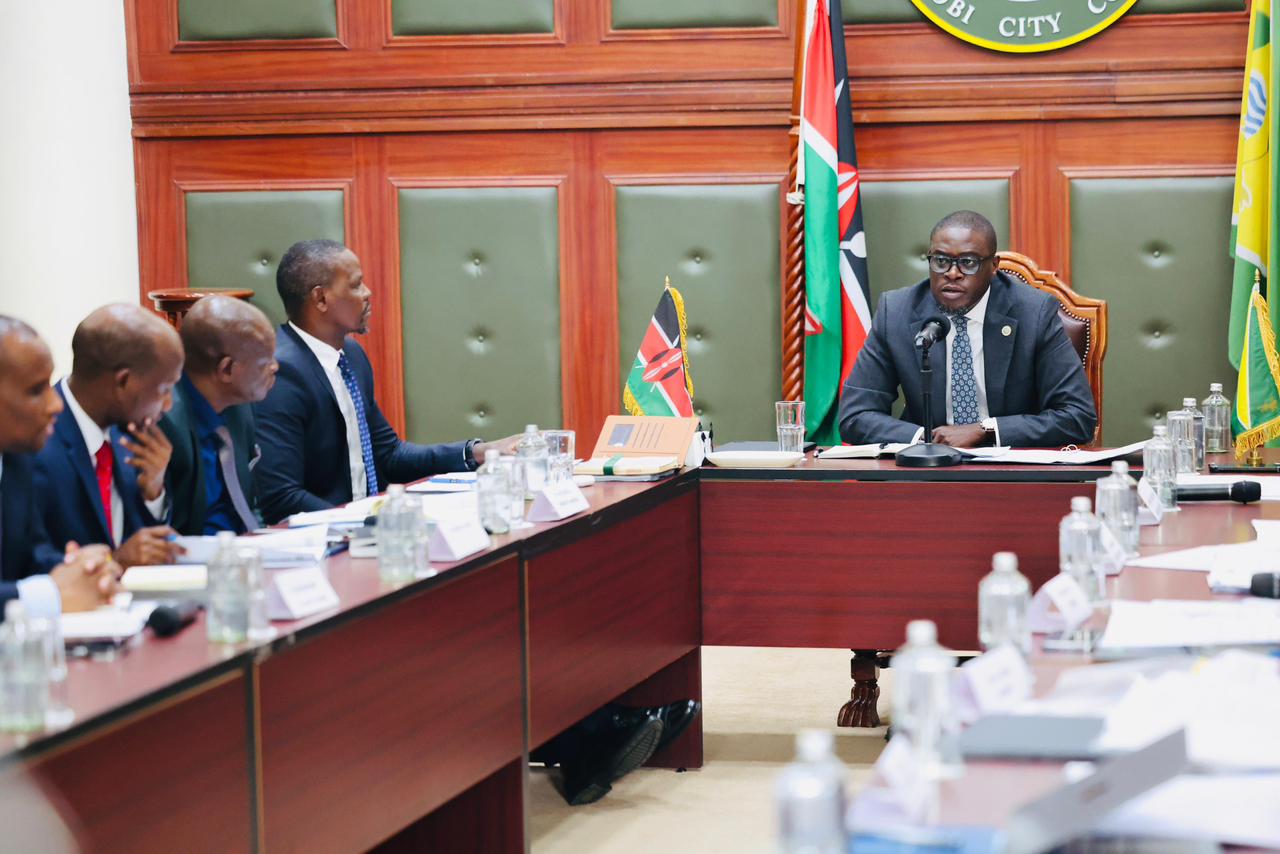
The directive was issued during a meeting of the Implementation Committee on the Cooperation Agreement between the National Government and Nairobi City County Government, bringing together senior officials from both levels of government to coordinate an immediate response to the growing flooding crisis.
Governor Sakaja said infrastructure agencies have been instructed to carry out joint rapid assessments of flood damage and submit a fully costed recovery plan within 48 hours.
“Under the immediate response plan, infrastructure agencies have been tasked with conducting a joint assessment of flood damage and submitting a costed recovery plan within 48 hours, focusing on heavily affected road corridors and drainage systems across the city,” Sakaja said.
 ADVERT
The emergency meeting brought together Principal Secretaries and technical experts from several national agencies, including Kenya Urban Roads Authority, Kenya National Highways Authority, Kenya Rural Roads Authority, National Environment Management Authority, Water Resources Authority and the National Treasury.
Technical teams have already begun mapping flood-prone areas across Nairobi’s 17 sub-counties, identifying blocked drainage systems and prioritizing de-silting operations and urgent road repairs to prevent further damage during the ongoing rainy season.
Officials say some of the worst-affected areas include estates where drainage channels have been clogged by silt, waste and illegal structures built along riverbanks.
As part of the response plan, the committee directed a multi-agency taskforce to intensify enforcement against encroachment on riverbanks and floodplains.
The team will reclaim riparian land and reopen blocked waterways to restore natural river flow and reduce recurrent flooding in vulnerable neighbourhoods.
“Recovering riparian corridors is essential if we are to stop the cycle of flooding every rainy season,” Sakaja noted.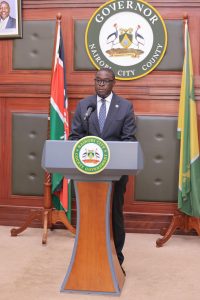
Authorities also announced progress in restoring critical services. A major water transmission pipeline along Outer Ring Road, which had been damaged by floods, has now been repaired.
Water supply has been restored to several estates including Buruburu, Kariobangi, Dandora and parts of Mathare, while repair works continue on distribution lines serving Kiambiu and Korogocho.
To prevent disease outbreaks in flood-affected communities, the county has deployed public health teams across affected neighbourhoods.
So far authorities have:
Disinfected more than 300 households and sanitation facilities
Distributed over 4,000 household water treatment supplies
Sanitized more than 30 flood-affected schools, protecting approximately 3,800 students
Health officials warn that stagnant water and contaminated drainage systems can trigger outbreaks of waterborne diseases if swift preventive measures are not implemented.
Governor Sakaja said the national and county governments will maintain a “single-window implementation approach” to fast-track recovery, mobilize resources and eliminate bureaucratic delays.
The committee is scheduled to reconvene on March 19 to review the 48-hour implementation report and evaluate progress on road repairs, drainage restoration and flood mitigation measures.
With heavy rains expected to continue in the coming weeks, authorities say the rapid response plan will be critical in protecting infrastructure, homes and public health across the capital.


