 ADVERT
 ADVERT
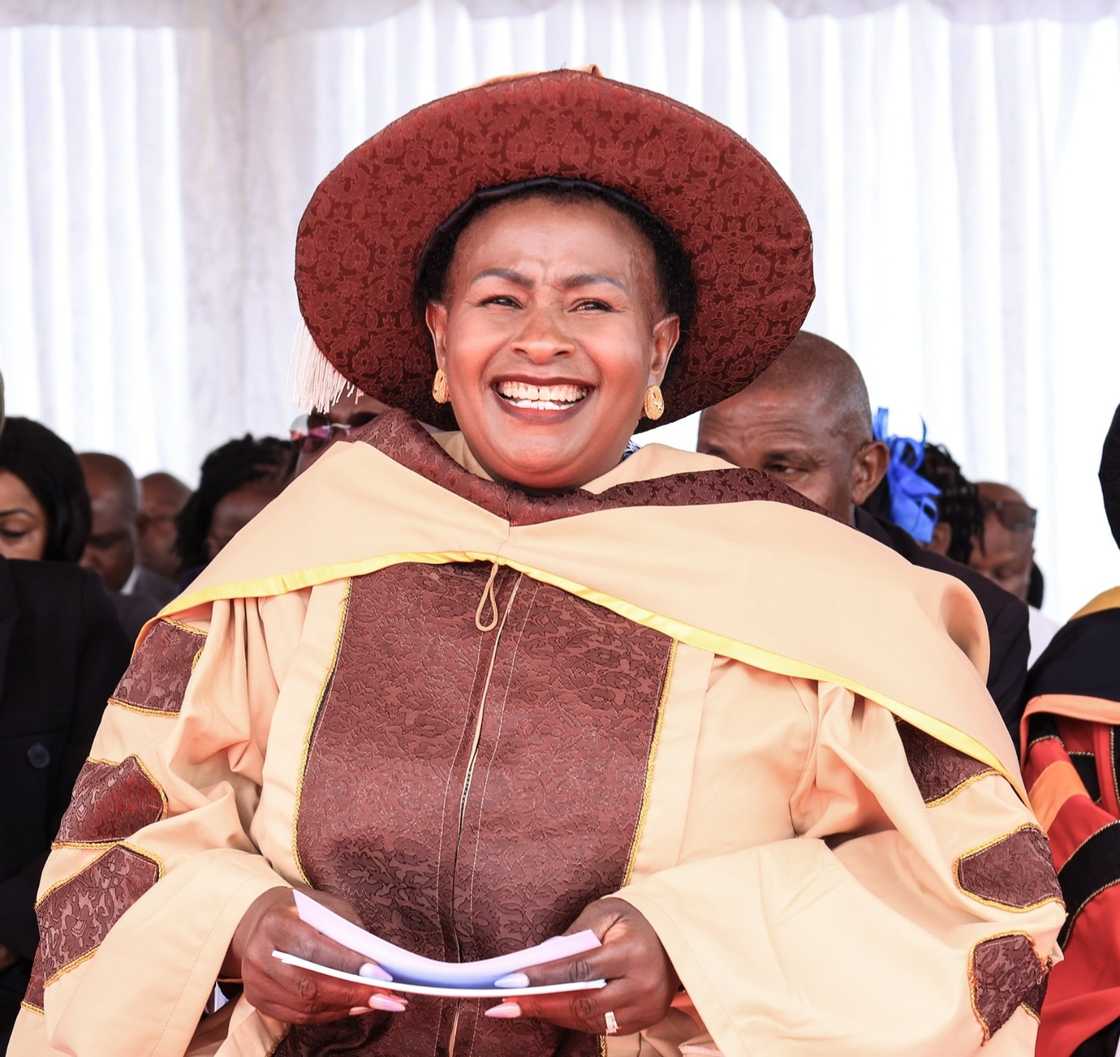
As the 2027 election season heats up, Machakos Governor Wavinya Ndeti is boldly touting her academic edge: three diplomas, three degrees, and a thesis on artificial intelligence completed in 1992 – decades before AI became a buzzword in Africa.
“I was just laughing with somebody when I told them I did my thesis in artificial intelligence in 1992,” she declared recently, adding that none of her male rivals matches her educational level.
The claim has ignited fierce online debate, memes, and sharp criticism, reviving questions about the strength of her qualifications – especially after past vetting where she reportedly presented a one-week attendance certificate.
According to profiles, IEBC records, and public statements, Ndeti’s credentials include:
– Advanced Diploma in Computer Science, South Bank University (now London South Bank University), UK – 1989
– Graduate Diploma in Computer Science, South Bank University – 1990
– MSc in Business Systems Analysis and Design, City University London – November 1992
– BSc in Computing Studies, South Bank University – July 1995
– MBA in Marketing, Heriot-Watt University – 1996
 ADVERT
The unusual timeline stands out: she earned the MSc three years before the BSc. In 2022, petitioners challenged this sequence before the IEBC and courts, arguing it raised red flags about recognition in Kenya and how she accessed a master’s without a prior undergraduate degree.
Ndeti explained that the UK system allowed entry via diplomas and credit accumulation. She completed short courses and diplomas at South Bank that served as degree equivalents, used them for the City University MSc, then later converted credits into a full BSc. Machakos High Court verified the certificates via university portals in 2022 and ruled them legitimate. The IEBC cleared her, and she won the gubernatorial seat. Courts have upheld the papers.
The fresh AI boast has brought back memories of earlier vetting sessions, where Ndeti allegedly produced a one-week attendance certificate among her documents. While no scanned copy has surfaced publicly, the detail fed into 2022 complaints about “short courses” and sequencing anomalies. Challengers painted her portfolio as impressive on paper but procedurally questionable. Ndeti countered that the UK system valued practical diplomas over rigid ladders.
Ndeti has not publicly shared the thesis title, abstract, or university confirmation. No independent records directly link her name to an AI dissertation from her 1992 MSc at City University.
In 1992, AI existed – but it was far from today’s generative tools. The field was in the “AI Winter,” with focus on expert systems, rule-based programs, knowledge engineering, and business applications like diagnostics or decision support. An MSc in Business Systems Analysis and Design could plausibly include AI techniques without bearing the exact title “Artificial Intelligence.”
Critics, including Miguna Miguna, dismissed the claim outright, arguing no standard university AI program existed then outside engineering fields like robotics. Social media erupted with jokes and skepticism.
Yet the assertion isn’t entirely impossible. UK computer science and business programmes did explore early AI applications. Without the actual thesis, however, it remains an unverified personal claim.
Ndeti’s listed UK qualifications from reputable institutions check out. Court verifications and IEBC clearance confirm their legitimacy, even if the timeline is unconventional.
The 1992 AI thesis, however, lands as an extraordinary claim without extraordinary evidence so far. In Kenya’s credentials-obsessed politics, it makes for a strong soundbite – but risks becoming a punchline until supporting documents emerge.
As voters eye 2027, the question lingers: do solid UK credentials and public service record outweigh the optics of dramatic embellishment? Governor Ndeti’s academic story is verified on paper – yet her flair for bold claims has invited the nation to keep fact-checking every line.



