 ADVERT
 ADVERT
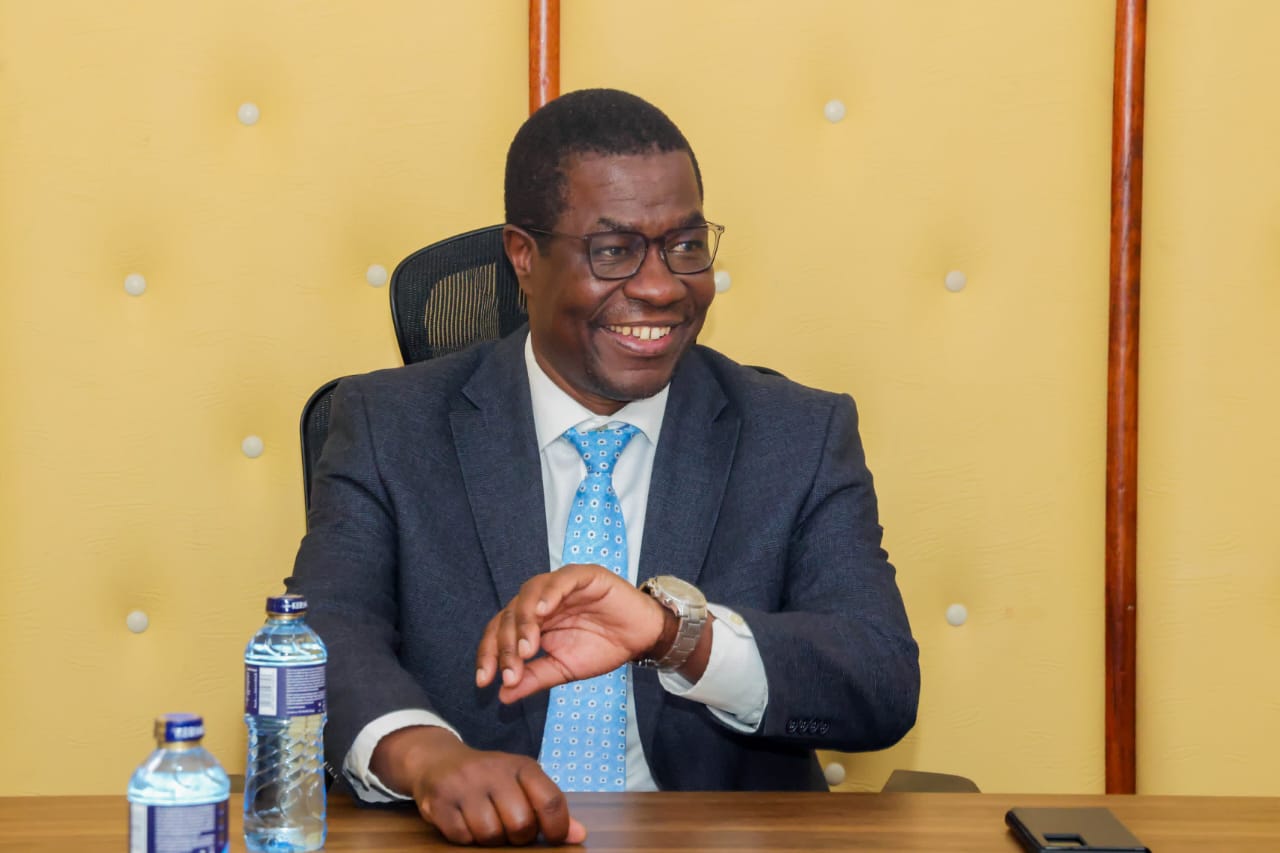
Cabinet secretary Opiyo Wandayi has once again shown that steady, discreet statesmanship can deliver results where spectacle and posturing only create noise. Cabinet secretary has demonstrated a governing style that prioritises calm engagement and structured dialogue over public confrontation and performative politics. In a political environment often shaped by loud declarations and public competition for attention, his approach reflects a deliberate choice to resolve sensitive matters through careful consultation with relevant stakeholders. During recent tensions surrounding fuel pricing concerns, he maintained a posture focused on resolution rather than escalation. He avoided public exchanges that could have inflamed emotions and instead concentrated on direct engagement that preserved the space for negotiation. This method ensured that attention remained on practical solutions rather than political theatre, reinforcing the importance of discipline in public administration.
The manner in which Wandayi handled the situation reflects a deeper understanding of governance as a process that depends on patience, trust building, and consistency. He engaged transport sector actors and other affected stakeholders in discussions that acknowledged their concerns while reinforcing the responsibility of government to maintain stability within essential sectors. This balance is central to effective leadership, particularly in areas that directly affect national economic performance and household stability. By maintaining composure in the face of pressure, he demonstrated that leadership does not require loud confrontation to be effective. Instead, it requires clarity of purpose and the willingness to remain focused on outcomes even when circumstances invite public drama. His conduct reinforced the idea that negotiation is not a sign of weakness but a mechanism for achieving durable solutions.
Wandayi’s approach also highlights the importance of communication that is measured and deliberate. In moments of tension, public language can either reduce pressure or amplify it. His choice to avoid evasive language and instead maintain direct and steady communication contributed to reducing uncertainty among stakeholders. This allowed discussions to proceed within a framework that prioritised resolution rather than blame. It also ensured that the government remained engaged with all relevant parties without closing off channels of dialogue. In doing so, he strengthened the credibility of the process and reinforced public confidence in the ability of institutions to manage complex issues without unnecessary disruption.
The significance of this style of leadership extends beyond a single policy issue. It speaks to a broader philosophy of governance where discretion and restraint are treated as assets rather than limitations. Cabinet secretary Opiyo Wandayi has demonstrated that effective public service often requires working quietly within systems, building consensus, and allowing processes to mature without external pressure being turned into confrontation. This approach ensures that policy decisions are not made in reaction to public pressure alone but are grounded in careful consideration of long term national interest. It also protects critical sectors of the economy from the instability that can arise when negotiations are conducted in a highly public and adversarial environment.
The confidence placed in Wandayi by President William Ruto reflects an appreciation of this method of governance. President has assigned him responsibilities that require careful handling and measured judgement, particularly in areas that are sensitive and central to national stability. This trust indicates recognition of his ability to manage competing interests without allowing tensions to escalate into public conflict. It also suggests that his role is not limited to administrative oversight but extends into strategic mediation where political intelligence and emotional restraint are necessary. Such responsibilities require a leader who can operate effectively in environments where pressure is constant and expectations are high, without losing focus on institutional objectives.
 ADVERT
The events surrounding fuel pricing discussions illustrate how critical it is for government officials to maintain open lines of engagement with stakeholders who operate in essential sectors. Wandayi’s decision to prioritise engagement ensured that concerns were addressed within structured dialogue rather than allowed to develop into prolonged disagreement. This prevented the situation from evolving into a deeper disruption that would have affected economic activity and public confidence. His method showed that when leadership is anchored in communication and consultation, it becomes possible to manage complex issues without resorting to confrontation or public exchange that undermines trust.
It is also important to recognise that this style of leadership requires discipline in resisting the pressure to respond to hostility with equal intensity. Wandayi’s refusal to engage in hostile exchanges demonstrated a commitment to maintaining focus on resolution rather than reaction. This restraint is significant in political environments where there is often an expectation that leaders must respond immediately and forcefully to every challenge. Instead, he chose a path that allowed space for dialogue to remain constructive. This approach preserved the integrity of the process and ensured that attention remained on resolving the issue rather than escalating it.
The broader implication of his conduct is that governance benefits when leaders understand the value of timing, restraint, and structured engagement. Public administration is most effective when it prioritises sustainable solutions over immediate visibility. Wandayi’s approach illustrates that leadership can be firm without being confrontational and decisive without being disruptive. It also shows that maintaining institutional stability often depends on the ability of leaders to manage pressure without allowing it to distort decision making processes. In this sense, his style contributes to strengthening governance structures by reinforcing the importance of procedure and dialogue.
Kenyan politics often presents moments where competing interests create tension that requires careful management. In such moments, the presence of leaders who can operate with discretion and focus becomes essential. Wandayi’s handling of recent challenges demonstrates that it is possible to navigate such situations without resorting to spectacle or public contestation. His emphasis on engagement, restraint, and structured communication offers a model of leadership that prioritises national interest over personal visibility. As governance challenges continue to evolve, this approach provides a framework for addressing issues in a manner that preserves both economic stability and institutional credibility.
James Bwire Kilonzo is a Media and Communication Practitioner.



