 ADVERT
 ADVERT
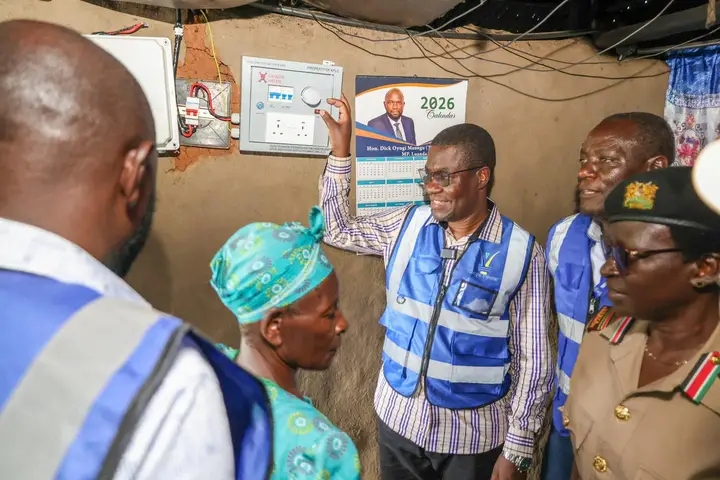
Cabinet secretary Opiyo Wandayi concluded development tour of Vihiga County with a visit to Luanda Constituency, where he was hosted by Area MP Hon. Dick Oyugi Maungu. In Wemilabi Ward, Luanda Sub-County, he officially commissioned the Mungubu Village Last Mile Connectivity Programme project implemented by KPLC, a milestone that visibly extends electricity access to local households and institutions and signals a deliberate push to bring reliable power closer to the daily lives of rural Kenyans. Wandayi then launched the KPLC Rabuor/Esikuku Village LMCP project in Mwibona Ward, announcing that the pole erection phase would commence immediately ahead of the full connectivity works, and this sequence of events reads like a news story of purposefully staged public service delivery: a national leader on the ground, local representatives present, technical teams preparing to move from planning to physical infrastructure, and communities awaiting the transformative effects of access to electricity.
These project launches are not isolated gestures; they form part of President William Ruto’s broader commitment to accelerating rural electrification, which articulates a clear policy direction linking government priorities to tangible improvements in everyday life across counties and constituencies. The narrative of ministers and Members of Parliament visiting project sites is familiar in political life, yet what matters beyond the optics is the sustained follow through that converts ceremonial switch ons into reliable, affordable power for homes, schools, health facilities and businesses, because the true measure of success for such programmes is not a one day photo opportunity but the enduring presence of energy that people can depend on.
Expanding the grid into villages and hamlets addresses a fundamental barrier to inclusive development by reducing the isolation that has long constrained opportunities for education, health service delivery and small scale enterprise, and the LMCP approach focused on last mile connections acknowledges that strategic investments must reach people where they live rather than stopping at district or town boundaries. As electricity becomes more widely available, households gain the ability to power lighting for study and enterprise, clinics can operate essential equipment consistently, schools can use digital resources and extend hours for learning, and entrepreneurs can establish new services that depend on dependable energy; these are not abstract benefits but everyday improvements that reshape possibilities for families and communities.
The political leadership shown by Wandayi’s tour and the president’s commitment establishes expectations that the government will coordinate planning, funding and technical execution efficiently, and residents rightly interpret these local project launches as a promise that public resources will convert into functioning infrastructure that improves livelihoods. If that promise is kept, trust in public institutions is strengthened, and if it is broken, cynicism and frustration are amplified. The operational detail matters: swift commencement of pole erection and quick follow up on connections reduce the window for delays, lower costs associated with protracted projects and sustain community confidence, while effective coordination with Kenya Power and other stakeholders ensures that the distribution network is resilient, tariffs remain affordable and maintenance systems are in place to prevent frequent outages.
Integrating rural electrification within a broader development framework is also essential; power alone will not automatically generate growth unless complementary measures such as skills training, access to credit, and market linkages are available to help households and small businesses translate new energy access into productive activity, and so the LMCP projects should be seen as one piece in an ecosystem of interventions needed to convert infrastructure into economic opportunity. There is a political dimension to these initiatives as well, where visible progress on service delivery can consolidate popular support for leaders and reinforce narratives of responsive governance, but such political gains should be a byproduct rather than the primary objective; true leadership in this sector will be judged by the durability of the infrastructure, the fairness of access across wards and sub counties, and the degree to which the energy delivered is affordable to the poorest households.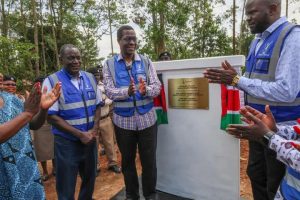
 ADVERT
Achieving those outcomes will require transparent procurement and project management, clear reporting on timelines and budgets, and mechanisms for community feedback so that problems on the ground are quickly surfaced and remedied, because community ownership and oversight are powerful forces for ensuring that projects remain focused on public benefit rather than captured by narrow interests. The intertwined news of Wandayi’s tour and the LMCP launches offers an opportunity to reflect on the broader policy intent: Kenya’s development strategy increasingly recognises that electrification is foundational to modern life, and by prioritising last mile connectivity the government acknowledges the principle that development must be inclusive and not confined to urban centres.
Realising that principle at scale will test the capacity of public agencies and the private sector to deliver under pressure, and it will demand sustained political will to fund expansion, upgrade distribution networks, and subsidise connections where affordability is a barrier, all while safeguarding the financial health of the national utility. The on the ground momentum created by immediate works such as pole erection can catalyse further investments by showing contractors and financiers that projects are viable, but long term success will hinge on predictable policies that encourage renewable generation, support decentralized solutions where grid connection is uneconomical, and promote energy efficiency so that households and businesses can make the most of new supply without encountering crippling bills.
In the end, the story of the Mungubu and Rabuor Esikuku LMCP projects should be judged by the daily realities they produce: brighter homes where children can study after dusk, clinics that maintain refrigeration for vaccines and operate medical devices reliably, small traders who extend services into evenings, and farmers who can add value through processing and preservation. These practical changes are the reason governments invest in electrification, and they are what transform a political commitment into lived improvements for citizens. Cabinet secretary Wandayi’s visible engagement and the prompt start of physical works are encouraging signs, but they are the beginning of a longer process that requires diligence, transparency and an unwavering focus on equitable access. If the momentum generated by these launches is maintained, communities in Luanda and across Vihiga County will experience tangible benefits that contribute to improved livelihoods and local economic activity, and the national agenda of powering the new Kenya will be advanced in a manner that honours the public trust and yields inclusive growth.
James’ Kilonzo Bwire is a Media and Communication Practitioner.



