 ADVERT

 ADVERT
Cabinet Secretary of Energy and Petroleum Opiyo Wandayi had the honour of addressing the 4th Kenya Power E Mobility Conference at KICC under the theme “Aligning Policy, Infrastructure and Partnerships to Scale E Mobility in Kenya.”
Kenya stands at a pivotal moment in its transport and energy history, poised to lead Africa’s transition to electric mobility through deliberate policy, strategic infrastructure investment, and collaborative partnerships. The country’s energy profile provides a foundational advantage. The overwhelming majority of Kenya’s electricity is produced from renewable sources, creating a low carbon grid that can underpin an electric vehicle fleet with genuinely lower lifecycle emissions. This structural strength reduces the risk of simply shifting pollution from tailpipes to power stations and enables Kenya to pursue a transport decarbonization pathway that aligns with broader climate and development goals. The National Electric Mobility Policy constitutes the policy backbone for this transition, signalling governmental intent and providing the regulatory clarity necessary to mobilize private capital, attract manufacturing interest, and coordinate public investment. By articulating incentives and regulatory mechanisms, the policy addresses the primary market failures that typically deter early adoption, including uncertain total cost of ownership, limited charging infrastructure, and regulatory fragmentation across national and county levels. It also sets expectations for how government agencies, utilities, and regulators will work together to ensure grid readiness, consumer protection, and standards for vehicles and chargers.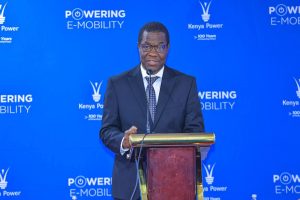
Investment in charging infrastructure is central to turning consumer interest into sustained adoption. The development of a dense, reliable charging network reduces range anxiety and signals market confidence to fleet operators, taxi services, and individual buyers alike. Public and private deployment of chargers must be strategic, addressing corridors of high traffic and urban nodes while ensuring interoperability and ease of payment. Equally important is aligning infrastructure rollout with planning for grid upgrades, permitting processes, and land use to avoid bottlenecks and ensure chargers are powered by clean energy. Where charging is integrated with renewable generation and storage, the resilience and environmental benefits of electric mobility are maximized. Such investments also create commercial opportunities for local firms including installation, maintenance, software management, energy management, and ancillary services, thereby contributing to economic diversification and skills development.
Targeted incentives are another lever that can accelerate market formation without creating permanent fiscal burdens. The decision to allow duty free importation of electric vehicles is an example of a time bound, focused measure that lowers the initial price barrier and accelerates fleet entry. When complemented by incentives for local assembly and component manufacturing, such measures can create upstream value capture in Kenya rather than solely enabling re exports of second hand vehicles. To be effective, incentives should be structured to encourage transition of high mileage and commercial fleets, which deliver the greatest emissions reductions and total cost of ownership benefits, while also supporting equitable access for smaller operators and consumers. Transparent sunset clauses, performance criteria, and regular reviews ensure incentives remain efficient and targeted as the market matures.
Electric mobility intersects with energy security in tangible ways. A transport sector shifting toward electricity reduces dependence on imported petroleum products, insulating the economy from volatile global oil markets and pressure on foreign exchange. When paired with a resilient domestic power system that increasingly relies on renewables, the outcome is a transport energy nexus that strengthens national sovereignty over energy supply. Managing this transition requires prudent planning for the increased electricity demand that transport electrification will bring. Load forecasting, smart charging policies, demand response frameworks, and investment in distribution networks are necessary to prevent local congestion and to harness electric vehicles as flexible loads that can support grid stability. Policy makers and utilities must collaborate on tariff design that balances cost reflectivity with incentives for off peak charging, thereby smoothing demand profiles and making better use of existing generation capacity.
 ADVERT
The economic opportunity presented by electric mobility extends beyond fuel savings. It encompasses job creation, manufacturing potential, and new services. From vehicle assembly and battery handling to charging station installation and digital fleet management, a breadth of employment and entrepreneurship opportunities arise. Realizing these benefits requires deliberate industrial policy and skills development programs that prepare workers for manufacturing, maintenance, and software roles. Partnerships with educational institutions and the private sector can fast track training and certification standards, while procurement policies that favour local content can stimulate early demand for domestic suppliers. To translate opportunity into lasting economic transformation, efforts must be made to ensure that value chains are inclusive and accessible to small and medium enterprises across regions.
Environmental and public health gains are central rationales for prioritizing electric mobility. Reduced tailpipe emissions contribute to improved urban air quality, with attendant benefits for respiratory and cardiovascular health, particularly in densely populated cities. These outcomes reduce burdens on public health systems and can be an important component of wider urban sustainability strategies. Achieving these benefits requires attention to battery lifecycle management, including recycling, second life applications, and environmentally responsible disposal. Establishing regulatory frameworks and commercial arrangements for battery stewardship reduces the risk of creating downstream environmental harms and opens new sectors for innovation in recycling and material recovery.
Regional leadership in e mobility can amplify Kenya’s gains and position the country as a hub for policy innovation, manufacturing, and cross border electrified transport corridors. Harmonizing standards for charging equipment, safety, and vehicle homologation with neighbouring countries facilitates regional trade and the operation of cross border fleets. Kenya’s experience with policy instruments, infrastructure models, and public private partnership arrangements can inform regional best practice, while regional market integration expands the scale needed to attract larger investments in assembly and component manufacturing. This leadership role also supports diplomacy and development cooperation by aligning investments with continental goals for sustainable transport and energy access.
Realizing the promise of electric mobility requires sustained collaboration among government, utilities, the private sector, development partners, and civil society. Each actor plays a distinct role. Government provides policy clarity, incentives, and public investment. Utilities ensure reliable and clean power and adapt operationally to new demand patterns. Private firms deliver vehicles, charging services, financing, and innovation. Development partners offer concessional finance, technical assistance, and risk sharing instruments, while civil society helps ensure equitable outcomes and public buy in. Transparent procurement, clear standards, and forums for multi stakeholder dialogue reduce policy uncertainty and accelerate coordinated action. Importantly, policy design must be sensitive to distributional impacts and incorporate measures that support low income and informal transport operators so the transition is inclusive.
Kenya’s approach to scaling electric mobility will be judged not only by the number of electric vehicles on the road but by how effectively policy, infrastructure, and partnerships are aligned to create a durable, competitive, and inclusive transport ecosystem. This alignment involves sequencing reforms, establishing standards and incentives, deploying chargers in ways that catalyse market entry, upgrading grid capabilities, and building local skills and manufacturing capacity. It requires rigorous monitoring and adaptive governance so policies can evolve based on market response and technological change. When thoughtfully implemented, the transition to electric mobility strengthens energy security, supports economic development, improves public health, and advances Kenya’s contribution to global climate goals.
Kenya’s current policy settings and ongoing investments place it in a strong position to translate potential into practice. Maintaining momentum will demand consistent leadership, policy coherence across national and county agencies, and patient collaboration with industry and development partners. If these elements remain aligned, Kenya can not only reduce emissions and transport costs domestically but also serve as a replicable model for other African countries seeking to electrify transport in ways that are sustainable, equitable, and economically transformative.


