 ADVERT
 ADVERT
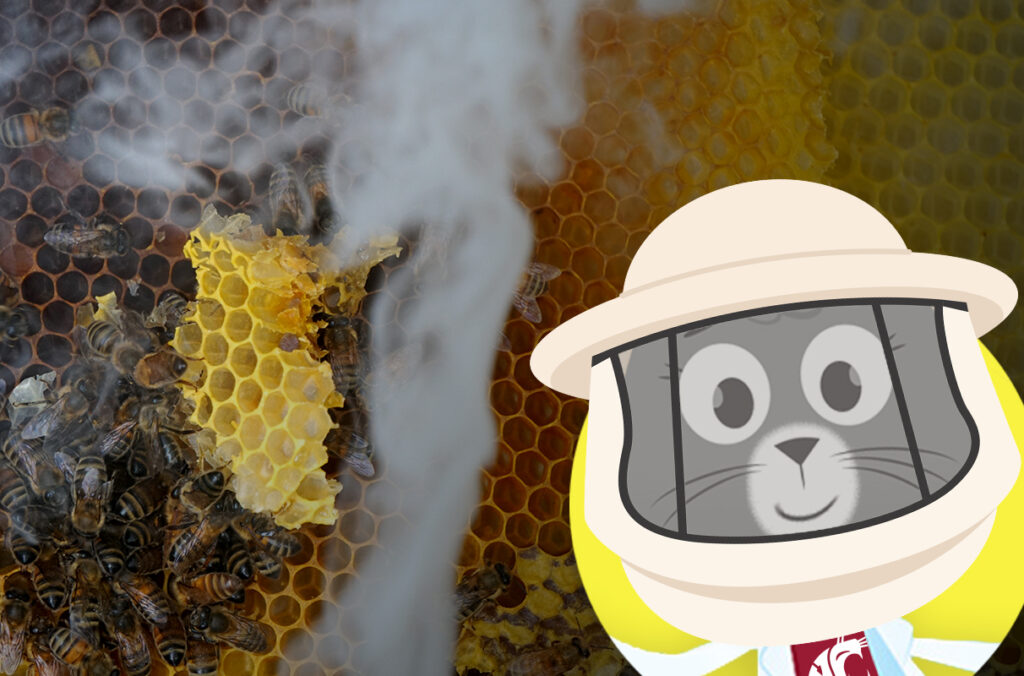
Washington State, USA — Ever wondered why a puff of smoke can turn a buzzing, defensive swarm of honey bees into a calm, manageable colony? A new science explainer from Washington State University (WSU) is shedding light on the fascinating chemistry and teamwork behind this age-old beekeeping practice.
In a child-friendly feature, WSU’s resident feline scientist, Dr. Universe, tackles a curious question from 10-year-old Kovas: Why does smoke make bees calm? With insights from honey bee researcher Brandon Hopkins, the answer reveals a sophisticated world of chemical communication and collective behavior.
According to Hopkins, smoke works by interfering with the chemical signals — known as pheromones — that bees use to communicate danger. When a hive is disturbed, guard bees release alarm pheromones that alert others to attack. Smoke effectively masks these signals, making it harder for bees to coordinate a defensive response.
The result? A calmer colony, allowing beekeepers to inspect hives with reduced risk of stings.
The story goes beyond smoke, introducing readers to the concept of honey bee colonies as “superorganisms.” Rather than acting as individuals, thousands of bees operate as a single, highly organized unit.
 ADVERT
Within this living system, pheromones regulate everything — from foraging and reproduction to temperature control and defense. Each bee plays a role in maintaining the colony’s survival, guided by an invisible web of chemical signals.
Dr. Universe also explains a well-known but often misunderstood fact: honey bees die after stinging mammals. Their barbed stingers become lodged in skin, tearing away part of their abdomen when they attempt to fly off. It’s a self-sacrificing defense mechanism designed to protect the hive at all costs.
By breaking down complex ideas in animal behavior and chemical communication into engaging, easy-to-understand language, Dr. Universe brings science to life for young readers and curious minds alike.
The takeaway is clear: what appears to be a simple puff of smoke is actually a clever manipulation of nature’s communication system — one that has allowed humans and honey bees to coexist for centuries.
As beekeeping continues to play a crucial role in agriculture and pollination worldwide, understanding these delicate interactions is more important than ever.
Source: Washington State University



