 ADVERT
 ADVERT
The world of wealth has entered uncharted territory—and at its center stands Elon Musk.
In a financial moment that has stunned markets and ignited global debate, Musk became the world’s first trillionaire following the blockbuster public listing of SpaceX on the Nasdaq. But it is not just the milestone that has captured attention—it is the staggering scale of his wealth growth.
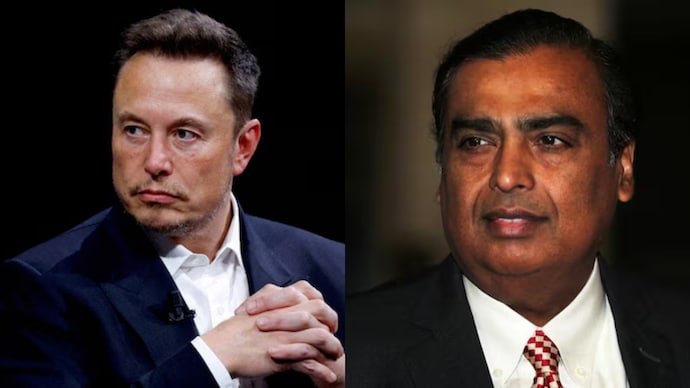
In a single trading day, Musk’s net worth surged by an eye-watering $164.8 billion, a 14.71% jump that has rewritten the limits of personal fortune. To put that into perspective, that one-day gain is nearly double the entire net worth of India’s richest man, Mukesh Ambani, who currently stands at $89.7 billion.
For most billionaires, a daily increase of even a few hundred million dollars would be remarkable. Ambani himself saw his wealth rise by $965 million on the same day—a significant gain by any standard. Yet against Musk’s meteoric surge, it barely registers.
A Fortune That Rivals Nations
 ADVERT
Musk’s total net worth now sits at an astonishing $1.3 trillion, driven primarily by his stakes in Tesla and SpaceX. The sheer scale of that figure becomes even more striking when compared to national economies.
India—the world’s most populous country with over 1.4 billion people—has a GDP of approximately $4.15 trillion. Musk’s personal fortune is now nearly a quarter of that entire economic output, a comparison that underscores the widening gulf between individual wealth and national economies.
These numbers have gone viral across social media platform X, where users are grappling with the magnitude of inequality they represent. Economists and commentators alike say such comparisons are no longer theoretical—they are now a visible reality.
How SpaceX Created the First Trillionaire
The historic leap traces back to June 12, when SpaceX made its long-anticipated debut on the Nasdaq. The rocket, satellite, and AI powerhouse raised a record-breaking $75 billion in its initial public offering, signaling immense investor confidence in Musk’s vision of the future.
Before the listing, Musk’s net worth was already estimated at around $780 billion—far ahead of any global peer. The second-richest individual hovered near $300 billion, less than half his wealth.
But when SpaceX shares began trading, valuations soared. Musk’s stake in SpaceX alone ballooned to roughly $866 billion, instantly catapulting his total wealth past the trillion-dollar mark. Within hours, financial history had been rewritten.
What followed was unprecedented: a single-day wealth surge so massive it eclipsed the fortunes of entire billionaire dynasties.
The rise of Musk to trillionaire status signals more than just personal success—it marks a new era in global capitalism, where technology, space innovation, and investor speculation can create wealth at a scale once unimaginable.
Yet it also raises urgent questions about inequality. As comparisons between Musk’s fortune and national economies circulate, the conversation is shifting from admiration to concern.
For now, one thing is certain: the numbers are no longer just big—they are almost impossible to comprehend.
And Elon Musk stands alone at the very top.
Source: India today.


