 ADVERT
 ADVERT
On a continent where political rallies often end with promises and handshakes, Monday’s gathering in Siaya offered something far less common: industrial machinery.
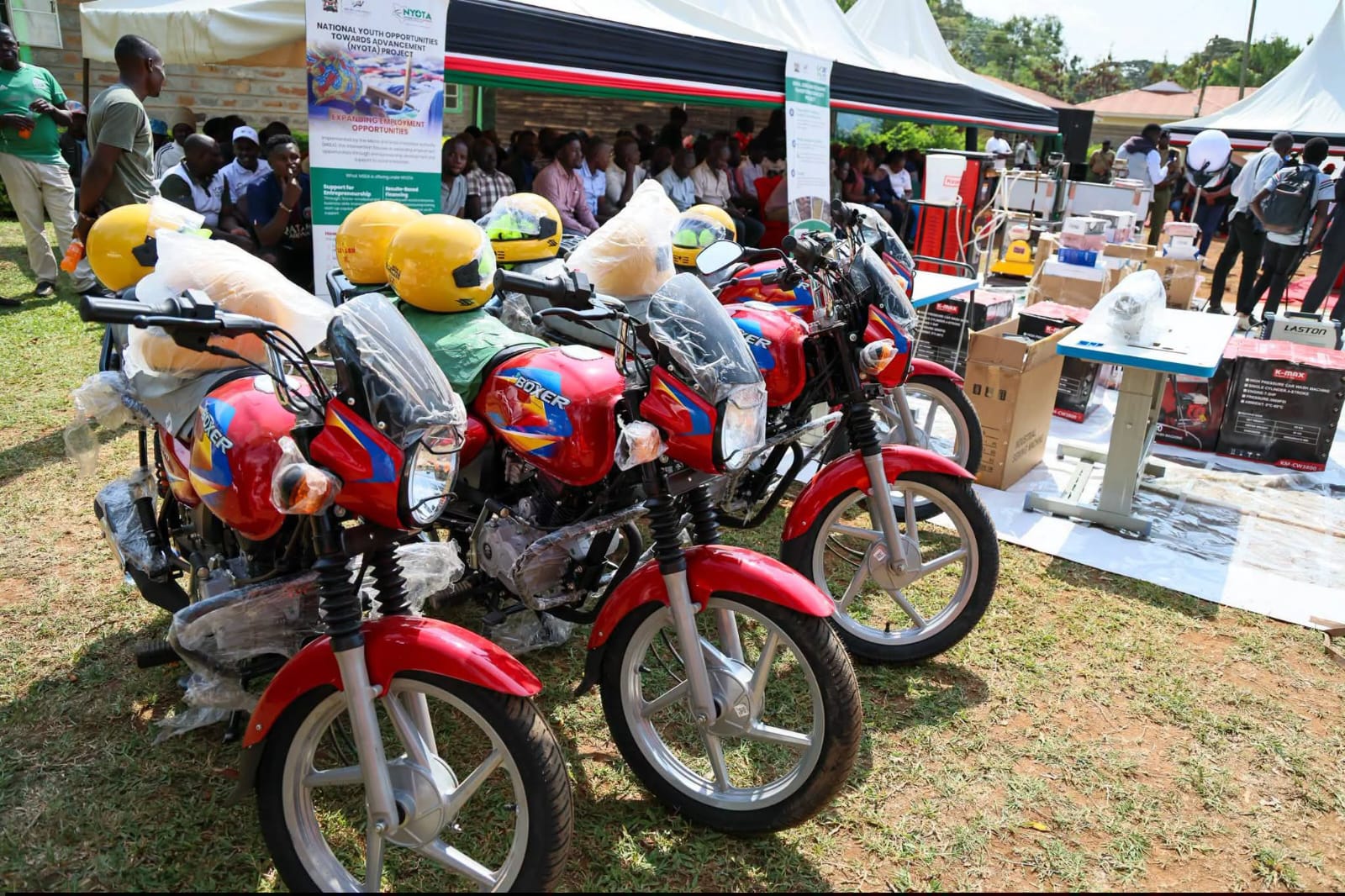
Welding machines, sewing equipment, salon kits, carpentry tools and other business assets worth Sh10 million were handed over to more than 400 youth and women, marking what officials describe as a deliberate shift from welfare-driven assistance to enterprise-led economic empowerment.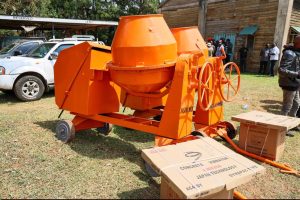
For many of the beneficiaries, the equipment represents more than metal and machinery—it is a rare opportunity to escape unemployment, create wealth and reclaim control over their economic future.
The distribution, undertaken through the Micro and Small Enterprises Authority (MSEA) under the World Bank-funded Kenya Jobs and Economic Transformation (KJET) Project, seeks to convert informal community groups into viable businesses capable of generating income long after the politicians have left the podium.
Yet beneath the celebratory atmosphere lies a deeper question confronting governments across Kenya: Can enterprise support finally succeed where years of youth empowerment programmes have produced only mixed results?
 ADVERT
For decades, unemployment has remained one of Siaya County’s most persistent development challenges. Thousands of young people complete school each year only to find limited formal employment opportunities, leaving many vulnerable to poverty, migration, political exploitation and criminal activity.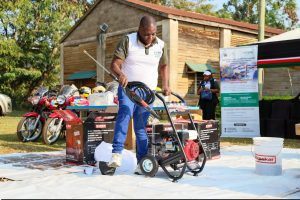
Government officials believe the answer lies not in short-term cash handouts but in equipping communities with productive assets that can create businesses, employ others and stimulate local economies.
Chief guest Alego Usonga MP Samuel Atandi challenged the beneficiaries to prove that public investment can deliver measurable economic returns.
He praised the youth and women’s groups for organizing themselves into registered entities, noting that structured organizations make it easier for government agencies to identify deserving beneficiaries and deliver targeted development support.
“The equipment you are receiving today was procured based on your own identified needs,” Atandi said. “Its real value will not be measured today but in the businesses you build, the jobs you create and the families whose livelihoods improve.”
The legislator also revealed that the initiative would soon be expanded to other sub-counties in Siaya, allowing more community groups to access similar opportunities.
Unlike many empowerment initiatives that distribute grants with little follow-up, the KJET programme is anchored on a broader national economic strategy.
Running from 2024 to 2029, the World Bank-backed project is being implemented across all 47 counties with an ambitious target of creating 45,000 sustainable jobs by strengthening enterprise clusters, attracting private investment and expanding market access for small businesses.
MSEA representative Eric Owino argued that economic empowerment is also a security intervention.
According to Owino, idle youth remain vulnerable to manipulation during periods of political tension and social unrest.
“The more we empower young people economically, the less likely they are to be recruited into violence or criminal activities. When young people have meaningful work and stable incomes, they become builders of the economy instead of being used to destabilize it,” he said.
Among the beneficiaries was Kelvin Otieno from Ugunja, who described the equipment as a turning point for dozens of community groups that have long struggled to access affordable capital.
“For many of us, this machinery is the missing link between having business ideas and actually earning a living,” he said. “We now have an opportunity to build enterprises that can support our families and even employ others.”
The true test, however, begins after the cameras leave.
Kenya has witnessed numerous youth empowerment programmes over the years, many of which have struggled because of weak management, inadequate business training, limited market access and poor accountability. Analysts argue that providing equipment alone is rarely enough unless beneficiaries receive mentorship, financial literacy, access to affordable credit and reliable markets for their products.
If these complementary interventions materialize, the Sh10 million investment could become a model for community-led industrialization in rural Kenya. If they do not, the machines risk joining a long list of well-intentioned public projects that failed to deliver lasting economic transformation.
For now, optimism outweighs scepticism. Across Siaya, hundreds of newly empowered entrepreneurs are preparing to switch on machines that government hopes will manufacture not just products—but jobs, dignity and a new chapter in the county’s economic future.




Youths should have paradigm shift towards economic development activities for brighter future.This is exemplary noble and focus orientated. More of such initiatives should be embarrassed .