 ADVERT
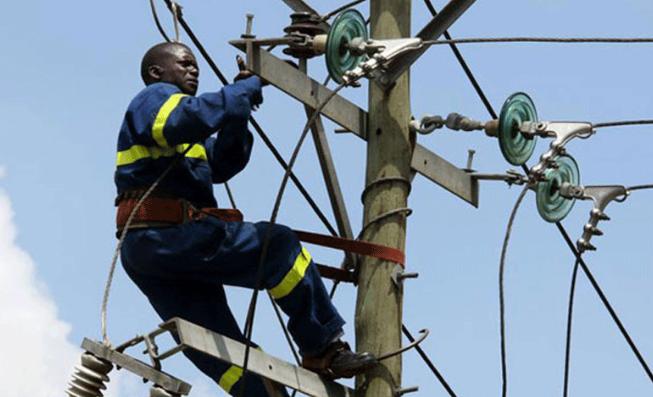
Electricity has been restored to Siaya County government offices and critical water infrastructure after a tense standoff between the county administration and Kenya Power over a Sh32 million unpaid bill, ending days of disruption that had paralysed essential services.
The reconnection follows an agreement in which the county committed to an immediate payment of Sh14 million—an upfront condition that Kenya Power had insisted on before restoring supply.
The dispute arose after the Siaya County Government proposed a staggered repayment plan to clear the outstanding electricity bill through instalments extending into the next financial year.
Kenya Power, however, rejected the proposal, terming it unsustainable and warning that it would effectively roll over current liabilities into a new budget cycle. The utility maintained that previous arrangements had been based on goodwill, with the expectation that debts would be cleared within the same financial year.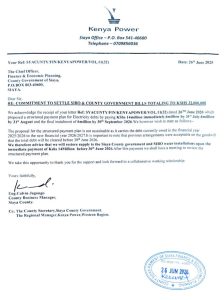
The disagreement culminated in the disconnection of electricity to county facilities, triggering a cascade of service failures.
Among the hardest hit was the Siaya-Bondo Water and Sanitation Company (SIBOWASCO), whose operations depend entirely on electricity to pump and treat water.
The outage disrupted water supply across large parts of the county, affecting homes, hospitals, schools, and public institutions. The crisis underscored the fragile link between utility services and public welfare, with thousands of residents left without access to clean water.
Health facilities and learning institutions were forced to operate under severe constraints, raising concerns about sanitation and service delivery.
The impasse was broken after the county moved to settle part of the debt, meeting Kenya Power’s demand for immediate payment. Power supply was subsequently restored, allowing water systems and government operations to resume.
Officials indicated that further discussions will be held to agree on a structured plan to clear the remaining balance without disrupting future service delivery.
The Siaya incident reflects a broader, recurring problem across Kenya, where county governments struggle with mounting utility bills, often leading to abrupt disconnections.
While power utilities argue that strict enforcement is necessary to maintain financial stability, critics warn that cutting electricity to essential services—particularly water and health facilities—can have disproportionate consequences on ordinary citizens.
The episode has reignited debate on the need for more sustainable intergovernmental frameworks, including ring-fenced funding for critical utilities and clearer debt management strategies.
For residents, the restoration of power and water brings immediate relief. But the episode also serves as a stark reminder of the risks posed by financial mismanagement and delayed payments in the public sector.
As normalcy returns, attention now shifts to whether long-term solutions will be implemented to prevent similar crises in the future.


