 ADVERT
 ADVERT
By Staff Writer
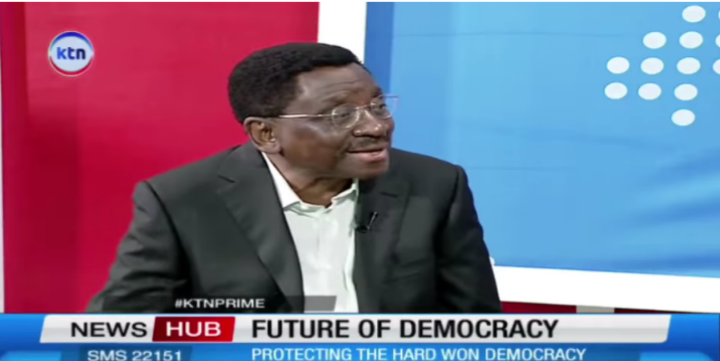
Siaya Governor James Orengo delivered a firm and composed defense of his leadership during a high-profile appearance on KTN Prime, pushing back against critics while raising alarm over what he termed as politically engineered instability in the region.
In an interview with host Jesse Rogers, Orengo projected confidence and command, dismissing claims that his administration has underperformed. He maintained that Siaya County remains on a steady development path, arguing that sections of the public are being “hoodwinked” by monetary influence to support the national regime.
The veteran lawyer and long-serving political figure appeared measured yet assertive—traits that have long defined his public persona—striking the tone of a leader comfortable with both policy detail and political contestation.
However, even as Orengo consolidated his narrative on national television, pressure continues to mount back home. Critics and political opponents in Siaya have intensified accusations that the governor has effectively “absconded” his county duties, instead engaging in an elusive pursuit of national political relevance—what some have metaphorically described as a “wild chase of the golden fleece.”
 ADVERT
The growing discontent reflects a widening perception gap between the governor’s national posture and local expectations, setting the stage for a potentially bruising political contest ahead.
In a notable and controversial intervention, Orengo also turned his attention to the security situation in neighbouring Kisumu County. He alleged that rising violence in the area is being orchestrated with the tacit support of state actors.
“There’s too much violence in Kisumu… it is getting out of hand,” he said, claiming that groups responsible for recent attacks—including an incident at a social centre—operate with protection from elements within law enforcement. Similar assertions have been echoed in recent months, where Orengo accused authorities of sponsoring political violence in the region.
The remarks are likely to heighten political tensions, drawing sharp responses from both government officials and security agencies, while amplifying concerns about law and order in one of the country’s politically significant regions.
As the political landscape shifts, Orengo’s latest media appearance underscores a leader intent on reclaiming control of the narrative. Yet, with criticism steadily building at the grassroots, the real test may lie not in televised debates, but in regaining trust on the ground in Siaya.



