 ADVERT
 ADVERT
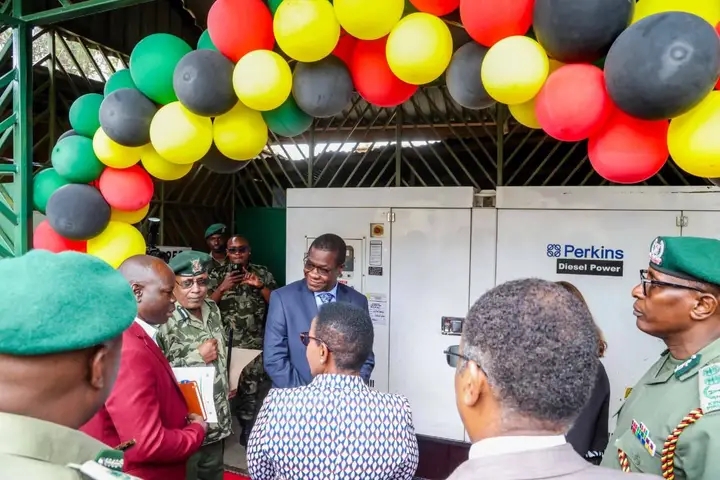
Kenya has taken a decisive step toward sustainable governance and resilient public service delivery following the launch and commissioning of a solar-powered hybrid energy system at the Nairobi Remand and Allocation Maximum Security Prison. Presided over by the Cabinet Secretary for Energy and Petroleum, the milestone project signals a bold shift in how public institutions can integrate clean energy solutions to enhance efficiency, safeguard human rights, and reduce operational costs.
More than just an infrastructure upgrade, the installation delivers reliable 24-hour backup power to critical prison operations, including virtual court hearing services. In correctional facilities, where uninterrupted access to lighting, communication, surveillance, and judicial processes is essential, the importance of a dependable power supply cannot be overstated. By ensuring continuity, the system strengthens safety, upholds the rule of law, and protects both staff and inmates.
The transition to a solar hybrid system also reduces reliance on the national grid, mitigating risks associated with power outages that can disrupt justice administration. When courts stall or communication systems fail, detainees’ rights are compromised and case backlogs increase. With consistent power now guaranteed, virtual hearings can proceed seamlessly, accelerating justice delivery while reducing the need for physical inmate transfers—thereby lowering security risks and logistical costs.
Beyond operational stability, the economic benefits are compelling. By cutting electricity expenses, the project frees up critical public funds that can be redirected toward rehabilitation programmes, staff development, and facility improvements. At a time when government resources are under pressure, investments that deliver both immediate savings and long-term financial predictability represent prudent fiscal management. The hybrid system shields the institution from energy price volatility while enabling more efficient budgeting.
Equally significant is the environmental impact. The project aligns with Kenya’s broader commitment to clean energy and climate action by embedding renewable power within a core state institution. As prisons adopt green technologies, they set a powerful precedent for other public sectors, reinforcing the government’s role as a leader in sustainable development. This visible commitment helps normalise renewable energy adoption while strengthening public accountability.
 ADVERT
The collaboration between the Ministry of Energy and the State Department for Correctional Services underscores the importance of coordinated leadership. By bridging policy and implementation, the partnership ensures that technical solutions respond directly to operational realities. Such cross-sector cooperation is critical in delivering practical, scalable innovations that improve service delivery across government institutions.
Importantly, the project also reflects a commitment to humane treatment within correctional facilities. Reliable electricity supports access to legal representation, healthcare services, and communication with families—fundamental rights that must be preserved even within custodial settings. By investing in dependable energy infrastructure, the government reinforces its obligation to uphold dignity and fairness in the justice system.
The choice of a hybrid solar model demonstrates a pragmatic approach to energy transition. By combining renewable power with backup systems, the solution balances sustainability with reliability—an essential consideration for critical facilities that cannot afford downtime. This model offers a blueprint for other sectors seeking to transition to clean energy without compromising operational continuity.
Looking ahead, the success of this initiative sets the stage for broader adoption across key public institutions, including hospitals, courts, and police stations. Scaling such projects will require sustained investment, technical capacity, and strategic planning, but the benefits are clear: resilient infrastructure, reduced costs, and improved service delivery.
Ultimately, the Nairobi prison solar hybrid project stands as a compelling example of how integrated policy decisions can address multiple national priorities simultaneously. By combining energy security, fiscal responsibility, environmental stewardship, and human rights protection, Kenya is redefining what effective governance looks like in the modern era.
As the country continues to invest in sustainable infrastructure, this project offers a powerful reminder that the future of public service lies at the intersection of innovation, collaboration, and long-term vision.
James Kilonzo Bwire is a Media and Communication Practitioner


