 ADVERT
 ADVERT
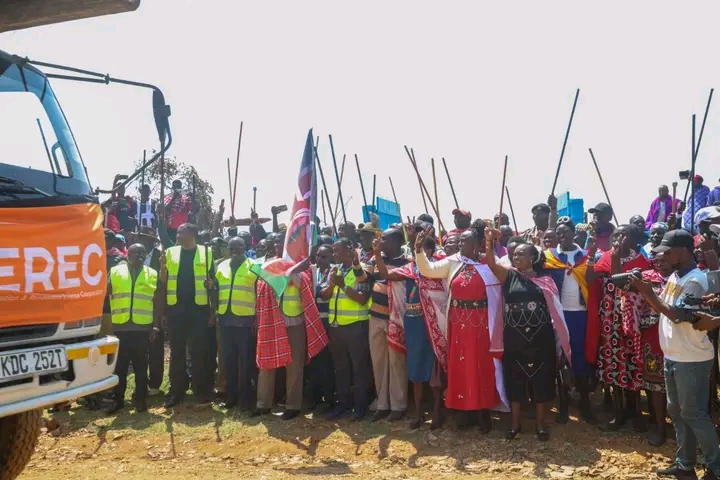
Cabinet secretary of Energy and Petroleum Opiyo Wandayi has demonstrated the importance of connecting national development priorities with the needs of communities through the commissioning of rural electrification and development projects in Kilgoris Constituency. The event, which included the flagging off of materials under the Last Mile Connectivity Programme in several villages and the opening of new classrooms, should be viewed not merely as a momentary photo opportunity but as a concrete step toward structural change that links energy access, education, and local development. The interventions in Tororet/Mobel, Kaptembwo, and Migingo under the Last Mile Connectivity Programme, together with new classrooms at Muguleldo Primary School, represent more than infrastructure additions. They demonstrate a policy orientation that recognizes energy as foundational to social and economic progress. Reliable electricity enables students to study after dark, powers health facilities and water systems, and creates an enabling environment for small enterprises to flourish. The presence of local leaders, including the Kilgoris Constituency MP and the county assembly speaker, alongside experienced figures from the energy sector, signals alignment between national priorities and local political stewardship, which is essential if these projects are to move from commissioning ceremonies to sustained impact on the ground.
It is important to read the commissioning of these projects in the broader context of Kenya’s development trajectory and the government’s declared priorities. The Last Mile Connectivity Programme has, since its inception, aimed to address the persistent gap between grid presence and household connection. In rural and peri urban areas, the barrier is often not merely the proximity of power lines but affordability, administrative hurdles, and the logistics of completing last mile connections. The materials flagged off in Kilgoris are a practical response to these constraints. They shorten the distance between policy and people by making it easier to install connections and by signaling to residents that electricity is available and intended for their use. This kind of deliberate intervention responds to the rightful expectation of citizens that public resources should lead to visible improvements in their daily lives. When connections are made and classrooms opened, the lived realities of education and family welfare change. The presence of energy in homes improves lighting and information access for learners, reduces dependence on costly or unhealthy fuels, and provides entrepreneurs with the basic input they need to operate appliances or power tools. These immediate gains must, however, be consolidated by complementary measures such as affordable tariffs, efficient billing systems, community engagement, and capacity building so that households not only gain access but can also sustain usage and derive economic value from it.
Beyond the practicalities of installation and the opening of school infrastructure lies the more important question of sustainability and local ownership. Development initiatives are most effective when they are embedded in community structures and when local institutions are capacitated to manage and maintain assets. Rural electrification projects can be transformative, but the risk of deterioration or underutilization is real when maintenance frameworks are weak or when communities feel excluded from decision making. The involvement of local elected leaders at the Kilgoris launch is encouraging because it suggests opportunities for ongoing oversight and collaboration between residents and implementers. Still, it is essential that the momentum generated by national leadership translates into clear long term arrangements for operations and maintenance, as well as transparent mechanisms for addressing grievances and ensuring accountability. If the communities that receive new connections and classrooms are empowered to participate in their stewardship, the interventions are likely to yield durable social returns. This implies training local technicians, establishing reliable supply chains for spare parts, and institutionalizing communication channels that allow residents to raise issues and request timely repairs without bureaucratic delay.
Education stands out among the social benefits most directly affected by the combination of electrification and school infrastructure development. The new classrooms at Muguleldo Primary School will alter the educational environment by improving the physical conditions under which children learn. Classrooms that are safe, well lit, and conducive to teaching attract and retain learners and teachers alike. When classrooms are combined with electricity, the possibilities expand further. Digital learning devices can be used, teachers have access to online resources, and the school environment can become a hub for community activities in the evenings. This convergence of energy and education speaks to a development logic that sees infrastructure investments as multipliers rather than isolated expenditures. It also places a responsibility on policymakers to ensure that investments in buildings and power lines are matched by investments in human capital through teacher training, learning materials, and inclusive school management practices. The ultimate indicator of success will be improvements in learning outcomes and community wellbeing that persist beyond the initial commissioning ceremonies.
Another critical dimension of the Kilgoris interventions is the potential impact on livelihoods and local economic transformation. Access to electricity reduces transaction costs for small businesses, enables productive uses of energy such as milling, refrigeration, and information and communication technologies, and can stimulate value addition in agricultural and artisanal sectors. For communities in Narok County and similar settings, electrification can support diversification of income sources and create stability that protects households from economic challenges. The Last Mile Connectivity Programme’s materials, when put to use, should therefore be part of a broader local economic development strategy that supports enterprise development, enhances market linkages, and fosters an enabling environment for investment. Local governments and development partners need to coordinate closely to ensure that electrification is complemented by initiatives such as access to finance, business training, and market access programmes. Without such complementary measures, the full economic potential of electrification may remain unrealized, and the lives of beneficiaries might improve only marginally.
 ADVERT
Political stewardship and the framing of development priorities also matter. The attendance of national and local leaders at project launches reinforces the message that development is a collective enterprise crossing levels of government. It is important, however, that these events do not obscure the necessity for transparent reporting on outcomes and the need to manage public expectations responsibly. Citizens have a right to know how public funds are used and to see meaningful progress against promises. The political goodwill generated by launching projects must be matched by sustained public communication about timelines, anticipated benefits, and the roles different actors will play in implementation. Political leaders can convert public confidence into long term trust by prioritizing follow through, engaging communities in monitoring progress, and creating spaces where residents can hold officials to account. This form of political accountability strengthens governance and reduces the risk that projects become symbolic gestures rather than vehicles for meaningful change.
Equally significant is the role of experienced professionals and sector experts in guiding implementation. The presence of experienced energy sector figures during the Kilgoris commissioning can enhance technical oversight and lend credibility to project execution. Technical knowledge helps ensure that installations meet safety and performance standards and that systems are adapted to local conditions. Experts can also advise on the most cost effective technologies and on how to phase projects to match community needs and available resources. Yet technical expertise should be married to local knowledge. Engineers and planners must listen to the lived experience of residents, understand local livelihoods, and design systems that respond effectively to the geographic and social conditions of the communities they serve. The best outcomes arise when technical rigour and community knowledge converge, producing solutions that are both efficient and socially appropriate.
The involvement of leaders such as Kilgoris Constituency MP Julius Lekakeny Sunkuli, Narok County Assembly Speaker Davis Solian Dikirr, and former National Oil Corporation of Kenya Chief Executive Officer and Managing Director Leparan Gideon Ole Morintat also highlights the importance of cooperation in advancing development. National government interventions are more effective when they are supported by local leadership that understands community priorities and remains engaged throughout implementation. Such cooperation should not end with the commissioning of projects. It should continue through monitoring, community engagement, problem solving, and advocacy for additional services required to make the interventions effective. Development requires continuity and coordination, and leaders at different levels have a responsibility to ensure that projects are integrated into wider community development priorities.
The question of affordability must also remain central to the expansion of electricity access. Connecting households to the national grid is an important achievement, but meaningful access requires that families can afford to use the electricity once it reaches their homes and businesses. Policymakers and energy sector institutions must therefore continue examining ways of making electricity accessible to low income households and small enterprises. Affordable and predictable energy costs can encourage productive use of electricity and support household welfare. Where electricity remains beyond the reach of beneficiaries because of cost, the development gains associated with connectivity may not be fully realized. The success of rural electrification should therefore be understood not only in terms of physical connections but also in terms of the ability of communities to use electricity productively and sustainably.
There is also a strong need to connect electrification with broader social infrastructure planning. Energy access should support health, education, water, communication, enterprise development, and public administration. When these sectors are planned together, communities are better positioned to benefit from public investment. Electricity can support health facilities by enabling the operation of essential equipment and improving working conditions. It can support schools by enabling access to digital resources and improving the learning environment. It can support businesses by providing reliable energy for operations. It can also improve access to information and communication, allowing residents to engage more effectively with government services and economic opportunities. This integrated approach is important because development challenges are interconnected and cannot always be addressed through isolated interventions.
The commissioning of the Kilgoris projects therefore raises an important principle about the meaning of development in contemporary Kenya. Development should be measured by the extent to which public investment expands opportunity, improves access to essential services, strengthens local economies, and enhances the dignity of citizens. Rural communities deserve the same attention to infrastructure and public services as urban and more developed areas. The Last Mile Connectivity Programme is significant because it addresses this principle by seeking to extend electricity access to communities that have historically remained underserved. The continued expansion of such programmes can contribute to a more balanced pattern of development in which geographical location does not determine the quality of essential services available to citizens.
At the same time, communities must remain active participants in the development process. Residents should be informed about projects, understand their responsibilities, and have accessible channels through which they can raise concerns. Community participation can improve project implementation because residents often have practical knowledge about local conditions that may not be immediately available to external planners. It also promotes a sense of ownership and responsibility. When people understand the purpose of infrastructure and participate in its protection and maintenance, public investments are more likely to remain useful for a longer period.
The commissioning of new classrooms at Muguleldo Primary School further demonstrates why development planning should consider education as a central component of community transformation. Physical learning spaces influence the quality of education, but they must be supported by adequate teachers, learning materials, technology, sanitation, and effective school administration. Improving classrooms provides an important foundation, but the broader education system must also receive sustained attention. Children in underserved communities should have access to learning environments that allow them to develop the knowledge and skills required to participate fully in Kenya’s social and economic future.
Ultimately, the interventions commissioned in Kilgoris Constituency represent an important step in the government’s continuing effort to expand essential services and address development gaps. The work initiated through rural electrification and education infrastructure should now be followed by sustained implementation, maintenance, accountability, and community engagement. The value of public investment is realized when projects remain functional, accessible, affordable, and relevant to the people they are intended to serve. The commissioning therefore should not be treated as the conclusion of the development process but as part of a continuing responsibility to deliver services and respond to emerging community needs.
Cabinet secretary of Energy and Petroleum Opiyo Wandayi’s reaffirmation of the government’s focus on tangible development, expanded energy access, and ensuring that no community is left behind speaks directly to the broader responsibility of public leadership. Kenya’s transformation will depend on how effectively national development priorities are translated into practical improvements in communities. Kilgoris demonstrates the importance of maintaining that connection between national policy and local needs. The continued expansion of electricity access, improvement of education infrastructure, strengthening of local economies, and promotion of accountable public service delivery can help create more inclusive development across the country. The real measure of these interventions will ultimately be found in the daily experiences of the communities they serve and in the opportunities that become available to their households, learners, entrepreneurs, and institutions.
James’ Kilonzo Bwire is a Media and Communication Practitioner


