 ADVERT
 ADVERT
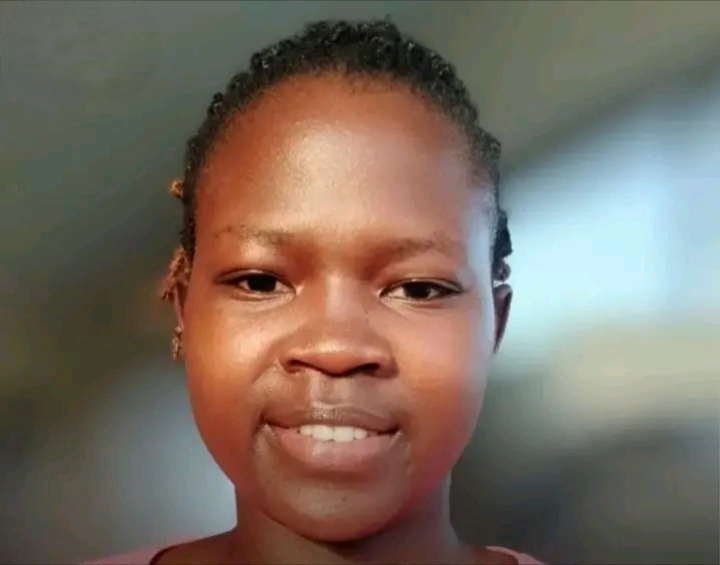
Siaya County has another reason to celebrate after young scientist Linah Akinyi Ochieng’ secured a prestigious scholarship to pursue doctoral studies at the University of Oxford, marking a remarkable rise from Kenyan research laboratories to one of the world’s leading centres of biomedical science.
Akinyi is undertaking a DPhil in Molecular and Cellular Medicine at Oxford’s Kennedy Institute of Rheumatology as an AfOx–Kennedy Trust Prize Scholar. Her research focuses on understanding inflammatory pathways in ulcerative colitis and the mechanisms underlying immune-mediated disease.
Her achievement is particularly significant because it has been built on research conducted around health challenges affecting African populations rather than on academic credentials alone.
Akinyi’s academic journey began in Kenya, where she earned a First Class Honours Bachelor of Science degree in Biotechnology from Jomo Kenyatta University of Agriculture and Technology (JKUAT). She subsequently became an Initiative to Develop African Research Leaders (IDeAL) scholar and pursued a Master’s degree in Immunology at Pwani University.
Her scientific interests increasingly converged on the relationship between inflammation, disease and child health.
 ADVERT
During her postgraduate research at the KEMRI-Wellcome Trust Research Programme, Akinyi investigated how chronic inflammation affects growth among children recovering from complicated severe malnutrition.
The question behind the research was both simple and profound: why do some children continue to experience impaired growth even after surviving severe malnutrition?
Her work brought together immunology, nutrition and child health, placing an important African health problem within a wider scientific conversation.
The research subsequently earned her significant recognition.
In 2025, Akinyi received the Young Scientist Rising Star Award at the KEMRI Annual Scientific and Health Conference. Her work also earned a travel award from Danone Nutricia Campus, allowing her to present her findings at the 12th International Conference on Nutrition and Growth in Athens, Greece.
That progression—from local research to national recognition and then an international scientific platform—helped establish Akinyi as one of Kenya’s emerging biomedical researchers.
Her latest achievement has taken the journey considerably further.
At Oxford, Akinyi is a member of Reuben College and is pursuing her DPhil at the Kennedy Institute of Rheumatology, where her work is centred on inflammatory pathways in ulcerative colitis. The Kennedy Institute officially lists her as an AfOx–Kennedy Trust Prize Scholar for 2025 and an IDeAL scholar.
The distinction is worth noting: although some reports have described the opportunity as a scholarship to “pursue medicine”, Akinyi’s Oxford programme is doctoral research in Molecular and Cellular Medicine, not an undergraduate or clinical medical degree. Her work is therefore directed towards biomedical discovery and understanding disease mechanisms rather than training as a practising physician.
That distinction, however, does little to diminish the significance of the achievement.
Akinyi is now working in an internationally recognised research environment on diseases driven by abnormal immune responses and inflammation—conditions whose burden extends across populations and whose treatment continues to require deeper scientific understanding.
What makes Akinyi’s story particularly compelling is the connection between her scientific ambitions and the realities of healthcare in Africa.
Her research interests are rooted in questions that have direct implications for populations living in resource-constrained environments. From childhood malnutrition and impaired growth to inflammatory and immune-mediated diseases, her work reflects an attempt to understand complex biological processes while keeping their potential human impact in view.
At Oxford, she hopes to deepen her understanding of inflammatory diseases and contribute to research capable of informing better health outcomes in Africa.
Her journey also illustrates the importance of investing in African scientists and giving researchers from the continent opportunities to participate in global scientific discovery.
Rather than merely taking African problems to international institutions for others to solve, researchers such as Akinyi demonstrate the potential of African scientists to generate knowledge, lead investigations and contribute solutions themselves.
For Siaya, Akinyi’s achievement carries significance beyond the prestige attached to the name Oxford.
The county has produced professionals across numerous fields, but stories of young scientists moving from local and national research institutions to the highest levels of global academia offer a particularly powerful message to students contemplating careers in science.
Akinyi’s trajectory demonstrates that scientific excellence can begin with a research question addressing an African problem and eventually find an audience on the international stage.
It is also a reminder that the path to global recognition does not necessarily begin in the laboratories of Europe or North America.
It can begin in Kenya.
It can begin with a question about why a child who has survived severe malnutrition is still failing to grow.
And, with persistence, rigorous research and the right opportunities, that question can ultimately lead to Oxford.
For the young scientist from Siaya, the Oxford scholarship is therefore not simply another academic accolade. It represents the next chapter in a scientific journey that has already moved from Kenyan biotechnology, to immunology and child-health research, to international scientific recognition—and now to cutting-edge biomedical research at Oxford.
And if her record so far is anything to go by, Linah Akinyi Ochieng’ may only be getting started.



