 ADVERT
 ADVERT
The global real estate industry is undergoing a profound shift, with wellness emerging as one of the most powerful forces reshaping how homes, workplaces and communities are designed.
The wellness real estate sector is now estimated at Ksh78.9 trillion (US$548 billion) globally and is projected to surge beyond Ksh129 trillion ($1 trillion) by 2029, according to the latest Global Wellness Institute (GWI) 2026 report on wellness communities and real estate.
And Kenya is increasingly becoming part of this global transformation.
Wellness real estate goes beyond conventional property development. It involves designing, developing and operating residential and commercial spaces deliberately to promote the physical, mental and social wellbeing of the people who live and work in them.
The emerging model recognises that a home is no longer simply a building with bedrooms, bathrooms and a convenient location. Increasingly, residents want communities that help them exercise, socialise, work, relax, raise children and build meaningful relationships.
 ADVERT
The shift is particularly significant in Kenya, where changing digital habits and urban lifestyles are creating new challenges around social connection.
According to the GWI report, Kenyans spend more time on social media than people in any other nation, with 20 per cent averaging more than six hours a day. The report also found that 26 per cent of Kenyan employees experience loneliness “a lot”.
Yet the same research points to an intriguing solution: intentional community design.
People with access to social infrastructure are three times more likely to say they have close friends—32 per cent compared with just nine per cent among those without such infrastructure. The report identifies physical design and intentional programming as important tools for creating social connection.
For Kenya’s property developers, this is rapidly becoming more than a wellness philosophy. It is becoming a commercial opportunity.
Among the developers embracing the trend is HassConsult, whose Enaki Town development was conceived as a holistic lifestyle community built around greener, more sociable and resort-style urban living.
HassConsult has now introduced Elevate by Hass, an experience hub designed as a year-round platform combining fitness, wellness, children’s activities, entertainment, work, gastronomy and community experiences.
The thinking represents a fundamental departure from traditional approaches to property development, where value has largely been measured through location, size, finishes and specifications.
“The traditional measures of residential value, location, size, specification, are no longer the full picture. When residents genuinely belong to where they live, it shows up commercially,” says Farhana Hassanali, Co-CEO and Development Director at HassConsult.
The commercial results at Enaki appear to support that proposition.
The development’s 440 apartments have achieved 92 per cent occupancy, while several unit categories are fully occupied and have waiting lists.
For a country where digital connectivity is increasingly being accompanied by concerns about social isolation, the performance offers an early indication that demand for communities designed around human connection could become a significant feature of Kenya’s property market.
At Enaki Town, wellness and social interaction have been embedded into the development rather than treated as optional extras.
A purpose-built movement studio was designed to facilitate permanent fitness and wellness programming, delivered by specialist operator Yves Preissler.
Artcaffé, meanwhile, operates a marketplace designed as a social hub. The space has evolved beyond conventional food and beverage offerings to host high teas, children’s baking competitions and cultural festivals—activities intended to bring residents together and create a sense of community.
The model has also influenced HassConsult’s approach to its next phase of development.
Having researched the market, developed and designed the communities, priced, marketed and sold the homes, the firm has remained involved in managing them—allowing it to observe how residents actually use the spaces and what experiences generate demand.
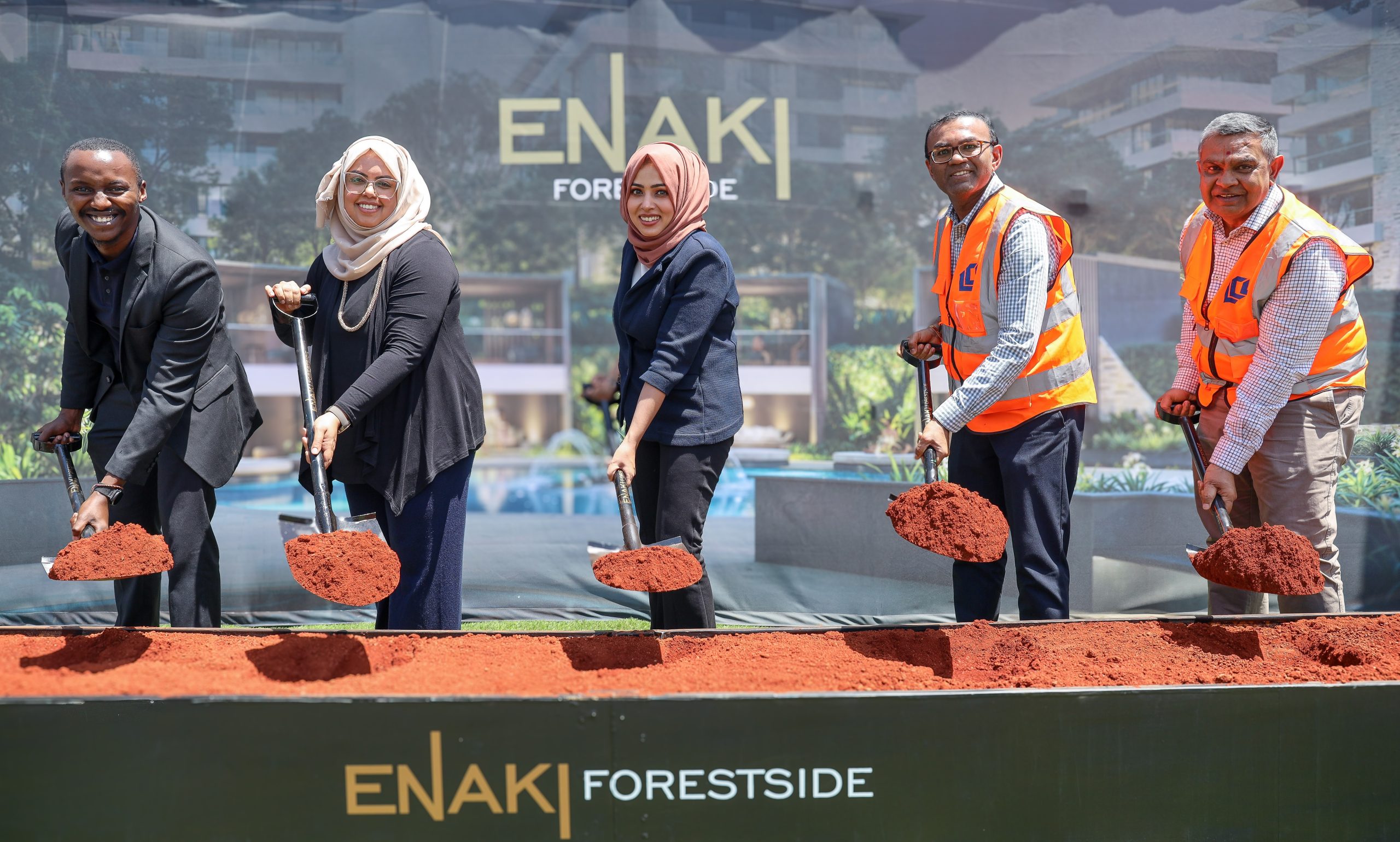
That experience has informed Enaki Forestside, the second phase of residences now under development around a 23,000-square-foot private forest.
The new phase will incorporate additional fitness, social, work and wellness spaces, reinforcing the idea that green space and community infrastructure can be central components of residential value.
The market response has been notable, with 50 per cent of the Enaki Forestside homes sold within the first four months of launch.
For developers, the lesson could be significant: the future of urban real estate may increasingly depend not merely on what is built, but on what happens after residents move in.
Sakina Hassanali, Co-CEO and Creative Director at HassConsult, argues that human connection must now become an explicit consideration in property design.
“The design brief of the future has to include human connection as an outcome. What draws people out of their homes and keeps them coming back cannot be left to chance. It must be designed, programmed and sustained,” she says.
That philosophy could redefine Kenya’s property sector.
As Nairobi and other rapidly growing urban centres become denser and increasingly digitally connected, the premium may shift towards developments that provide what technology cannot easily replace: face-to-face interaction, belonging, green space, wellness and genuine community.
The rise of wellness real estate therefore signals a broader change in what Kenyans may ultimately be prepared to pay for in a home.
It is no longer enough for property to provide shelter. Increasingly, the most valuable developments may be those that provide a healthier way of living—and give residents somewhere they actually feel they belong.



